
Break a Leg - Why?
What inspired the age old saying for the stage?


If you have been raised around or been involved with the theatre in any way, you probably have heard the saying - Break A Leg. Or even just in general, this is a natural response to wish someone good luck. But why?
The earliest published example in writing specifically within a theatre context comes from American writer Edna Ferber's 1939 autobiography A Peculiar Treasure, in which she writes about the fascination in the theatre of "all the understudies sitting in the back row politely wishing the various principals would break a leg".
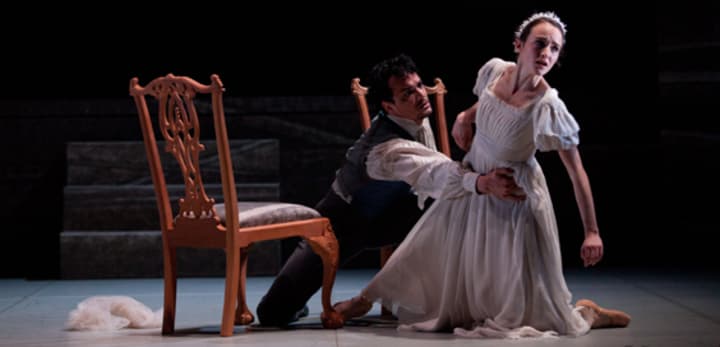
However, theatrics are known for their superstitions - which is why some believe its for the actor's own benefit before the step onstage to reaffirm "Break a leg!" to their cast mate. The term appears to come from the belief that one ought not to utter the words 'good luck' to an actor.
By wishing someone bad luck, it is supposed that the opposite will occur. Other superstitions are that it is bad luck to whistle in a theatre, to say the final line of a play during dress rehearsal, or to say the name of 'the Scottish Play' (Macbeth) in a theatre's green room.

So rest assured, your cast aren't wishing that you actually break your leg during a performance - unless you're Eve in All About Eve - and it is ironically a sign of affection. Although as I looked further into this saying, there are actually some other meanings attached to this saying which I found:
- The performer bowing: The term "break a leg" may refer to a performer bowing or curtsying to the audience in the metaphorical sense of bending one's leg to do so.
- The performer breaking the leg line: The edge of a stage just beyond the vantage point of the audience forms a line, imaginary or actually marked, that can be referred to as the "leg line", named after a type of concealing stage curtain called a leg. In the days of vaudeville, for an unpaid stand-by performer to cross or "break" this line would mean that the performer was getting an opportunity to go onstage and be paid. Therefore, "break a leg" might have shifted from a specific hope for this outcome to a general hope for any performer's good fortune. Even less plausible, the saying could originally express the hope that an enthusiastic audience repeatedly calls for further bows or encores. This might cause a performer to repeatedly "break" the leg line or, alternatively, it might even cause the leg curtains themselves to break from overuse.
- Alluding to David Garrick: During a performance of Shakespeare's Richard III, the famed 18th-century British actor David Garrick became so entranced in the performance that he was supposedly unaware of a literal fracture in his leg.
- The audience breaking legs: Various folk-theories propose that Elizabethan or even Ancient Greek theatrical audiences either stomped their literal legs or banged chair legs to express applause.
- Alluding to John Wilkes Booth: One popular but false etymology derives the phrase from the 1865 assassination of Abraham Lincoln, during which John Wilkes Booth, the actor-turned-assassin, claimed in his diary that he broke his leg leaping to the stage of Ford's Theatre after murdering the president. The fact that actors did not start wishing each other to "break a leg" until as early as the 1920s (more than 50 years later) makes this an unlikely source. Furthermore, Booth often exaggerated and falsified his diary entries to make them more dramatic.
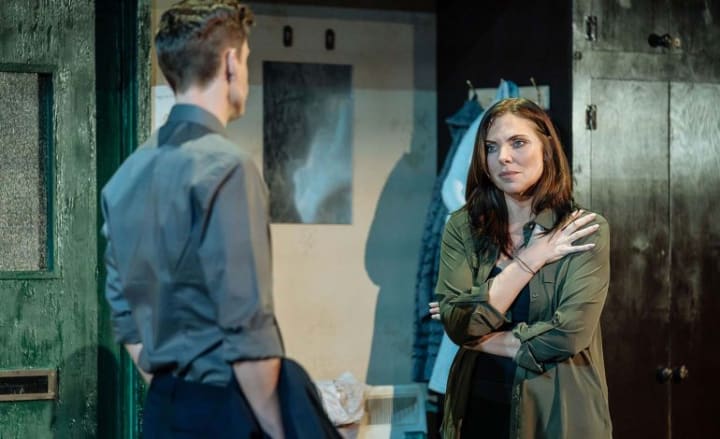
Honestly, the theatre has been a huge part of my life, both as a writer and audience member. It's sort of become part of my DNA. Jane Eyre, Cursed Child and Girl on the Train were the last shows I saw on stage before the pandemic. With hope of stage doors being allowed to open this year - I genuinely can't wait to wish for these talented individuals (on and off stage) to break a leg and bring stories to life again in auditoriums across the UK.
About the Creator
Ted Ryan
Screenwriter, director, reviewer & author.
Ted Ryan: Storyteller Chronicles | T.J. Ryan: NA romance
Socials: @authortedryan | @tjryanwrites | @tjryanreviews
The Author Diaries #1: The Storyteller’s Curse — Exclusive Prologue Reveal
Author’s Note: Dear Readers, Thank you for being here — for reading, subscribing, and stepping back into the world of The Storyteller Chronicles. When I finished Book One, I truly thought the story was done. Silas was defeated. The grimoire was safe. Lauren had saved the day — in two worlds — and her family were reunited.
By Ted RyanExclusive • 6 months ago
A Failed Artist, A Disillusioned Poet, An Underpaid Game Show Host
I took my son and niece to Gori, a small town in Georgia where Joseph Stalin was born. They talked me into visiting the Stalin's Museum, the largest in the post-Soviet space. I had resisted going there because I just can't stand the monster and know enough about him, or so I thought.
By Lana V Lynx7 days ago in FYI
Do Transplanted Organs Age Like Their Donors or Adapt to Their New Bodies?
The concept of an organ transplant is often framed as a "new lease on life," a medical miracle that replaces a failing part with a functional one. But while the surgery might take only a few hours, the biological implications last for decades. One of the most fascinating questions in transplant medicine is whether a donated organ remains "stuck" at the age of the donor or if it eventually adapts to the age of the recipient.
By John Ammerlane5 days ago in FYI


Comments
There are no comments for this story
Be the first to respond and start the conversation.