

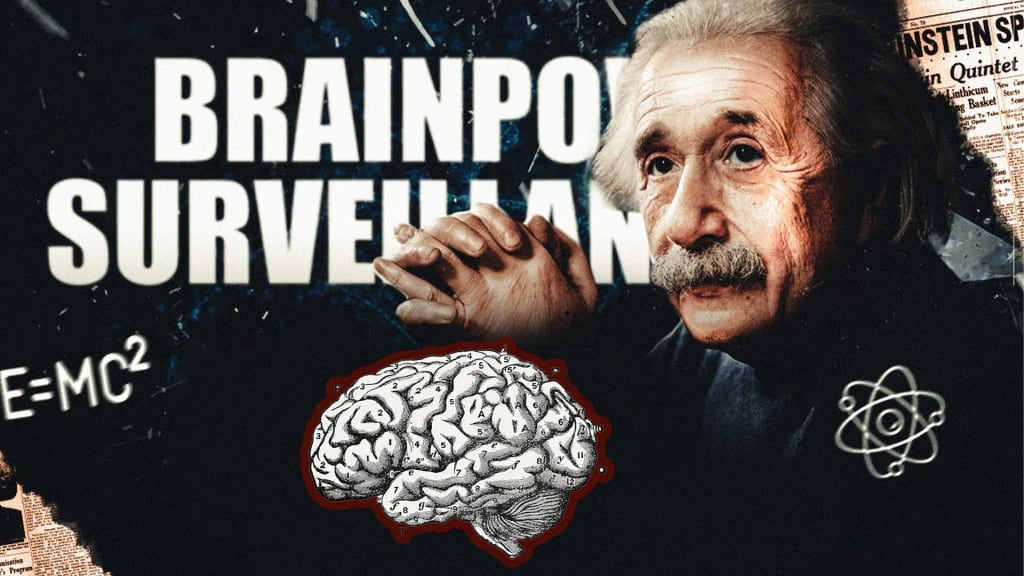
Humanity takes pride in many things—wealth, science, poetry, cinema—but at the root of all these achievements lies one crucial attribute: intelligence. We consider intelligence to be one of the most important traits in ourselves, often treating it like a type of strength. However, the moment we try to define what intelligence actually is, the picture becomes blurry.
In its simplest form, intelligence can be seen as a mechanism—a process—for solving problems. For humans, survival has always depended on overcoming challenges: finding food, shelter, mates, outsmarting rivals, and avoiding predators. Intelligence evolved as a response to these ever-present demands, helping organisms navigate a complex and often hostile world.
Yet intelligence is not a singular entity. It's a combination of various capacities: the ability to acquire knowledge, learn new skills, think creatively, devise strategies, and engage with complex ideas. These capacities manifest in diverse behaviors—from levels of awareness to innate or learned responses to stimuli. But when scientists attempt to define where intelligence begins, opinions diverge—especially because intelligence is tightly interwoven with consciousness, another mysterious aspect of cognition. Consciousness aids problem-solving but is itself hard to define.
So, rather than seeing intelligence as one specific thing, it's more productive to view it as a toolbox—a collection of instruments that support survival and adaptation. At the foundation of this toolbox are three essential cognitive tools:
1. Information Gathering and Perception
The first fundamental tool of intelligence is the ability to gather information about the world. Living organisms perceive their environment through sensory organs—sight, hearing, smell, taste, and touch. These senses allow them to react appropriately to changes in their surroundings and to remain constantly aware of internal states such as hunger or fatigue. Information is the bedrock of all action; without it, survival is reduced to mere luck.
2. Memory and Retention
The second core tool is memory—the ability to store and recall information. This prevents the need to relearn the same things over and over again. Memories can relate to places, events, social interactions, or skills—like hunting strategies or building techniques. Mastery often requires repetition, as seen in animals that learn to fly or swim. This process of skill acquisition helps form routines and efficient behaviors over time.
Even simple organisms demonstrate surprising problem-solving capabilities. The slime mold, a single-celled entity with no brain, can solve mazes by extending its body and avoiding obstacles based on prior experience. Scientists debate whether such behavior qualifies as "true intelligence," but it's clear that even minimal systems can display intelligent-like actions.
3. Learning and Problem-Solving
While some behaviors are instinctive, many animals exhibit the ability to learn—and this is where intelligence becomes even more fascinating. For instance, bees can be trained to push colored balls into specific areas in exchange for a sugar reward. This kind of behavior is not innate—it is learned and refined over time.
As the problems become more complex, more sophisticated tools are required. Advanced organisms use memory, sensation, and motor skills to solve a wide variety of problems. These skills form a sort of mental library of knowledge. But beyond problem-solving lies a uniquely powerful human trait: creativity.
Creativity and Planning: Hallmarks of Higher Intelligence
Creativity involves making new and valuable connections between seemingly unrelated things. From the standpoint of intelligence, it's about combining remembered information in novel ways to solve problems. It also includes the ability to use new tools or methods to accomplish tasks—like a primate using a stick to fish for ants, or an octopus hiding inside a coconut shell.
Another advanced cognitive trait is planning—the ability to anticipate future problems and prepare for them. Squirrels, for example, store food for winter, and this behavior requires far more than just instinct. They evaluate each nut for quality, decide whether to eat or hide it, and even engage in deceptive behaviors—pretending to bury nuts if they sense they're being watched. This demonstrates a rudimentary understanding of other minds, which is crucial for strategic planning.
As problems grow more complex, they demand a wider range of tools. Organisms with more “tools” in their cognitive toolbox can solve more difficult problems. And in this respect, humans have evolved further than any other species.
The Cultural Advantage
Humans not only developed a vast range of cognitive tools but also a powerful amplifier of intelligence: culture. Culture enables the sharing and accumulation of knowledge across generations. No individual could invent particle accelerators or space rockets on their own—but by collaborating and building on centuries of shared discoveries, humanity can tackle problems far beyond the scope of a single mind.
Conclusion
Intelligence is not a single trait but a combination of tools, skills, and capacities that allow living beings to navigate, adapt, and survive. From basic information gathering to memory, creativity, and long-term planning, intelligence manifests in remarkable ways across the natural world. But in humans, with the help of culture and cooperation, intelligence has reached unparalleled heights making us the only species capable of questioning the very nature of intelligence itself.
About the Creator
Keep reading
More stories from Point Of Best and writers in FYI and other communities.
Control your Dopamine
Dopamine: The Brain’s Feel-Good Neurotransmitter and the Age of Overstimulation Dopamine is often called the brain’s "feel-good hormone." It plays a crucial role in both the mind and body, influencing motivation, focus, and our sense of reward. But in recent years, the tech world has introduced a concept called dopamine fasting—a trend that started in Silicon Valley and has quietly spread across many parts of the developed world.
By Point Of Best8 months ago in FYI
A Failed Artist, A Disillusioned Poet, An Underpaid Game Show Host
I took my son and niece to Gori, a small town in Georgia where Joseph Stalin was born. They talked me into visiting the Stalin's Museum, the largest in the post-Soviet space. I had resisted going there because I just can't stand the monster and know enough about him, or so I thought.
By Lana V Lynxabout a month ago in FYI
Trouble at the Tea Leafing Café
The rain had started right around the time that Annie was buttering her second thick slice of homemade toast for breakfast, and hadn’t paused since. Not that anyone could tell. The windows of the café were fogged over, and with every seat filled with happy customers munching on fresh baked pastries or steaming bowls of the delicious soup of the day, it was hardly surprising. Annie looked around the room, finally taking a moment to breathe after the lunch time rush. Her old life already felt like a bad memory, a part of her history, always, but just that. History.
By Hannah Moore7 days ago in Fiction



Comments
There are no comments for this story
Be the first to respond and start the conversation.