
Bananas Could Go Extinct… Again
The Past, Present, & Future of the World’s Most Popular Fruit ~ The Real Banana Republics, the Fall of the Gros Michel, & How the Cavendish Conquered the World
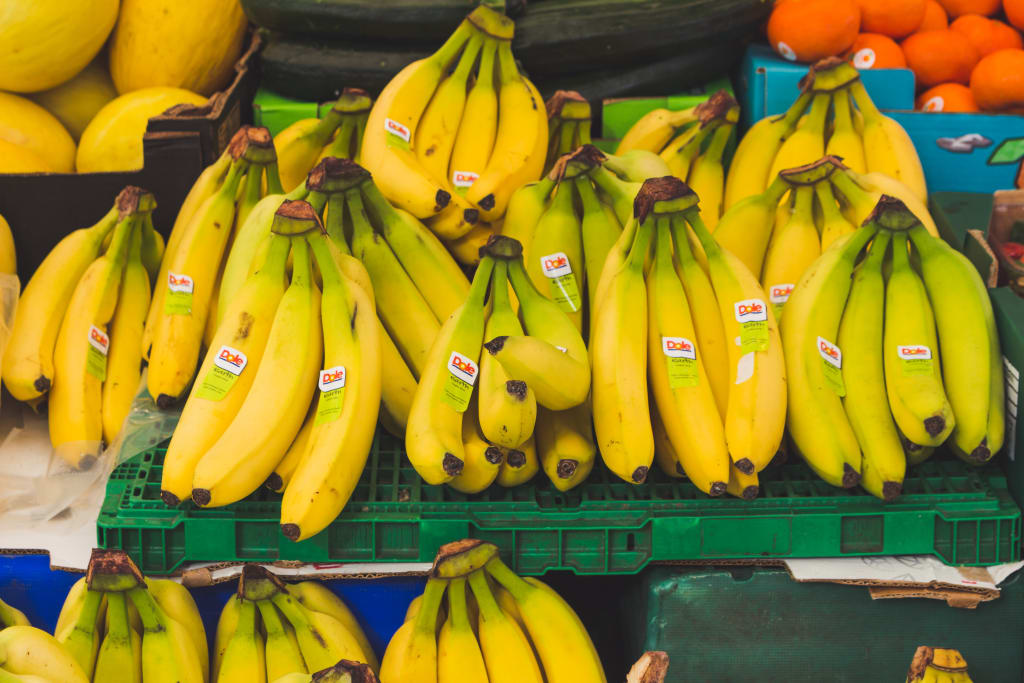
Yes, you read the title right. Bananas are facing extinction… again. In fact, a deadly plant-pandemic of Tropical Race 4 (TR4) threatens the existence of the world's most popular fruit. But, astoundingly enough, this isn’t the first time bananas have faced extinction.
But to better understand why modern bananas are going extinct, let's take a look at the history of the banana. Get ready for Banana History 101!
80 years ago, everyone ate better bananas. Literally.
If you’ve ever sucked on a banana-flavored candy, you’re tasting the artificial flavor based off of the modern banana's extinct cousin, the Gros Michel Banana.
Up until the 1950s, this softer, more aromatic, and apparently sweeter banana captured America's heart. The banana used in the first banana splits, star of Eddie Cantor’s smash-hit “Yes, We Have No Bananas,” the flavor profile for which all artificial banana flavor is based, and modeled in the famous (albeit racist) Chiquita Banana commercials. There was no doubt about it, people were in love with the Gros Michel.
What they didn’t know was the bloody and imperialist industry it took to export billions of bananas right into America’s kitchens and grocery stores.
The Rise of Banana Republics & The Bloody History of the World's First Bananas
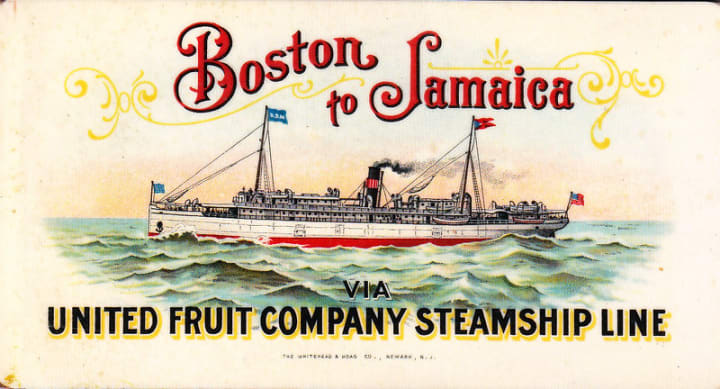
In order to meet the massive and growing demand for bananas, multiple U.S.-based companies consolidated and merged into a company known as the United Fruit Company (UFC). The United Fruit Company wielded enormous influence and they controlled enormous tracts of land in many countries in Central America. So much land that they began to build infrastructure to connect and expand their operations all across Central and South America. Paying the local workers who worked the plantations minimally (or not at all) and exploiting the local environment to make way for more banana plantations.
The UFC also began to build infrastructure for its business as favors to the government. In fact, one of the first modern mail systems in Central America was built by the UFC. Then the company got permission to assemble private militaries all in the name of protecting their business. Do you see where this is going?
The UFC was one of the richest corporate monopolies in the world at that time. The banana industry grew so big that it basically controlled the people, the crops, the economy, the infrastructure, and even government agencies. Soon many of these Central American countries, including Honduras, Guatemala, and Costa Rica, became so reliant on and dominated by, this industry, that these countries were no longer being run by the people or even the government.
That's right, entire countries were being run by U.S. banana companies. Anytime there was political dissent or opposition, the banana companies would simply marshal their personal armies and overthrow the resistant government. And later it was revealed that the U.S. CIA actually aided the UFC's military conquests as part of a covert anti-communism campaign. Or rather, they believed the propagandist pitch for assistance from the UFC's PR department.
Like many imperialistic legacies, this one resulted in the ravaged countries being economically and socially unstable today, as is seen in many Central American countries - all thanks to the banana.
The Fall of the Gros Michel
Only one thing could put an end to this horrifically managed industry and the world's beloved banana, a pandemic. Its victims? Bananas. Due to the mass commercialization of the Gros Michel, the disease was able to spread quickly. By the late 1960s, the Gros Michel was commercially wiped out. Here's how it went down:
In the 1950s, banana plantation owners were beginning to notice that their banana plantations were being ravaged by a mysterious disease. Scientists identified it as a strain of Panama Disease known as Tropical Race 1 (TR1).
Panama Disease is a soil-borne disease and it is extremely difficult to eliminate from the soil. As a result, the only effective way to eliminate the pestilence was to burn down the infected banana plantations and plant new crops that weren't affected by TR1. In desperation, the banana industry searched fruitlessly for an alternative banana that was resistant to TR1; no luck. It was only after a special banana was selectively bred in a horticultural house in England that the Cavendish was born.
Believe it, or not, there are actually thousands of different, unique types of bananas. From Blue Java to Red bananas, there are so many unique bananas with many different flavors, tastes, and texture profiles. However, most of these bananas are only grown in native environments and are usually destined for local markets.
How the Cavendish Conquered the World & Created a Recipe for Disaster
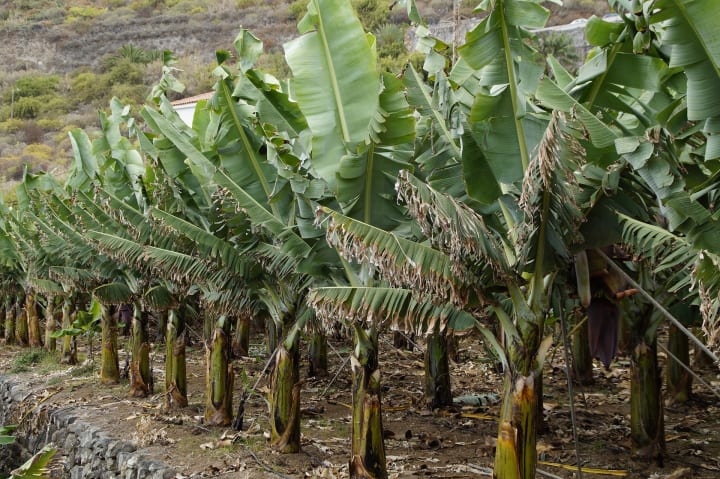
Today, the Cavendish accounts for 99% of all banana exports. It was chosen, not just because it was resistant to TR1, but because it could be handled relatively easily, and grown quickly. However, the Cavendish reproduces asexually, meaning each banana is an identical genetic copy of the mother plant. A lack of genetic diversity in the banana population can make it more susceptible to diseases. Farms that employ monocropping (the practice used to grow bananas on the same land every year), enjoy the financial benefits but deplete the soil. As a result, the soil is more susceptible to pests and diseases.
More than a decade ago, Dan Koeppel, author of Banana: The Fate of the Fruit That Changed the World, warned in an NPR interview that it was possible that Panama Disease would return and ravage the Cavendish industry. “[Every] single banana scientist I spoke to—and that was quite a few—says it’s not an ‘if,’ it’s a ‘when,’ and 10 to 30 years,” he said. “It only takes a single clump of contaminated dirt, literally, to get this thing rampaging across entire continents.
“It only takes a single clump of contaminated dirt, literally, to get this [disease] rampaging across entire continents.
And that's exactly what happened.
The Fight to Save the Cavendish
A new strain of Panama Disease called Tropical Race 4 (TR4) was first discovered in Taiwanese soil samples almost 30 years ago.
It was seen as relatively virulent but wasn’t given much attention until its geographical distribution exploded. By the time farmers in Malaysia, Indonesia, and the Philippines were burning entire banana plantations in a desperate attempt to contain the disease, TR4 had already made its way to the Middle East and North Africa. Then, in 2019, scientists confirmed the dreaded facts: the first outbreak of TR4 in South and Central America had been detected. This region is where most of the world's banana exports hail from, raising a global alarm about the potentially devastating impacts the outbreak could have on the industry. In just under a decade, TR4 has caused a multinational banana crisis that is causing the banana industry billions of dollars a year.
Perhaps a few 21st century solutions would suffice?
In fact, scientists have already genetically modified a TR4-resistant Cavendish. However, restrictions on imported GMOs in the E.U. and other countries prevented this banana from becoming mainstream.
There is even a greenhouse in the Netherlands that found a way to plant bananas without soil to prevent the spread of TR4. The bananas rest on factory-produced material that is TR4-free. The Honduras Foundation for Agricultural Research has spent over four years developing a TR4-resistant variety that can mimic the Cavendish as much as possible. A molecular biologist at the International Institute of Tropical Agriculture in Kenya is using gene-editing tools like CRISPR to suppress certain Cavendish genes that make them susceptible to TR4.
Regardless, the potential extinction of the Cavendish banana doesn't necessarily mean the disappearance of the banana as a species. Although, the spread of TR4 certainly could drive up retail prices of the fruit in the coming years and devastate millions of banana farmers whose livelihoods depend on the sale of their only crop. The industry will have to deal with the economic fallout from the disease and work to support the livelihoods that depend on the banana industry.
In the meantime, perhaps you should sit down and peel the world's most beloved fruit and savor the distinctive flavor of humanity's biggest horticultural project - ever.
Banana bread anyone?
This article was originally published under my Medium account and has been updated and re-written with relevant details.
About the Creator
A Failed Artist, A Disillusioned Poet, An Underpaid Game Show Host
I took my son and niece to Gori, a small town in Georgia where Joseph Stalin was born. They talked me into visiting the Stalin's Museum, the largest in the post-Soviet space. I had resisted going there because I just can't stand the monster and know enough about him, or so I thought.
By Lana V Lynx18 days ago in FYI


Comments
There are no comments for this story
Be the first to respond and start the conversation.