
10 Dangerous Ways North Koreans Escape the World’s Most Secretive Nation
From Frozen Rivers to the DMZ: The Harrowing Journeys Behind North Korean Defections in 2026

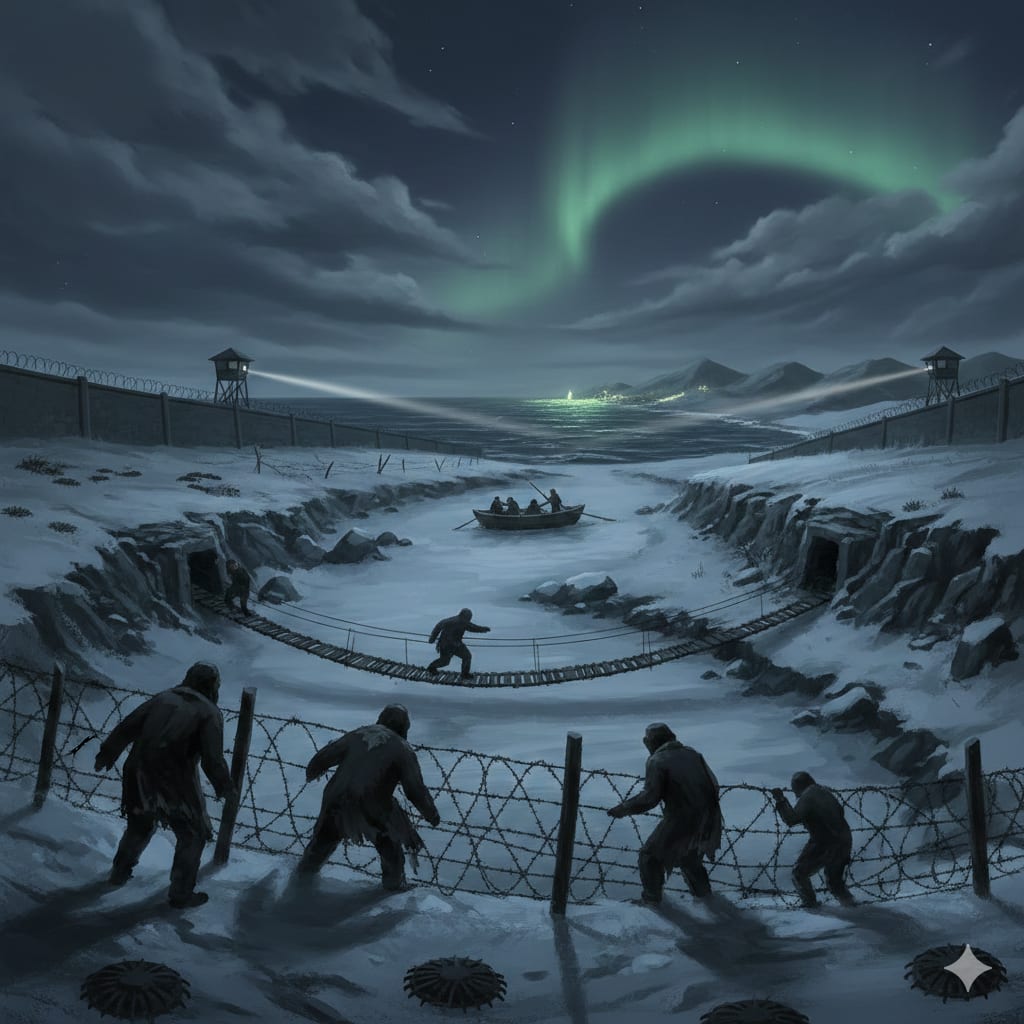
North Korea has long carried the reputation of being the world’s ultimate “hermit kingdom.” It’s a country sealed off by ideology, military force, and fear where borders are not just lines on a map, but life-or-death barriers.
Despite the risks, thousands of North Koreans have attempted to escape over the years. Some succeed. Many don’t. And almost all pay a heavy price.
Today, as North Korea continues to dominate global headlines with military threats and rising tensions, it’s worth remembering something deeply human behind the politics: there are ordinary people trying to survive and find freedom.
Here are 10 of the most dangerous and daring ways North Koreans have escaped and what makes each route so risky.
10. Crossing the Chinese Border
For many North Koreans, the northern border into China is considered the “easiest” escape route, though that word is relative.
Unlike the heavily militarized southern border, parts of the Tumen River (which separates North Korea from China) are less fortified. Some defectors cross when water levels drop in summer. Others attempt the journey in winter when the river freezes solid.
But getting into China is only step one.
China does not officially recognize North Koreans as refugees. If caught, they are often forcibly repatriated, meaning sent back to North Korea, where imprisonment, torture, or worse may await.
Many families rely on a system called “chain defection.” One member escapes first, finds a broker in China, and arranges for the rest of the family to follow. Others attempt to bribe border guards, a gamble that can cost them everything if it fails.
9. Escaping Through the Yellow Sea
The ocean may seem like freedom. But the Yellow Sea is brutally unforgiving.
Some defectors attempt to sail toward South Korea. The risk? North Korea’s navy has little hesitation in firing upon unauthorized vessels.
Others attempt the journey by swimming, a terrifying decision that exposes them to drowning, hypothermia, and exhaustion.
Even though South Korea lies geographically close, the distance between survival and tragedy can be just a few freezing waves.
8. The Laos-Burma-Thailand Route
Because China frequently sends defectors back, many North Koreans don’t stay there long.
Instead, they travel secretly through a dangerous underground route:
- From China
- Into Laos or Myanmar (Burma)
- Then onward to Thailand
Thailand has historically shown relative leniency. While defectors may be detained temporarily, they are generally not sent back to North Korea. From there, humanitarian groups often help arrange relocation to South Korea.
This route can take months and involves smugglers, brokers, jungle crossings, and enormous financial costs.
7. Help From Aid Organizations
Behind many successful escapes are humanitarian networks operating quietly across borders.
Groups like Liberty in North Korea (LiNK) and various Christian missionary organizations help defectors navigate safe houses, forged documents, and international relocation processes.
These organizations treat North Korean defections as one of the most urgent humanitarian crises of our time.
Without them, many escape stories would end very differently.
6. Crossing the Sea of Japan
Another maritime route leads toward Japan.
Defectors who manage to reach Japanese shores are generally not deported and are often allowed to continue on to South Korea.
However, this journey requires a boat, which increases visibility and the likelihood of being intercepted by North Korean naval patrols.
It’s a gamble across open water with no guarantees.
5. Defecting During International Sports Events
North Korea rarely allows citizens to travel abroad. But there is one exception: elite athletes.
Members of the North Korean Olympic team sometimes gain permission to travel internationally. Even then, they are heavily monitored by government escorts.
Still, some athletes have managed to slip away during international competitions, seeking asylum in democratic host countries.
However, escaping during events held in countries like China would offer little protection.
4. Foreign Labor Missions
North Korea sends thousands of workers abroad under state-controlled labor programs. These workers are stationed in countries like China, Russia, and even parts of Europe.
Conditions are often described as harsh and exploitative, with most wages reportedly sent back to the North Korean government.
But being outside the country offers opportunity.
Unlike athletes or diplomats, laborers may not always be under constant armed supervision. Some seize rare moments to disappear and request asylum.
3. The DMZ - The Most Dangerous Border on Earth
The Demilitarized Zone (DMZ) between North and South Korea is one of the most fortified borders in the world.
- 150 miles long
- Landmines
- Electric fences
- Armed guards on both sides
Crossing it is almost unimaginable.
Yet, some have tried - especially North Korean soldiers. If they survive the crossing, South Korea typically grants them asylum or citizenship.
But survival is never guaranteed.
2. Defection From the Diplomatic Corps
North Korea maintains embassies worldwide. Diplomats posted abroad live under scrutiny, but they are physically outside the country.
Over the years, several high-ranking diplomats have defected with their families, including cases in the United Kingdom and the United States.
These defections are rare but highly significant, often sending shockwaves through international politics.
1. Student Exchange Programs
Surprisingly, some North Korean students are allowed to study abroad.
While heavily vetted and monitored, these students occasionally choose not to return home.
But this decision comes at an unbearable cost.
In North Korea, the families of defectors can face collective punishment - imprisonment, labor camps, or worse. For many students, escaping means placing loved ones in grave danger.
It is perhaps the most heartbreaking trade-off of all: freedom at the expense of family.
Why So Many Risk Everything
With rising global tensions and renewed headlines surrounding North Korea in 2026, the political narrative often overshadows the human one.
Behind every missile test or international threat are millions of ordinary citizens - many of whom simply want safety, dignity, and opportunity.
Defection is never simple. It’s never safe. And it’s rarely without sacrifice.
But for those who attempt it, the alternative can feel even worse.
Final Thoughts
North Korea remains one of the most closed-off countries in the world. Yet even the strongest walls cannot completely contain the human desire for freedom.
Every successful escape carries a story of courage, fear, sacrifice, and hope.
And as long as conditions remain harsh, people will continue searching for a way out - no matter how dangerous the journey.
.
.
.
.
.
.
.
.
.
.
North Korean defectors, how North Koreans escape, North Korea escape routes, DMZ escape stories, North Korean refugees, Tumen River escape, North Korea humanitarian crisis, escaping North Korea 2026, Yellow Sea defection, North Korean student defection.
About the Creator
Areeba Umair
Writing stories that blend fiction and history, exploring the past with a touch of imagination.
Keep reading
More stories from Areeba Umair and writers in FYI and other communities.
The Creepiest Drawings Kids Have Ever Made (And Why They’re Seriously Unsettling)
We’ve all heard that kids say the creepiest things. They’ll casually mention a “friend” standing in the corner… when no one’s there. They’ll talk about memories that don’t belong to them. And sometimes, they’ll draw pictures that make you question everything.
By Areeba Umairabout 20 hours ago in FYI




Comments
There are no comments for this story
Be the first to respond and start the conversation.