
Your Smartphone: The Most Addictive Drug on Earth
It’s in your pocket, in your hand, controlling your every move.

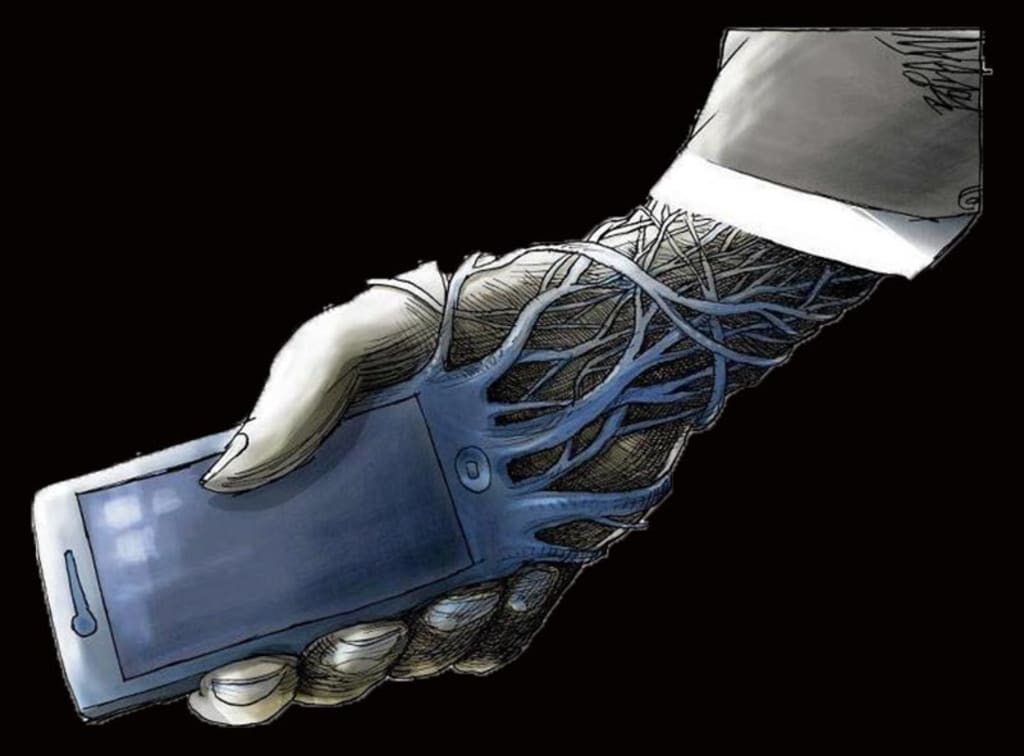
What if the most dangerous addiction of our time wasn’t a substance? What if it wasn’t cocaine, heroin, or meth—but something far more insidious? Something we carry with us every second of the day, something that rewires our brains without us even noticing?
Smartphones have become an extension of ourselves. We wake up to them, eat with them, work with them, and fall asleep next to them. They promise convenience, entertainment, and connection. But behind the glowing screen lies a silent epidemic—one more destructive than any drug ever known.
Studies show that excessive smartphone use changes our brains in ways eerily similar to hard drugs. Dopamine spikes, attention spans crumble, anxiety rises, and real-life relationships suffer. Unlike traditional drugs, which are illegal and stigmatized, smartphones are encouraged, celebrated, and even necessary for modern life. That’s what makes them even more dangerous.
So, what if the most powerful addiction of the 21st century wasn’t something you snorted, injected, or smoked—but something you simply scrolled?
The Digital Drug That Hijacks Your Brain
Drugs hook us by manipulating our brain chemistry. Smartphones do the exact same thing—only worse.
Every notification, like, and message triggers a hit of dopamine—the brain’s pleasure chemical. It’s the same rush a gambler feels when they win or a drug user experiences when they take a hit. But unlike cocaine or heroin, there’s no end to the high. Your phone is always there, always buzzing, always luring you back in.
Social media platforms and apps are designed with psychological traps to keep you hooked:
• Infinite scrolling – There’s no stopping point, no natural break. You’re trapped in an endless cycle of dopamine hits.
• Random rewards – Just like a slot machine, notifications are unpredictable. This uncertainty keeps your brain craving more, always checking, always hoping.
• FOMO (Fear of Missing Out) – You feel the need to constantly check your phone or risk missing something important. This anxiety fuels addiction.
Over time, this constant stimulation rewires your brain. Attention spans shorten, patience disappears, and real-life moments start feeling dull compared to the fast-paced digital world. Just like a drug addict needs a stronger dose, you need more screen time to feel satisfied. It’s a vicious cycle—one designed to keep you trapped.
Smartphones Destroy More Than Just Your Time
We assume that because we’re not injecting anything into our veins, smartphone addiction isn’t as bad as drug addiction. But what if it’s worse?
Consider this:
• Smartphones are rewiring our brains – MRI scans show that heavy smartphone users have reduced gray matter in areas linked to attention, memory, and impulse control—just like drug addicts.
• They destroy sleep – The blue light from screens suppresses melatonin, keeping us awake, disrupting deep sleep, and leading to long-term health issues.
• They increase depression and anxiety – Social media creates a toxic cycle of comparison, insecurity, and low self-esteem, leading to skyrocketing mental health issues.
• They ruin relationships – The more we stare at our screens, the less we engage with the real people around us. Couples fight. Families grow distant. Friendships fade.
Unlike drugs, smartphones don’t have physical withdrawal symptoms, but the psychological effects are just as devastating. Imagine a world where no one makes eye contact, where conversations are replaced with scrolling, where real life feels dull compared to the screen. That world is already here.
The Illusion of Control: Can You Stop?
Here’s the scariest part: Most of us don’t even realize we’re addicted.
If someone offered you a drug, you’d have a choice. You could say no. But smartphone addiction doesn’t feel like a choice—because it’s been engineered to be invisible.
Ask yourself:
• How often do you check your phone without thinking?
• How uncomfortable do you feel without it?
• How many times have you meant to check something quickly, only to lose 30 minutes scrolling?
If your phone disappeared for a week, would you feel relieved—or panicked?
Smartphone addiction isn’t just about losing time—it’s about losing control. And that’s what makes it more dangerous than any drug. Because when the addiction is invisible, it’s almost impossible to fight.
Can We Break Free?
The first step in breaking any addiction is recognizing it. But quitting smartphones isn’t as simple as quitting drugs—because our entire society is built around them. Work, communication, entertainment, even identity—it’s all tied to our screens.
So, what can we do?
• Set screen time limits – Use apps to track your usage. You’ll be shocked at how much time disappears.
• Create phone-free zones – No phones at meals, in the bedroom, or during conversations.
• Replace scrolling with real life – Read a book. Take a walk. Have a face-to-face conversation. Rewire your brain to crave real-world experiences again.
• Turn off notifications – The fewer distractions, the less temptation.
• Try a digital detox – Go without your phone for a full day. See how it feels. If it terrifies you, that’s a sign of how deep the addiction runs.
Smartphones are a powerful tool, but when they control us instead of the other way around, they become the most dangerous drug of all.
Are you ready to take back control? Or will you keep feeding the addiction, one scroll at a time?
About the Creator
Bubble Chill Media
Bubble Chill Media for all things digital, reading, board games, gaming, travel, art, and culture. Our articles share all our ideas, reflections, and creative experiences. Stay Chill in a connected world. We wish you all a good read.
Keep reading
More stories from Bubble Chill Media and writers in Futurism and other communities.
Digital Identity in France: Where Do We Really Stand?
Digital identity is no longer a distant or abstract idea. It is gradually becoming part of everyday life in France, driven by technological progress, European regulations, and a strong desire to simplify administrative interactions. Yet for many people, the concept remains unclear. This article explains the current state of digital identity in France through ten essential points, shedding light on its stakes, its promises, and its limits.
By Bubble Chill Media about a month ago in Futurism
About Binding Prometheus
I want to start actively advocating on behalf of my own work, and the most valuable part of my canon is, without a doubt, Binding Prometheus, the play I have been working on since 2019 and only finished in 2023 as part of my MA. The play itself is an amalgamation of a million different inspirations. On one end, it evokes the Ancient Greek myth-play, deriving its own title from the earliest extant work of Western drama we have, Aeschylus’s Prometheus Bound. On the other end, it borrows significantly from the sci-fi bulwarks from over the years, namely Mary Shelley’s Frankenstein and Karel Capek’s Rossum’s Universal Robots. The play could be an episode of Black Mirror, I fear. I don’t know. I’ve only ever seen one episode of Black Mirror.
By Steven Christopher McKnight17 days ago in Futurism
Coco Coir Market: Natural Fibers, Sustainable Agriculture & Growth Path
According to IMARC Group's latest research publication, The global coco coir market size was valued at USD 393.75 Million in 2024. Looking forward, IMARC Group estimates the market to reach USD 628.55 Million by 2033, exhibiting a CAGR of 5.07% from 2025-2033
By James Whitman4 days ago in Futurism



Comments (1)
"I know," she whispered back, her voice thick with emotion. "It’s like... with you, I’ve found a part of myself I didn’t even know was missing."