


We live in an age where machines can paint like Picasso, write like Shakespeare, and play chess better than any grandmaster alive. With Artificial Intelligence (AI) rapidly evolving, a natural question arises: Is your mind still superior, or has AI finally taken the throne?
The battle between the human brain and artificial intelligence isn’t just technological—it’s philosophical, emotional, and deeply human. Let’s dive into this fascinating face-off to see what sets us apart and where we might actually work best together.
The Power of the Human Mind
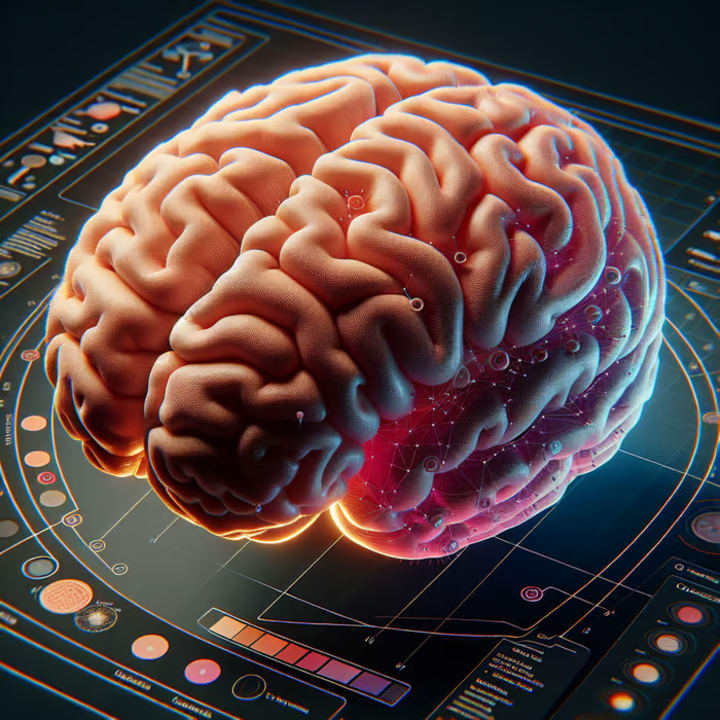
Your brain is the most complex structure in the known universe. With approximately 86 billion neurons and trillions of synaptic connections, it’s capable of imagination, empathy, intuition, and creativity—traits machines still struggle to replicate.
Here are a few areas where the human mind still rules supreme:
1. Emotions and Empathy
AI can mimic emotions, but it doesn't feel them. When you comfort a friend, appreciate a beautiful sunset, or fall in love, you're engaging in emotional intelligence—something uniquely human. AI lacks consciousness. It doesn’t understand joy, sadness, or love. It can analyze facial expressions and simulate caring responses, but there’s no real emotional experience behind those ones and zeroes.
2. Creativity
While AI can generate art, music, and even poetry, it does so based on existing patterns and data. It lacks true inspiration. Humans create from a place of inner experience, emotion, and spontaneity. A child’s doodle, a poet’s verses, or a chef’s new recipe—all reflect our ability to think beyond data.
3. Ethical and Moral Judgment
Humans weigh decisions not only by logic but by ethics, culture, and values. You might give up a seat for an elderly person or help a stranger without expecting anything in return. AI, without human input, can’t make such value-based judgments. It follows the rules we give it, but it doesn’t understand why those rules matter.
What AI Does Better
Despite the remarkable abilities of the human mind, AI has undeniable advantages in certain areas:
1. Speed and Accuracy
AI can process massive amounts of data in seconds. It can detect patterns in data that would take humans years to uncover. In medical fields, AI helps detect diseases early by scanning thousands of images with precision that rivals or surpasses human doctors.
2. No Fatigue
AI doesn’t sleep, eat, or need coffee breaks. It can work around the clock without losing efficiency. Whether it’s running customer service chatbots or monitoring complex systems like traffic networks, AI doesn’t tire.
3. Consistency
Humans make errors, especially when tired or distracted. AI follows algorithms strictly. In industries where precision matters—such as manufacturing or aviation—AI ensures consistency and quality that human hands sometimes fail to maintain.
The Great Difference: Consciousness
The biggest difference between your mind and AI is consciousness. You’re aware of yourself, your thoughts, your existence. AI is not. It doesn’t “know” it exists. It has no personal experiences, no subjective reality. You remember your first bicycle ride. You dream at night. You imagine futures. AI doesn’t.
This difference isn’t just biological—it’s existential. The human mind is not only an information processor but a feeling, perceiving, and aware entity. Until AI gains consciousness (if it ever does), it remains a powerful tool, not a rival.
AI Complements, Not Competes
The battle between human minds and AI doesn’t have to be a fight. In fact, the future belongs to those who can combine human intuition with artificial intelligence.
Doctors use AI to assist in diagnosing diseases faster, while their own human judgment ensures ethical and emotional support.
Writers use AI tools to brainstorm ideas or fix grammar, while still bringing their unique voice and storytelling to life.
Teachers use AI apps to customize learning, while offering emotional guidance and mentorship that only a human can give.
This combination creates a hybrid intelligence—where the strengths of both humans and machines are harnessed for greater outcomes.
The Dangers of Overdependence
However, over-relying on AI can be dangerous. If we stop thinking critically or creatively and just accept whatever AI provides, we risk becoming mentally passive. It’s crucial to stay alert and keep our minds active.
Just as calculators didn’t replace our need to learn math basics, AI shouldn’t replace our curiosity, imagination, or moral reasoning. Let AI do the boring work—data sorting, grammar fixing, number crunching—so we can focus on being more human.
So, Who Wins?
There’s no clear “winner” in the battle of Your Mind vs AI. Each has its domain.
Want creativity, empathy, ethical reasoning? Choose the human mind.
Need speed, pattern recognition, tireless effort? Let AI take the lead.
But the real magic happens when both collaborate. When a doctor pairs her deep empathy with AI’s fast diagnostics. When a writer merges emotional storytelling with AI-generated prompts. When students use AI to learn faster, not lazier.
Conclusion: Upgrade Your Mind
In this era, the smartest move isn’t to compete with AI but to upgrade yourself alongside it. Learn how it works. Use it wisely. Don’t fear AI—master it.
Remember: AI may mimic intelligence, but you possess consciousness, emotions, creativity, and values. That’s something no algorithm can replicate. So instead of asking, “Will AI replace me?” start asking, “How can I use AI to become even better?”
Because the real genius is not the machine. It’s the mind behind the machine.
About the Creator
MAROOF KHAN
Passionate vocalist captivating audiences with soulful melodies. I love crafting engaging stories as a writer, blending music and creativity. Connect for vocal inspiration!
Keep reading
More stories from MAROOF KHAN and writers in Futurism and other communities.
How AI Is Changing Mental Health Care
AI and the human brain – merging intelligence for mental health innovation In recent years, artificial intelligence (AI) has transformed nearly every industry—and mental health care is no exception. From AI-powered chatbots offering emotional support to sophisticated virtual therapists assisting clinicians in diagnosing and treating mental illnesses, the landscape of mental health care is being revolutionized. For those who suffer in silence, lack access to therapy, or face social stigmas, AI is opening new doors to support, understanding, and healing.
By MAROOF KHAN10 months ago in Futurism
Non-stick Coatings Market Overview: Production Trends, Raw Materials & Demand Forecast
According to IMARC Group's latest research publication, global non-stick coatings market size reached USD 2.17 Billion in 2024. Looking forward, IMARC Group expects the market to reach USD 3.19 Billion by 2033, exhibiting a growth rate (CAGR) of 4.4% during 2025-2033.
By sujeet. imarcgroup7 days ago in Futurism




Comments
There are no comments for this story
Be the first to respond and start the conversation.