
Winemaking AI
How AI is Revolutionizing Vineyard Management and Enhancing Your Wine Experience


Artificial intelligence is making waves in the wine industry, transforming vineyard management and elevating the quality of the wine you enjoy. From AI-backed autonomous tractors to precision irrigation systems, vineyards are leveraging technology to improve efficiency, sustainability, and decision-making. Here’s how AI is shaping the future of winemaking and enhancing your wine experience.
AI-Powered Autonomous Tractors: A New Era of Precision Farming
Vineyards are embracing AI-driven autonomous tractors to streamline operations. These high-tech machines can map vineyard rows, analyze soil health, and detect crop conditions with unparalleled accuracy. Farmers like Tom Gamble, a third-generation vintner, are early adopters of AI-powered tractors, using them to reduce fuel consumption, minimize pollution, and make better-informed decisions about their crops.
These tractors do not replace human labor but rather enhance productivity by allowing farmers to focus on strategic decision-making. AI ensures that tractors spray pesticides and fertilizers only where needed, reducing waste and environmental impact.
Smart Irrigation Systems: Optimizing Water Usage
Water conservation is crucial for sustainable vineyard management. AI-powered irrigation systems analyze soil moisture levels, vine health, and weather patterns to determine optimal watering schedules. Companies like Redwood Empire Vineyard Management are automating irrigation valves that detect leaks and shut off excessive water flow, preventing waste and improving water efficiency.
These systems learn and adapt over time, ensuring that vines receive the right amount of hydration while reducing costs and environmental footprint. This technology is particularly valuable in regions facing water scarcity, helping vineyards maintain high-quality grape production without overusing natural resources.
AI in Disease and Yield Prediction: Protecting Vineyards
One of the biggest threats to vineyards is disease outbreaks, which can destroy entire crops and require years of recovery. AI-powered platforms, such as Scout by UC Davis, process thousands of vineyard images in hours, detecting signs of disease before they spread. By identifying problem areas early, farmers can take immediate action to prevent widespread damage.
Additionally, AI assists in yield prediction by analyzing grape cluster growth as early as the flowering stage. This enables vintners to plan labor, resources, and production processes with greater accuracy, leading to more consistent wine quality and reduced production costs.
Enhancing Wine Branding and Customer Experience
Beyond the vineyard, AI is making an impact in wine marketing and branding. Generative AI is being used to design personalized wine labels, while AI-driven platforms like ChatGPT assist wineries in pricing strategies, market analysis, and customer engagement. These advancements allow wineries to create more compelling and customized wine experiences for consumers.
Challenges and the Future of AI in Winemaking
While AI offers significant benefits, its adoption presents challenges, especially for small wineries. High investment costs and the need for specialized training can be barriers to entry. However, as technology becomes more accessible, AI will likely become an industry standard, helping winemakers of all sizes optimize their processes.
The integration of AI in vineyards is not replacing traditional winemaking craftsmanship but rather enhancing it. By improving efficiency, sustainability, and precision, AI is ensuring that the wines of the future maintain their quality while being produced in a more environmentally responsible manner. As AI continues to evolve, the wine industry is poised for a high-tech transformation that will benefit both producers and consumers alike.
About the Creator
Horace Was
Essay Writer, Aviation and Technology Expert
Keep reading
More stories from Horace Was and writers in Futurism and other communities.
Aviation's Green Future
The aviation industry is at a critical juncture in its journey toward sustainability. As the global demand for air travel continues to rise, so does the urgent need for greener alternatives to traditional aviation fuels and infrastructure. Recognizing this, the International Civil Aviation Organization (ICAO) has launched a game-changing initiative—the ICAO Finvest Hub—to directly connect aviation sustainability projects with investors worldwide.
By Horace Wasabout a year ago in Futurism
Contract Catering Market: How AI Is Transforming Institutional Food Services
AI Overview of the Contract Catering Market Contract catering refers to outsourced food services provided under long-term agreements to institutions such as offices, hospitals, schools, airlines, and industrial sites. Unlike traditional restaurants, contract catering companies operate within client premises, offering tailored food solutions that align with organizational needs.
By James Smith6 days ago in Futurism
Vinyl Record Market Trends: Music Collectibles, Analog Revival & Forecast to 2034
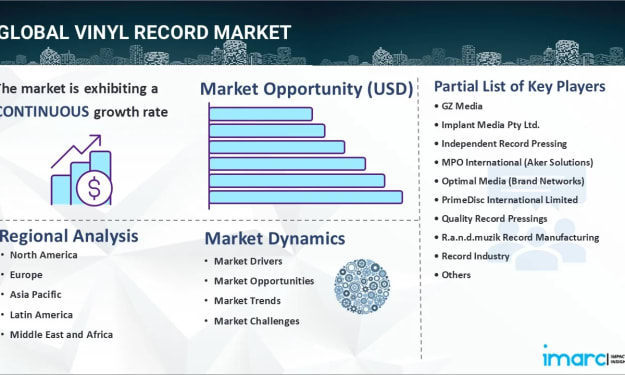
Vinyl is no longer a relic of the past — it's one of the most exciting growth stories in the global music industry. Fueled by nostalgia, the enduring appeal of analog sound, and a passionate collector community, the global vinyl record market is on a firm upward trajectory. According to IMARC Group's latest research, the global vinyl record market size reached USD 2.1 Billion in 2025. Looking ahead, IMARC Group expects the market to reach USD 3.6 Billion by 2034, exhibiting a CAGR of 6.50% during 2026-2034. Asia Pacific currently dominates the global market, driven by growing middle-class spending, flourishing indie music scenes, and strong collector culture across the region.
By Suhaira Yusuf4 days ago in Futurism
Guard Your Battery
Why are some people so attractive just by standing there? It’s not because they are "likable," but because they don’t need everyone to like them. I realized later that truly charismatic people allow themselves to be criticized, but they never criticize themselves. They never try to please the world; instead, the world stops to watch them.
By Emily Chan - Life and love sharing5 days ago in Poets



Comments
There are no comments for this story
Be the first to respond and start the conversation.