
Why war on terror are Failed
Unending Battles, Unmet Goals: The Global Fallout of a Misguided Mission

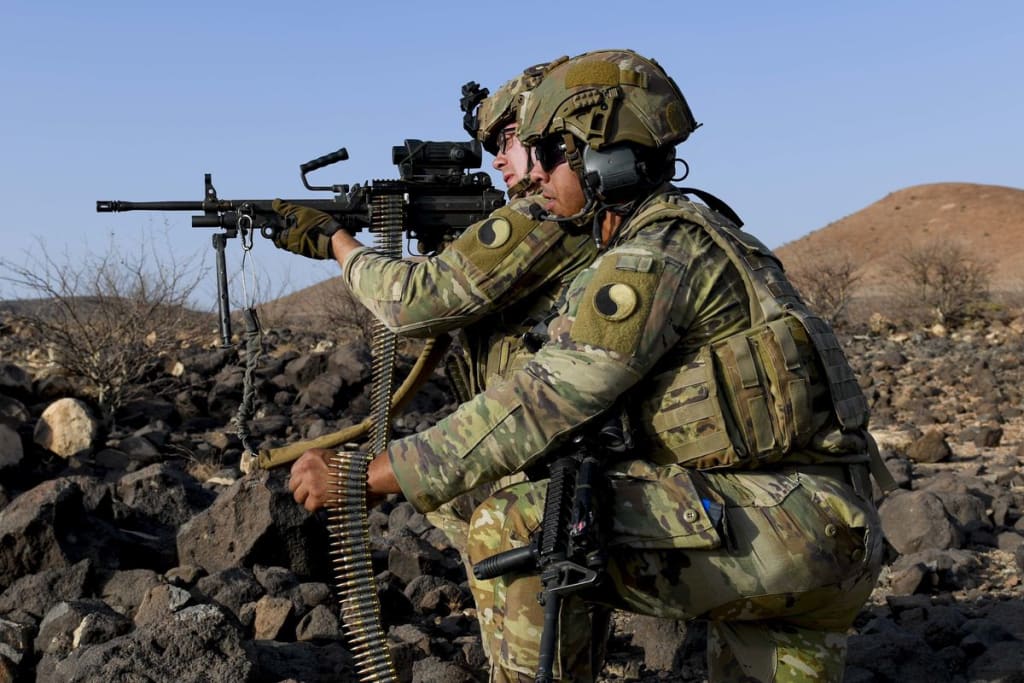
In the wake of the devastating 9/11 attacks, the United States declared a “War on Terror” — a bold and aggressive campaign to root out terrorism globally. The goal was simple in theory: eliminate terrorist threats, ensure national security, and build democratic societies in volatile regions. However, over two decades later, the results are far from the vision once promised. The War on Terror, despite trillions spent and countless lives lost, has failed to achieve its primary objectives. This failure is not just a military or strategic issue; it's a humanitarian, political, and ideological catastrophe that continues to reverberate around the world. --- 1. Unclear and Ever-Changing Objectives One of the most significant reasons the War on Terror failed is the lack of clearly defined and consistent goals. At the beginning, the objective was to dismantle al-Qaeda and capture or kill its leader, Osama bin Laden. However, the mission quickly evolved into broader nation-building efforts in Afghanistan and Iraq, regime change, and spreading democratic values through military force. These shifting priorities created confusion both within the U.S. government and among its allies. In Afghanistan, the war morphed from a counter-terrorism mission into a decades-long occupation aimed at reshaping the political landscape. In Iraq, the U.S. toppled Saddam Hussein under the pretext of eliminating weapons of mass destruction — weapons that never existed. These actions not only failed to end terrorism but often exacerbated instability. --- 2. Terrorism Didn’t End — It Evolved One of the most ironic outcomes of the War on Terror is that terrorism did not vanish; it transformed. While al-Qaeda suffered heavy losses, new, more brutal groups like ISIS emerged. The U.S. invasions and airstrikes destabilized entire regions, creating power vacuums that extremist groups rushed to fill. Terrorism became more decentralized, with cells and lone-wolf attackers spreading across the globe, from Europe to Southeast Asia. By failing to address the root causes of terrorism — such as poverty, political repression, foreign occupation, and ideological grievances — the war merely suppressed symptoms while allowing new threats to flourish. The spread of radical ideologies via the internet only further complicated counter-terrorism efforts. --- 3. Civilian Casualties and Human Rights Violations Civilian casualties became a grim hallmark of the War on Terror. In countries like Iraq, Afghanistan, Yemen, Pakistan, and Syria, thousands of innocent people died as a result of drone strikes, air raids, and ground invasions. These losses fueled deep resentment among local populations, turning many against Western powers and pushing some into the arms of extremist groups. Moreover, notorious incidents like the torture of detainees at Abu Ghraib, indefinite detention at Guantanamo Bay, and extraordinary renditions severely undermined the moral authority of the United States. These violations of human rights not only damaged America’s global reputation but also weakened the ideological justification for the war itself. --- 4. Enormous Financial Costs With Little Return The financial cost of the War on Terror is staggering. According to the Costs of War Project at Brown University, the U.S. has spent over $8 trillion on the post-9/11 wars, with much of that money going toward military contractors, equipment, and infrastructure in war zones. Yet, in return, the world remains plagued by ongoing conflicts, refugee crises, and terrorist threats. These massive expenditures diverted resources from domestic priorities like healthcare, education, and infrastructure. Future generations will bear the burden of debt for a war that, in the end, has yielded little in the way of lasting peace or security. --- 5. Destabilization of Entire Regions Rather than stabilizing the Middle East, the War on Terror led to widespread chaos. The U.S. invasion of Iraq dismantled a functioning (albeit authoritarian) government, leading to a violent insurgency and eventually the rise of ISIS. In Afghanistan, after 20 years of occupation, the Taliban returned to power just weeks after U.S. withdrawal — a symbolic and strategic defeat that underscores the futility of the mission. Countries like Libya, Syria, and Yemen descended into civil war, with regional powers and militant groups competing for control. Refugee crises, ethnic strife, and humanitarian disasters followed in the wake of military interventions that were never paired with sustainable political solutions. --- 6. Erosion of Civil Liberties at Home The War on Terror did not just impact foreign nations. It also changed life within the U.S. and other Western democracies. The Patriot Act, mass surveillance programs, racial profiling, and increased airport security were justified in the name of national defense. However, these measures often infringed on civil liberties and created a culture of fear and suspicion, especially toward Muslim communities. Instead of promoting freedom and democracy, these policies ironically led to the erosion of rights and freedoms in the very countries that claimed to uphold them. --- 7. Lessons Ignored, History Repeated The Vietnam War should have taught the U.S. about the dangers of prolonged military occupation without clear goals or local support. Unfortunately, those lessons were ignored. Just as in Vietnam, U.S. forces in Afghanistan and Iraq became entangled in local politics, tribal conflicts, and cultural complexities they didn’t fully understand. Every surge, withdrawal, and policy shift was met with renewed violence and resistance. Without a long-term vision, strategies relied on temporary gains and political optics, rather than sustainable outcomes. --- Conclusion The War on Terror, rather than eradicating terrorism, has left the world more fragmented, volatile, and unsafe. Its legacy is one of endless wars, disillusioned veterans, devastated countries, and failed promises. It exposed the limitations of military power in solving ideological and socio-political problems. True security cannot be bought with bombs or secured through invasions. It must be built through diplomacy, development, education, and mutual respect. The world must now pivot from a doctrine of endless war to one of peacebuilding, justice, and empathy. Only then can we begin to heal from the long and tragic shadow cast by the War on Terror.
About the Creator
Mati Henry
Storyteller. Dream weaver. Truth seeker. I write to explore worlds both real and imagined—capturing emotion, sparking thought, and inspiring change. Follow me for stories that stay with you long after the last word.
Keep reading
More stories from Mati Henry and writers in Futurism and other communities.
The King of comedy
In the smoky gray streets of late 19th-century London, where laughter was scarce and poverty was widespread, a boy named Charles Spencer Chaplin was born on April 16, 1889. The world was on the cusp of industrial and artistic revolutions, but for young Charlie, life began with hardship.
By Mati Henry 9 months ago in Futurism
Saudi Arabia Robotic Process Automation Industry: AI Integration, Workflow Efficiency & Enterprise Adoption
Rising digital transformation initiatives, increasing demand for efficient automated workflows across sectors, growing adoption in finance, healthcare, and retail, and Vision 2030's digitalization push are driving RPA demand, supported by cost reduction needs, operational productivity goals, and expanding technology infrastructure. According to IMARC Group's latest data, the Saudi Arabia robotic process automation (RPA) market size was valued at USD 0.03 Billion in 2024. Looking forward, IMARC Group estimates the market to reach USD 1.1 Billion by 2033, exhibiting a CAGR of 41.20% from 2025-2033.
By Kishan Kumar7 days ago in Futurism
The Infrastructure Layer Powering the Next Phase of Blockchain Growth
As the blockchain industry matures, attention is steadily shifting from speculative tokens to foundational infrastructure. While early crypto cycles focused heavily on digital currencies and decentralized finance, the current phase emphasizes scalability, interoperability, and developer accessibility. Behind every decentralized application (dApp), smart contract, and Web3 platform lies a robust infrastructure layer that keeps networks running efficiently.
By Muhammad Talha Ahmad5 days ago in Futurism




Comments
There are no comments for this story
Be the first to respond and start the conversation.