
Why This Billionaire Doesn’t Own a Single Stock or Bond
How Pat Neal Built a $1.2 Billion Fortune by Betting Solely on What He Knows Best—And Ignoring Wall Street

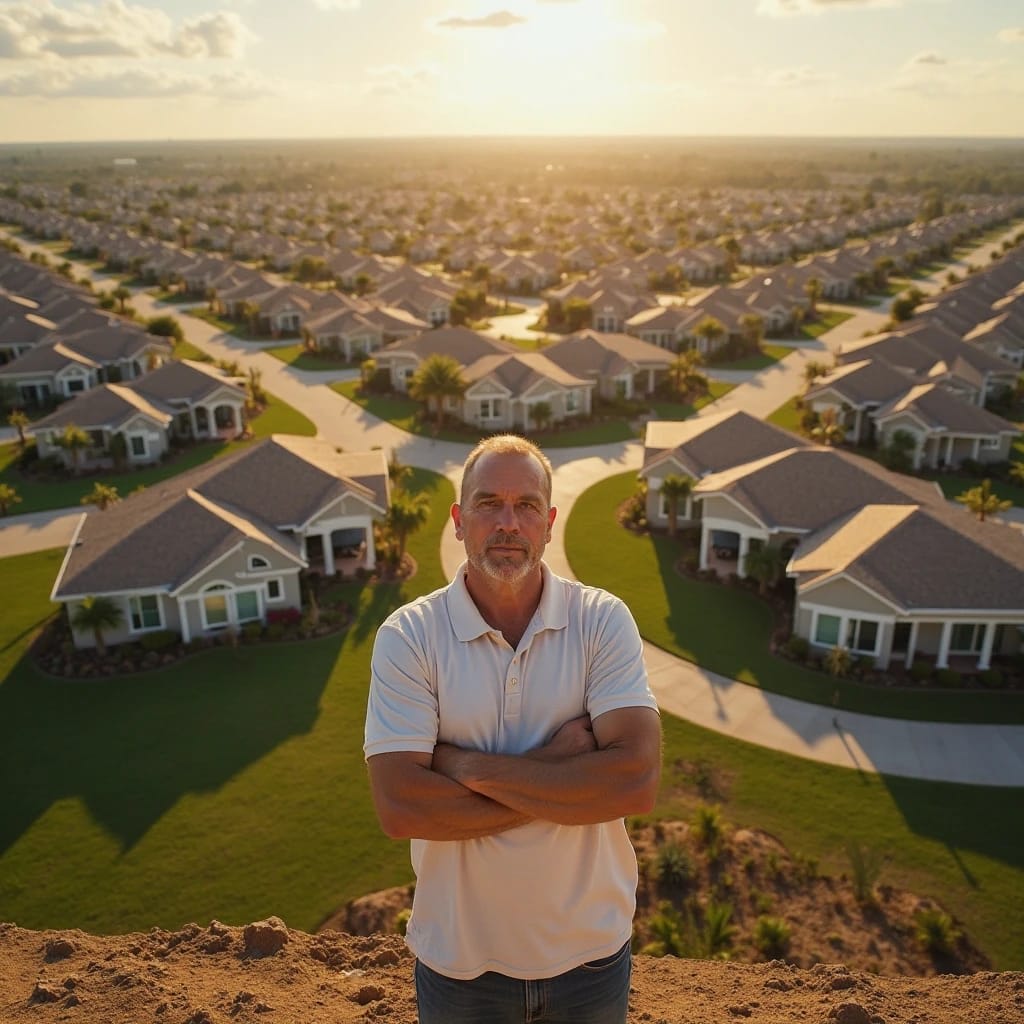
At 5 a.m. on an ordinary weekday morning, while most people are still in bed, homebuilding mogul Pat Neal is already deep in thought. As the warm water hits his shoulders in the shower, he's not thinking about yoga, breakfast, or even the weather—he’s thinking about the 10-Year Treasury Bill. Not because he invests in it, but because it tells him something about his real passion: housing.
Neal, now 76, isn’t your typical billionaire. He doesn’t own a single stock. Not one bond. No flashy ETF portfolios or retirement fund strategies. He doesn’t even touch Treasury bills, despite closely following them. And yet, his net worth stands at an estimated $1.2 billion.
So where is all his money?
Locked away in the one thing he knows better than anything else: land and homebuilding.
Pat Neal is the founder of Neal Communities, a Florida-based homebuilding company that has constructed more than 25,000 homes. Nearly every dollar of his vast wealth is tied up in the business he started in 1970—one he’s been pouring himself into ever since.
“I like controlling my own future,” Neal says. “I don’t live an expensive lifestyle. And my retirement is my business.”
In other words, he doesn’t need a stockbroker to tell him where to invest. His own land holdings do that for him. While he pays himself a modest $150,000 annual salary, he generates additional cash flow by selling home lots—of which he owns around 26,000, many through partnerships with his sons. Each lot is estimated to be worth anywhere from $50,000 to $150,000.
Neal didn’t always reject traditional investing. Growing up in Des Moines, Iowa, in the 1950s and ’60s, he was always hustling—mowing lawns, delivering papers, even selling detergent. By high school, he was earning more than his mother, a schoolteacher.
His first real investment came in his teenage years when he bought 100 shares of Iowa Beef Packers for around $1,500. By the time he reached college, he had doubled his money and sold for a profit.
But his early luck didn’t last. Encouraged by a stockbroker in the 1970s, he bought into Delta Corporation of America, a mobile home loan company based in Florida. After peaking briefly, the company posted a bad earnings report and tanked. Neal held on, trusting his broker’s advice to "buy the dip"—right until the stock went to zero.
“I rode it down to nothing,” he says. “That broker became a butcher.”
His second broker didn’t fare much better.
After a string of failed trades and more disillusionment, Neal made a bold decision—he was done with the stock market for good.
Real Wealth Is Built on What You Know
Instead of scattering his money across dozens of companies he barely understood, Neal went all-in on what he knew: homebuilding and real estate development.
His investment philosophy now revolves around one simple idea: “Buy land ahead of growth.”
Neal and his sons spend their days driving through neighborhoods, studying maps, reading obituaries, and talking to local contacts—all in search of the next great piece of land. Their competitive edge? They know the Florida housing market inside and out.
Betting on the Blind Spots
That hands-on knowledge has led to some extraordinary wins.
In the late 1980s, Neal bought 1,087 acres in Sarasota County’s LeBamby Hunting Preserve for just $0.10 per square foot. At the time, the area looked like nothing more than wilderness. But Neal had done his homework. He suspected an interstate expansion was coming, and when the surrounding infrastructure began to develop, he flipped some of that land for as much as $57 per square foot—a staggering return.
In another example, Neal and his son John acquired a foreclosure property from City National Bank of Florida in 2014 for just $6,000 an acre. After development, they were selling parcels of it last year for $250,000 an acre.
“The bank didn’t even know the value of the land they had,” Neal says with a knowing smile.
The Books That Shaped His Strategy
Though he avoids the markets, Neal is far from financially illiterate. He’s a voracious reader of investment philosophy and frequently quotes the likes of Peter Lynch and Seth Klarman—two legends who, like Neal, emphasize understanding your investments thoroughly.
“Investing is a knowledge business,” Neal says. “Unique knowledge should allow you to have better-than-average returns.”
Unlike market-timers or trend chasers, Neal believes in the power of expertise over diversification. And in his case, it’s paid off.
No Exit Strategy Needed
Despite being well past traditional retirement age, Neal has no plans to step away from his business.
“My retirement is my business,” he repeats.
He’s not looking for a golden parachute, nor is he trying to sell Neal Communities to a conglomerate. Instead, he’s gradually passing down leadership to his sons—men who’ve inherited both his work ethic and his understanding of land.
For him, the thrill isn’t in cashing out. It’s in watching an empty field turn into a thriving neighborhood. It’s about control, legacy, and passion—not volatility, diversification, or portfolio management.
Final Thoughts: In a World Obsessed With Stocks, One Man Did It Differently
Pat Neal’s story is more than just one man’s financial journey—it’s a case study in trust, discipline, and self-reliance. While most billionaires spread their wealth across markets and hedge their bets, Neal focused on what he knew and turned it into a fortune.
His approach isn’t for everyone. But in a world where investors often jump from one trend to the next, Neal’s commitment to simplicity and long-term thinking feels radical—and refreshing.
You don’t need to own stocks to be wealthy. Sometimes, all you need is land, vision, and the courage to bet on yourself.
About the Creator
Muhammad Sabeel
I write not for silence, but for the echo—where mystery lingers, hearts awaken, and every story dares to leave a mark
Keep reading
More stories from Muhammad Sabeel and writers in Futurism and other communities.
The One Platform That Brings Me the Most Vocal Traffic (It’s Not Twitter!)
I thought I knew where my audience was—until a forgotten app outperformed all the big names. If you had asked me last year which platform would send the most readers to my Vocal stories, I would've said Twitter. Or maybe Facebook. At a stretch, Medium.
By Muhammad Sabeel8 months ago in Futurism
Cell Dissociation Market Outlook: Advancements in Cell-Based Research and Growth Opportunities
According to IMARC Group's latest research publication, The global cell dissociation market size reached USD 404.8 Million in 2024. Looking forward, IMARC Group expects the market to reach USD 1,186.4 Million by 2033, exhibiting a growth rate (CAGR) of 12.06% during 2025-2033.
By James Whitmanabout 18 hours ago in Futurism
Plant-Based Food Market: How AI and Innovation Are Shaping the Future of Sustainable Nutrition
Introduction The global food industry is undergoing a significant transformation as consumers shift toward healthier and more sustainable dietary choices. One of the most prominent trends emerging from this shift is the growing popularity of plant-based foods. These products are derived entirely from plant sources such as soy, peas, almonds, oats, coconut, and other plant ingredients, offering alternatives to traditional animal-based products.
By James Smith2 days ago in Futurism



Comments
There are no comments for this story
Be the first to respond and start the conversation.