
Why Deepfakes Are Social Media’s Next Big Threat
Fake Faces, Real Consequences:

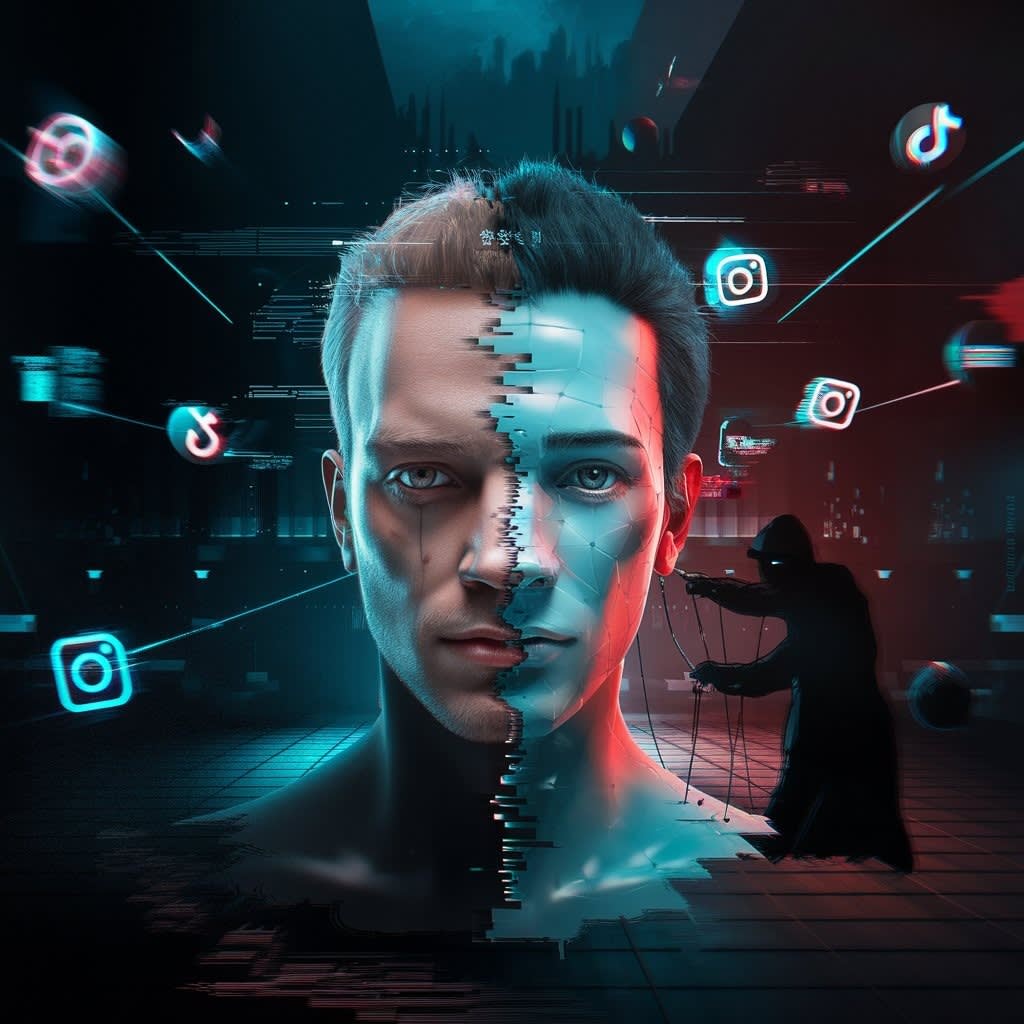
In the age of advanced artificial intelligence, deepfakes have emerged as a powerful yet dangerous technology capable of altering reality. What started as a novel AI-driven innovation has now become a tool for misinformation, privacy invasion, and online deception. Deepfake technology manipulates images, videos, and audio to create hyper-realistic but entirely fabricated content. As deepfakes become more convincing, they pose a significant threat to individuals, businesses, and even democracy itself.
In this article, we’ll explore the rise of fakes, their impact on social media, and what can be done to combat their misuse.
What Are Deepfakes?
Deepfakes use artificial intelligence and deep learning algorithms to manipulate or generate visual and audio content that appears real. The term "deepfake" comes from the combination of "deep learning" and "fake," emphasizing how AI-driven techniques are used to create hyper-realistic yet deceptive media.
How Deepfakes Work
Deepfake technology relies on neural networks, particularly generative adversarial networks (GANs), which pit two AI models against each other—one generating fake content and the other detecting it. Over time, this process refines the deepfake until it becomes indistinguishable from real media.
Some common deepfake techniques include:
Face-swapping: Replacing one person's face with another's in a video.
Lip-sync deepfakes: Altering video footage to make someone appear to say something they never said.
Voice deepfakes: Cloning a person's voice using AI, allowing for realistic yet entirely fake audio recordings.
Why Are Deepfakes a Major Threat to Social Media?
Social media platforms have become a breeding ground for deepfake content. Their rapid spread and viral nature make them a powerful tool for misinformation, cybercrime, and digital manipulation.
1. The Spread of Misinformation
Deepfakes are increasingly being used to spread false narratives, whether in politics, business, or celebrity scandals. A well-crafted deepfake video can quickly go viral, misleading millions before fact-checkers can intervene.
Example:
In recent years, deepfake videos of world leaders delivering fake speeches have surfaced, causing widespread confusion and political tension.
2. Privacy Invasion and Reputation Damage
Deepfakes can be weaponized for personal attacks, blackmail, or revenge. Unsuspecting individuals can find their faces superimposed onto inappropriate content, leading to irreversible damage to their reputations and emotional distress.
Example:
Celebrities and influencers have been frequent victims of deepfake pornography, where their likeness is used without consent in explicit content.
3. Cybersecurity Risks and Fraud
Cybercriminals are leveraging deepfakes to bypass security measures, impersonate executives, and conduct sophisticated scams. With AI-powered voice cloning, scammers can trick employees into transferring money or revealing sensitive company information.
Example:
A financial scam involving a deepfake voice led to a fraudulent wire transfer of over $35 million, highlighting the growing risks for businesses.
4. Erosion of Trust in Digital Content
As deepfakes become more advanced, people may start doubting all digital content, even legitimate news and media. This creates a phenomenon known as the "liar’s dividend," where genuine evidence can be dismissed as fake, further fueling distrust in journalism and truth.
Example:
A politician caught in a scandal could claim that incriminating footage is a fake, leading to confusion and public skepticism.
How to Spot a Deepfake
While deepfake technology is improving, there are still signs that can help you identify manipulated content:
Unnatural Blinking: AI-generated faces may blink unnaturally or too little.
Facial Distortions: Look for inconsistencies in skin texture, lighting, or facial symmetry.
Lip-Sync Issues: Audio and lip movement may not perfectly align.
Blurry or Distorted Edges: Hairlines, ears, and backgrounds may appear unnatural.
Odd Voice Cadence: Deepfake voices may lack natural intonations and emotional depth.
Fighting Back Against Deep Fake Threats
1. AI Detection Tools
Tech companies are developing AI-driven detection tools to identify deepfake content. Platforms like Facebook, Twitter, and TikTok are integrating deepfake detection measures to curb misinformation.
2. Digital Watermarking
Researchers are exploring digital watermarking techniques to authenticate videos and images, making it easier to verify real content.
3. Stricter Social Media Regulations
Governments and organizations are implementing stricter regulations on AI-generated content, requiring platforms to label fakes and hold creators accountable.
4. Public Awareness and Media Literacy
Educating users about deepfake technology and critical thinking is essential. The more people understand deepfakes, the less likely they are to fall for misinformation.
5. Strengthening Cybersecurity
Businesses should adopt multi-factor authentication, biometric security measures, and employee training to prevent deepfake-related fraud.
1. Can deepfakes be used for positive purposes?
Yes, deepfake technology is also used for entertainment, movie special effects, and restoring historical footage. However, the risks outweigh the benefits when misused.
2. Are there laws against deepfake misuse?
Many countries are introducing laws to criminalize malicious deepfake usage, especially in cases of fraud, defamation, and privacy violations.
3. How can I report a deep fake?
Most social media platforms have reporting features for suspicious content. If you suspect a deepfake, report it immediately and flag it for review.
4. Can deepfake technology be stopped?
While deepfake technology will continue to evolve, AI-powered detection tools and legal measures can help mitigate its harmful effects.
5. Who is most at risk from deepfake threats?
Public figures, politicians, influencers, and businesses are prime targets, but everyday users can also fall victim to deepfake scams and privacy violations.
6. What should I do if I become a victim of a deepfake attack?
If a deepfake harms your reputation or privacy, report it to social media platforms, consult legal authorities, and seek professional assistance to mitigate the damage.
Conclusion
Deepfakes are one of the most pressing digital threats of our time, reshaping how we consume information and interact online. As social media continues to be a battleground for misinformation, privacy breaches, and fraud, it is crucial to stay informed and take proactive steps to combat deepfake misuse. By leveraging AI detection tools, enhancing cybersecurity, and promoting media literacy, we can work towards a safer and more trustworthy digital future.
The rise of deepfake technology is inevitable, but with vigilance and innovation, we can mitigate its negative consequences before they spiral out of control.
About the Creator
Smm Experts
Your Social Media Marketing A-Team includes a Dedicated Account Manager, a Seasoned Social Media Buyer, a Creative Graphics Designer, and a Talented Content Writer, working harmoniously to propel your brand forward.
Keep reading
More stories from Smm Experts and writers in Futurism and other communities.
Goku: China's Open-Source Answer to Sora?
The AI text-to-video landscape is evolving rapidly, with new breakthroughs pushing the boundaries of what’s possible. OpenAI’s Sora recently stunned the world with its ability to generate hyper-realistic, high-quality videos from simple text prompts. But now, a new contender has entered the race—Goku, an open-source AI video generation model developed by ByteDance, the parent company of TikTok.
By Smm Experts 11 months ago in Futurism
About Binding Prometheus
I want to start actively advocating on behalf of my own work, and the most valuable part of my canon is, without a doubt, Binding Prometheus, the play I have been working on since 2019 and only finished in 2023 as part of my MA. The play itself is an amalgamation of a million different inspirations. On one end, it evokes the Ancient Greek myth-play, deriving its own title from the earliest extant work of Western drama we have, Aeschylus’s Prometheus Bound. On the other end, it borrows significantly from the sci-fi bulwarks from over the years, namely Mary Shelley’s Frankenstein and Karel Capek’s Rossum’s Universal Robots. The play could be an episode of Black Mirror, I fear. I don’t know. I’ve only ever seen one episode of Black Mirror.
By Steven Christopher McKnight22 days ago in Futurism
Egypt Handicrafts Market Analysis: Key Players and Market Forecast
According to IMARC Group's latest research publication, the Egypt handicrafts market size reached USD 2.72 Billion in 2024. The market is projected to reach USD 6.39 Billion by 2033, exhibiting a growth rate of 8.91% during 2025-2033.
By Abhay Rajputa day ago in Futurism
Rachel Reviews: The Spiral Archive by Pieter Hendrik
It's difficult for me to know where to start with a review of this book as it was, for me, an entirely unique experience and one that I'll probably never have again. I don't want that to be interpreted as unenjoyable but it has left me scratching my head a little and ruminating on its content, its themes and its characters.
By Rachel Deeming5 days ago in BookClub


Comments
There are no comments for this story
Be the first to respond and start the conversation.