

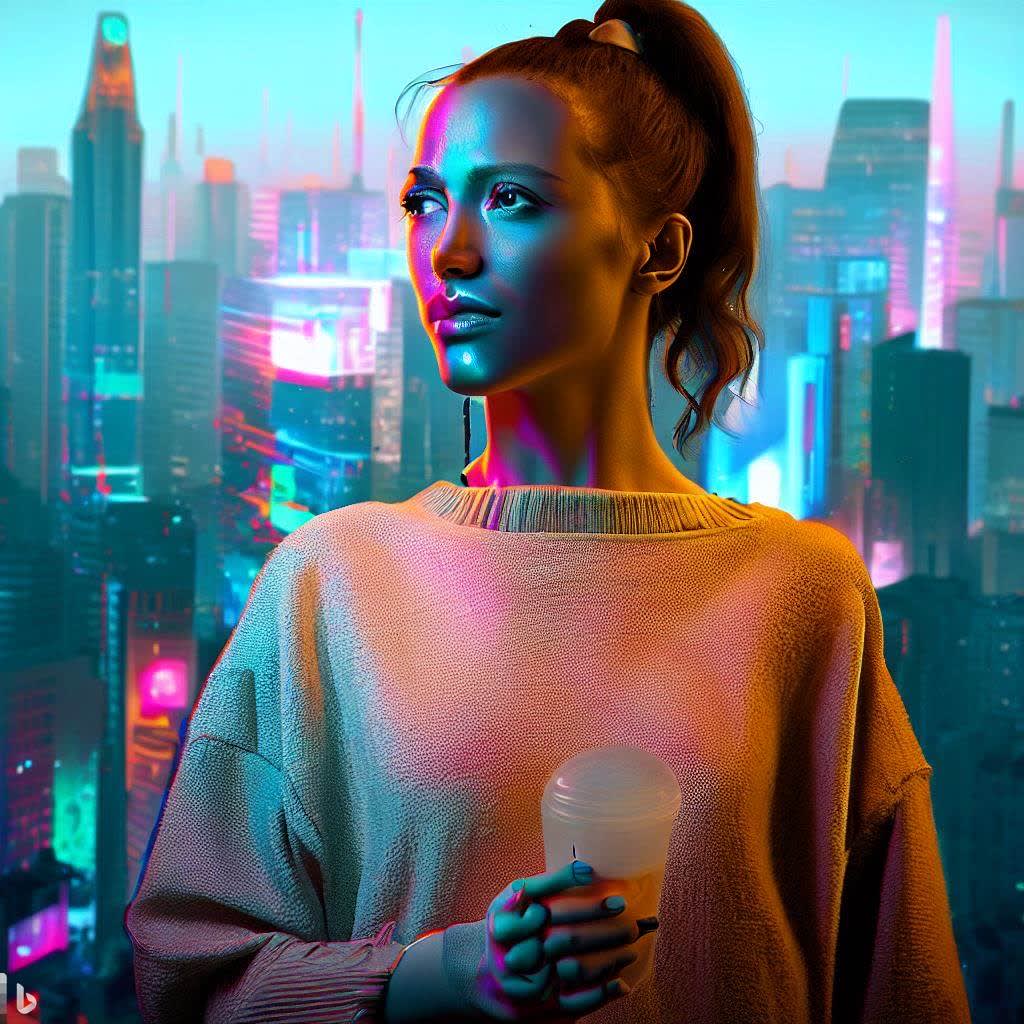
Life in 2050: A Glimpse at the Future
The year 2050 may seem far away, but it is only three decades from now. What will life be like then? How will the world look like in terms of population, climate, technology, economy and society? While no one can predict the future with certainty, some experts have made projections based on current trends and scenarios. Here are some of the possible aspects of life in 2050:
Population: According to the United Nations, the world population is expected to reach 9.7 billion by 2050, up from 7.8 billion today. Most of this growth will occur in developing regions, especially Africa and Asia, while Europe and North America will see a decline or stagnation in their populations. This will pose challenges and opportunities for food security, health care, education, urbanization and migration.
Climate: The Intergovernmental Panel on Climate Change (IPCC) warns that if greenhouse gas emissions continue to rise at the current rate, the global average temperature could increase by 1.5°C above pre-industrial levels by 2030 and by 4°C by 2100. This would have devastating consequences for ecosystems, biodiversity, human health and well-being, as well as social and economic stability. To avoid this scenario, the IPCC urges countries to take urgent and ambitious actions to reduce emissions and adapt to the impacts of climate change. Some of these actions include shifting to renewable energy sources, improving energy efficiency, promoting low-carbon transportation and agriculture, enhancing natural carbon sinks and implementing carbon pricing.
Technology: The pace of technological innovation is likely to accelerate in the coming decades, bringing new possibilities and challenges for humanity. Some of the emerging technologies that could transform various aspects of life in 2050 include artificial intelligence (AI), biotechnology, nanotechnology, robotics, quantum computing, blockchain and virtual reality. These technologies could enable breakthroughs in fields such as health care, education, communication, entertainment, security and governance. However, they could also pose ethical, social and environmental risks that need to be addressed.
Economy: The global economy is projected to grow by more than threefold by 2050, reaching $127 trillion in gross domestic product (GDP), according to a report by PricewaterhouseCoopers (PwC). The report also predicts that China will overtake the United States as the largest economy by 2030, followed by India, Indonesia and Brazil. The emerging markets will account for more than half of the global GDP by 2050, while the advanced economies will see their share decline. The report also suggests that the world will face several challenges to sustain this growth, such as inequality, resource scarcity, environmental degradation and geopolitical tensions.
Society: The world in 2050 will be more diverse, connected and urbanized than ever before. According to the World Health Organization (WHO), life expectancy at birth will increase from 72 years today to 77 years by 2050, with significant variations across regions and countries. The aging population will pose opportunities and challenges for health care systems, social security schemes and intergenerational relations. The world will also see more migration flows due to factors such as climate change, conflict, poverty and opportunity. According to the International Organization for Migration (IOM), there were 272 million international migrants in 2019, representing 3.5% of the global population. This number could rise to over 400 million by 2050. The world will also become more urbanized, with 68% of the population living in cities by 2050, up from 55% today. This will require more investment in infrastructure, services and governance to ensure livable and sustainable urban environments.
Life in 2050 will be shaped by many factors that are beyond our control but also by many choices that we make today. The future is not predetermined but rather a result of our actions and interactions. Therefore, we have a responsibility and an opportunity to shape it for ourselves and for future generations.
```
Source: Conversation with Bing, 05/04/2023(1) What will the world look like in 2050? - The Nature Conservancy. https://www.nature.org/en-us/magazine/magazine-articles/sustainable-future-2050/ Accessed 05/04/2023.
(2) What Will Our World Look Like in 2050? • Trojan Family Magazine. https://news.usc.edu/trojan-family/climate-change-2050-usc-experts-predictions/ Accessed 05/04/2023.
(3) Life in 2050: A Look at the Homes of the Future | IE. https://interestingengineering.com/innovation/life-in-2050-a-glimpse-at-the-homes-in-the-future Accessed 05/04/2023.
About the Creator
Hannah
Hi I’m Hannah and I’m sure you enjoy this Article
Thanks for your support ❤️
About Binding Prometheus
I want to start actively advocating on behalf of my own work, and the most valuable part of my canon is, without a doubt, Binding Prometheus, the play I have been working on since 2019 and only finished in 2023 as part of my MA. The play itself is an amalgamation of a million different inspirations. On one end, it evokes the Ancient Greek myth-play, deriving its own title from the earliest extant work of Western drama we have, Aeschylus’s Prometheus Bound. On the other end, it borrows significantly from the sci-fi bulwarks from over the years, namely Mary Shelley’s Frankenstein and Karel Capek’s Rossum’s Universal Robots. The play could be an episode of Black Mirror, I fear. I don’t know. I’ve only ever seen one episode of Black Mirror.
By Steven Christopher McKnight25 days ago in Futurism
Saudi Arabia Eyewear Market: Premiumization Trends, Digital Retail & Consumer Lifestyle Shifts
Saudi Arabia's eyewear market grows with rising fashion consciousness and premium brands, fueled by Vision 2030 tourism and e-commerce, as opticians expand luxury and blue-light glasses for young consumers. According to IMARC Group's latest research publication, Saudi Arabia eyewear market size reached USD 1.38 Billion in 2025. The market is projected to reach USD 2.29 Billion by 2034, exhibiting a growth rate of 5.80% during 2026-2034.
By Jeffrey Wilson7 days ago in Futurism


Comments
There are no comments for this story
Be the first to respond and start the conversation.