
What is IoT Payment? Its benefits and applications
The Role of IoT in Payments
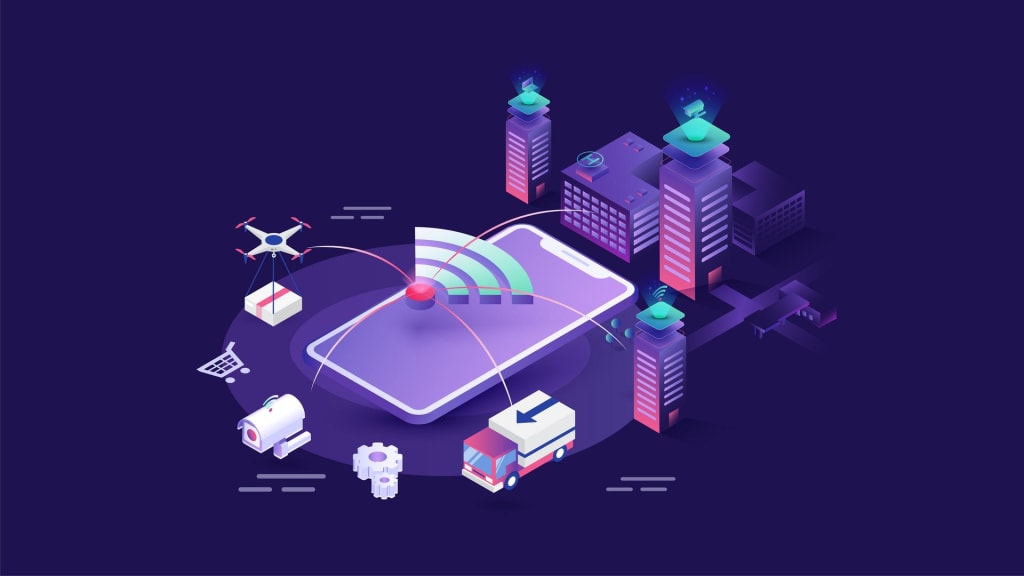
IoT Payment is a way to pay for goods and services using the Internet of Things (IoT). It is a new, revolutionary way to pay for your purchases. In this article, we will discuss its benefits and applications.
What is IoT Payment?
IoT Payment is a new way of conducting electronic payments that use Internet-connected devices such as phones and tablets. The term means “Internet of Things,” but it can also include payments made through an ATM or other non-mobile machines.
IoT payment systems are built on top of the existing infrastructure for mobile payments, but they offer some unique features that make them appealing to users and merchants alike:
They are often free. Many banks are offering free or low-cost services for their customers. This is because they want to attract more customers into their ecosystem and increase their overall revenue from those customers.
They are faster than traditional payment methods. With IoT payments, you don’t need to enter card numbers or passwords when you make a transaction—you just scan a QR code with your phone!
Benefits of IoT Payments
IoT payment is a new concept developed over the past few years. The main goal of this technology is to make transactions more accessible and secure. Let’s take a look at five benefits of IoT payments:
1. Improved Security
With the Internet of Things (IoT), your money is safer than ever. The IoT is a network of physical devices, vehicles, buildings, and other items embedded with sensors, software, and connectivity.
When you use IoT payments at a restaurant or store, for example, you can track the location of your purchase in real-time. If someone tries to steal it from you, you'll know immediately — and you can take action to stop them. And if someone steals your wallet or purse with cash inside, that cash will be just as hard to trace as it is now.
2. Reduced Costs
Payments made using IoT technologies often incur lower costs than traditional methods, and this is mainly because transactions are conducted using electronic devices that don’t require expensive hardware or infrastructure.
In addition, some IoT-based payment solutions are also cheaper than traditional e-commerce platforms because they do not require third-party intermediaries like banks or other financial institutions.
3. Better Customer Experience
IoT payments provide a much better customer experience than cash or credit cards can offer. Suppose you're using an IoT payment system at a restaurant or store.
In that case, your order will be almost instantly when it's ready — no more waiting while they process your payment manually. That means fewer people waiting in line behind you and more time spent enjoying your meal or shopping experience.
Many IoT systems have built-in loyalty programs that give customers rewards points every time they purchase with their device or app.
4. Lower Fraud Risk
One of the most common benefits of IoT payments is lower fraud risk. Using biometric authentication, such as the face or fingerprint scanners, instead of passwords or PINs, you can ensure that only authorized users get access to your account.
In addition, by using biometric authentication, you don't have to worry about forgetting your password or PIN because it's linked to your identity rather than something static like a password or PIN.
5. Faster Transactions
The IoT allows for faster transactions and less waiting time. Using mobile wallets and contactless payments means you can make purchases quickly and easily. The technology also makes it possible to track inventory levels, which helps businesses cut down on fraud and errors.
Applications of IoT Payments
IoT payments are a hot topic for many financial institutions and payment providers, but only some have been able to capitalize on them. The challenge lies in creating products and services that enable consumers to use IoT devices in their daily lives and provide them with benefits from their financial institution or payment provider.
Here are five applications for IoT payments:
1. Self-checkout kiosks
As IoT is used in the real world, this is one of the most popular ways retailers use IoT technology in their stores today. Self-checkout kiosks allow customers to scan items as they shop and pay at their convenience.
These kiosks can also be used for returns and exchanges, which reduces wait times and improves customer satisfaction. This has helped retailers such as Walmart, Tesco, Home Depot, and Lowe's save money by reducing labor costs while improving customer experience.
2. Smart parking meters
Smart parking meters can help cities save money, reduce traffic congestion and make parking easier for drivers. Innovative parking meter applications include:
They are paying for parking with a mobile phone. Drivers can pay for their time at a meter using their cell phones. This is convenient for drivers and cities, saving time and reducing the number of people who forget to feed the meter. The town also benefits because it can collect more revenue from paid parking spaces.
3. In-car payments
In-car payments are an excellent example of how IoT payments are being used novelty. The technology allows drivers to pay for goods and services using their cars' infotainment systems. This will enable drivers to remain focused on the road and avoid having to fumble for their wallets or smartphones.
The most significant benefit of this payment type is convenience, which is particularly useful for people who have trouble getting around or have disabilities. It also eliminates the need to carry cash or credit cards. In addition, it can help businesses save money by reducing the number of employees needed at drive-thru windows and gas pumps.
4. Digital wallets
Digital wallets are an essential part of the IoT payments ecosystem because they provide a convenient way for consumers to pay for goods and services in stores or online with their mobile devices. Many different types of digital wallets are available on the market today, including Apple Pay, Android Pay, and Samsung Pay.
5. Supply chain management
Supply chain management is one of the most critical applications for IoT payments. When it comes to supply chain management, you're looking at various types of businesses.
For example, you can use IoT payments if you have a warehouse and want to ensure that your inventory levels are continually optimized. You can also use them to monitor the health of your employees so that you know when they're getting too stressed or not exercising enough or when they're not taking their breaks properly.
Wrapping Up
The IoT has the potential to reshape every aspect of our lives, from how we shop to how we learn and interact with others. Currently e-scooter apps are also using IoT technology.
It will allow us to monitor our health and surroundings in previously impossible ways while also helping us save money on our energy bills and water usage.
IoT payments are one area where people already see huge benefits. The ability to use your smartphone or smartwatch as a payment device means you no longer need to carry cash or credit cards with you when out shopping or traveling abroad.
It also offers greater security than traditional payment methods — as long as you have your mobile phone with you, there's no need for anyone else to know your PIN or bank account details.
About the Creator
Keep reading
More stories from writers in Futurism and other communities.
About Binding Prometheus
I want to start actively advocating on behalf of my own work, and the most valuable part of my canon is, without a doubt, Binding Prometheus, the play I have been working on since 2019 and only finished in 2023 as part of my MA. The play itself is an amalgamation of a million different inspirations. On one end, it evokes the Ancient Greek myth-play, deriving its own title from the earliest extant work of Western drama we have, Aeschylus’s Prometheus Bound. On the other end, it borrows significantly from the sci-fi bulwarks from over the years, namely Mary Shelley’s Frankenstein and Karel Capek’s Rossum’s Universal Robots. The play could be an episode of Black Mirror, I fear. I don’t know. I’ve only ever seen one episode of Black Mirror.
By Steven Christopher McKnight20 days ago in Futurism
Saudi Arabia Home Healthcare Market: Aging Population, Chronic Diseases & Market Growth
According to IMARC Group's latest research publication, Saudi Arabia home healthcare market size reached USD 4,214.4 Million in 2025. The market is projected to reach USD 7,583.4 Million by 2034, exhibiting a growth rate of 6.75% during 2026-2034.
By Faisal Al-Harbiabout 2 hours ago in Futurism
My New Book is Finally Here
My poetry collection Beautiful and Brutal Things is done. It's actually done and finally published over 270 pages. Over a year of my life went into this book. More than a year, really. Long days at my computer, sometimes seven days a week because I couldn't stop even when I probably should have. Then two months of editing that felt harder than the writing itself. But it's finished, and I'm still standing, and the book is real.
By Tim Carmichael4 days ago in BookClub




Comments
There are no comments for this story
Be the first to respond and start the conversation.