
What Hip-Hop Tours and Heavy-Machinery Crates Share in Packaging Strategy
Packaging
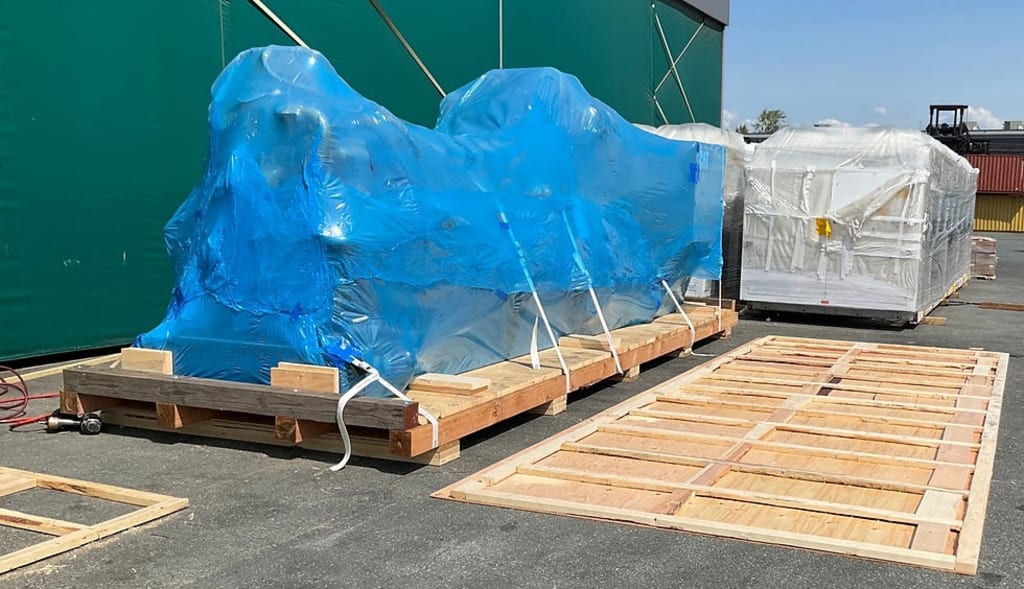
Fans feel the adrenaline long before the first hi-hat drops. They notice spotless trusses, cables clipped with military neatness, flight cases racked like Tetris blocks. That crisp visual rhythm tells the crowd they bought a ticket to a flawless night. The same instant recognition happens on a loading dock thousands of miles away when an engineer cracks open a wood crate the size of a studio apartment and sees zero damage, no loose hardware, and brightly stamped compliance marks.
Confidence—or suspicion—forms in seconds. Presentation sets the tone whether you are about to blast “Summertime” for 20,000 nostalgic listeners or start-up a freshly shipped 15-ton press roller on a factory floor. Beneath the surface, both worlds rely on identical principles: meticulous planning, custom-built hardware, airtight timing, and people who sweat the details in shadows. Pull back the curtain and you will find that hip-hop stagecraft and industrial logistics share the same playbook for unforgettable—or unbreakable—deliveries.
Setting the Stage: Why Presentation Matters
A tour venue is a cathedral of first impressions. Before a single lyric spills from the monitors, the crowd reads the room: perfectly aligned LED walls, subs tucked under the apron, drum risers gleaming like chrome. Those early cues whisper, “Relax—we’ve got you.” Shipping supervisors do the same reading when a 12-crate shipment arrives after three weeks at sea. They scan for clean edges, unbroken tilt indicators, moisture sensors still white, labels intact. One split corner and trust evaporates faster than CO₂ from a fog machine.
Think of the legendary DJ Jazzy Jeff, famous not only for scratches but for stage precision. His tech team rehearses console placement to the inch, rehearses cable drops so dancers never trip. Packaging engineers pursue the same choreography with layered foams, vapor barriers, and edge blocks that deaden shock waves. Recent material-science research shows a 35 percent reduction in peak G-forces for payloads above 3,000 pounds when multi-density foam and honeycomb panels are combined in a single cradle (Amcon Foam, 2025). That translates directly to profit: a 2024 study of 440 shippers reported that one in ten industrial shipments still arrive with visible damage (EP Logistics, 2024). Each unbroken arrival becomes a brand-building “whoa” moment equal to a pyrotechnic cue hitting perfectly on beat.
Protective shipping packaging acts as the unseen lighting designer. Layered compression zones, shock indicators that flip color at 35 G, moisture scavengers hidden under dunnage—it all works so the recipient enjoys the same sense of safety a concertgoer feels when subs rumble without rattles.
Yet presentation is more than aesthetics; it is reputation cast in plywood and polypropylene. Quincy Jones famously told a nervous young Will Smith, “Right now, everybody who needs to say yes is sitting out there” (Smith, Will, 2021). Every crate opening carries that same high-stakes audition; one fractured seal and the audience starts looking for refunds.
The Crew Behind the Scenes: Logistics & Load-In
Ask any FOH engineer and they will tell you the most thrilling part of show day is not the show itself; it is the hour when semis roll up and a ballet of forklifts, dollies, and chain motors transforms an empty shell into a living sound machine. Each department drops gear at precise marks so cables stretch without slack and sightlines stay clean. Miss a cue and the delay ripples through the entire production.
Export logistics mirrors that ballet. Pallet jacks give way to gantry cranes; set lists become packing lists. But the principle is identical: synchronized execution. A recent Supply Chain Quarterly survey found 82 percent of Fortune 500 companies rely on third-party experts to orchestrate these moving parts, citing speed and error reduction as top benefits (SCQ, 2025). Integrated Kitting and assembly solutions function like a preset on a setlist: gaskets, bolts, documentation, and consumables arrive in one SKU so installers can unbox and go, losing zero time hunting parts.
Synchronized Execution in Practice
Touring example: At 9 a.m. load-in, lighting truss must be in the air by noon so soundcheck can start at 2.
Shipping example: A three-crate gearbox must clear customs, reach the plant dock, and enter position before riggers arrive at dawn. Delay customs and the entire maintenance window collapses.
Tools of the Trade
Stage riggers trust 1-ton chain hoists rated 5:1 over load.
Crate builders oversize corner cleats, bolt lugs through four inches of douglas-fir, and install floor blocking so shafts never slide.
Techs run time-coded cues: logistics teams run RFID scans tied to live dashboards.
Both crews share an unwritten oath: if the audience notices you, something went wrong.
Custom Solutions for Unique Challenges
Every arena is a snowflake—ceiling height, dock angle, rigging grid, power service. A tour adapts daily, swapping pod trusses for vertical sticks when the grid is too shallow, or flipping the stage to camera left because a hockey dasher can’t move. In crating, every payload demands this same inventiveness.
Touring with Special Equipment
During a 2017 backstage interview, DJ Jazzy Jeff chuckled about losing every song file “five minutes before a gig” and rebuilding the set list on the fly. His gear team packs redundant SSDs in shock-mounted slots, UPS units in foam-lined drawers, and a backup mixer in a stealth compartment. Industrial packagers match that agility when they craft floating saddles for turbine rotors or temperature-stabilized enclosures for biopharma reactors.
Global rules add a wrinkle. Certified Heat treat packing services require wood heated to 56 °C for 30 minutes—the gold standard spelled out by ISPM-15 and enforced by more than 170 nations. No stamp, no crossing the border. Heat treatment sterilizes without chemicals, protecting ecosystems while clearing customs in hours instead of days.
Made-For-You Packing Protocols
Designers begin with load maps, center-of-gravity vectors, and g-factor limits straight from ASTM D-4169. They prototype foam densities, calculate screw withdrawal loads, and test vapor-barrier welds the way a monitor engineer tunes EQ filters. The result is a one-of-a-kind crate—part armored fortress, part eco-controlled habitat—that earns the same reverence a custom flight case gets when it rolls off the truck.
A typical heavy-machinery crate may feature:
2-inch cross-linked PE foam base to damp 30–50 Hz vibration
4,000-pound rated steel tie-bars bolted through skid beams
Aluminum foil barrier bag with 200-gram desiccant canisters
Shock sensors pre-calibrated at 25 G vertical, 15 G lateral
No off-the-shelf box can do that, just as no rental lighting plot fits every arena roof.
Compliance, Quality & Customer Confidence
Tour managers juggle pyrotechnic permits, crowd-control plans, and sound-pressure ordinances. Freight planners juggle customs codes, fumigation certificates, and carrier liability clauses. Mistake either and the show stops.
ISPM-15: The Backstage Pass for Wood Packaging
ISPM-15 stamps function like laminates hanging from a stagehand’s belt: they signal universal clearance. Heat treatment wins favor because it leaves no toxic residues, unlike methyl-bromide fumigation, and earns acceptance on every continent. Border officers look for the “wheat stamp,” scan the country code, and wave the cargo through. Skip the stamp and a shipment can face quarantine fees that dwarf freight costs.
Real Test: Avoiding Damage & Delays
Analysts at SpotSee calculated that indirect costs of a damaged capital-asset shipment—downtime, penalties, emergency charters—run 4× the item’s purchase price (SpotSee White Paper, 2024). Compare that with engineered crating programs reporting damage rates below two percent across 8,400 shipments in 2024 warranty data. Reliability is more than a feel-good metric; it is a balance-sheet multiplier.
Service Excellence Behind the Scenes
An old monitor engineer proverb goes, “No-one applauds the night the cables behave.” Packaging pros feel the same: success is silent. They log crate-drop data, photograph every tie-down, and transmit proof-of-pack to stakeholders before the truck even shifts into first gear. Silence, in both fields, equals mastery.
Amplifying Every Performance: The Power of Precision
The temptation is to chase grand gestures—massive subs, thick plywood—but real reliability lives in decimals. Sound engineers obsess over 0.3 dB EQ tweaks; crate builders obsess over 0.3 inch foam gaps.
Attention to Detail
During soundcheck, pink-noise sweeps detect resonant peaks; in packaging, accelerometers detect micro-shifts in center-of-mass during forklift tilts. Both disciplines interpret data, tweak parameters, and re-test until the graph flattens. That level of discipline explains why seasoned freight engineers ask for torque-wrench readings on every lag screw; it is their equivalent of a line-array laser target.
Boosting ROI Through Reliability
Lower repair budgets, fewer LD penalties, cleaner customer surveys—all flow from precision. Imagine recouping the 10 percent of shipments normally lost to damage and redeploying that capital into new product lines or, in tour speak, bigger light shows. Smart Protective shipping packaging costs pennies per pound compared with overnighting a replacement gearbox halfway across the globe.
Encore: What Musicians and Manufacturers Can Learn from Each Other
Designing Sustainable Solutions
Tours now travel with collapsible truss that nests six high, slashing steel use by 40 percent per mile. Shippers echo that with reusable crates—bolt-together skids, screw-strip lids, refillable desiccant pouches—that cycle through dozens of trips. Engineers experiment with bio-based foams and molded pulp just as stage designers swap incandescent PARs for LED, proving sustainability can coexist with durability.
Long-Term Relationships
Fans line up every tour because each show delivers. Clients reorder because each shipment lands unscathed. Trust grows show by show, crate by crate. Both arenas flourish on consistency birthed backstage and inside warehouses where the lights seldom shine.
Encore Performance: Why Both Worlds Rely on Perfect Packaging
Whether you are guarding platinum-selling vinyl or a 25-ton turbine shaft, the mission is identical: protect the performance before it begins. That mission lives in foam density tables and set-change spreadsheets, in ISPM-15 stamps and chain-motor load charts, in the unsung heroes who finish work long before the crowd roars or the production line restarts. Get the packaging right and everything else—shows, schedules, reputations—hits on cue.
About the Creator
About Binding Prometheus
I want to start actively advocating on behalf of my own work, and the most valuable part of my canon is, without a doubt, Binding Prometheus, the play I have been working on since 2019 and only finished in 2023 as part of my MA. The play itself is an amalgamation of a million different inspirations. On one end, it evokes the Ancient Greek myth-play, deriving its own title from the earliest extant work of Western drama we have, Aeschylus’s Prometheus Bound. On the other end, it borrows significantly from the sci-fi bulwarks from over the years, namely Mary Shelley’s Frankenstein and Karel Capek’s Rossum’s Universal Robots. The play could be an episode of Black Mirror, I fear. I don’t know. I’ve only ever seen one episode of Black Mirror.
By Steven Christopher McKnight17 days ago in Futurism




Comments
There are no comments for this story
Be the first to respond and start the conversation.