
What are major errors in backend development?
Major errors in backend development
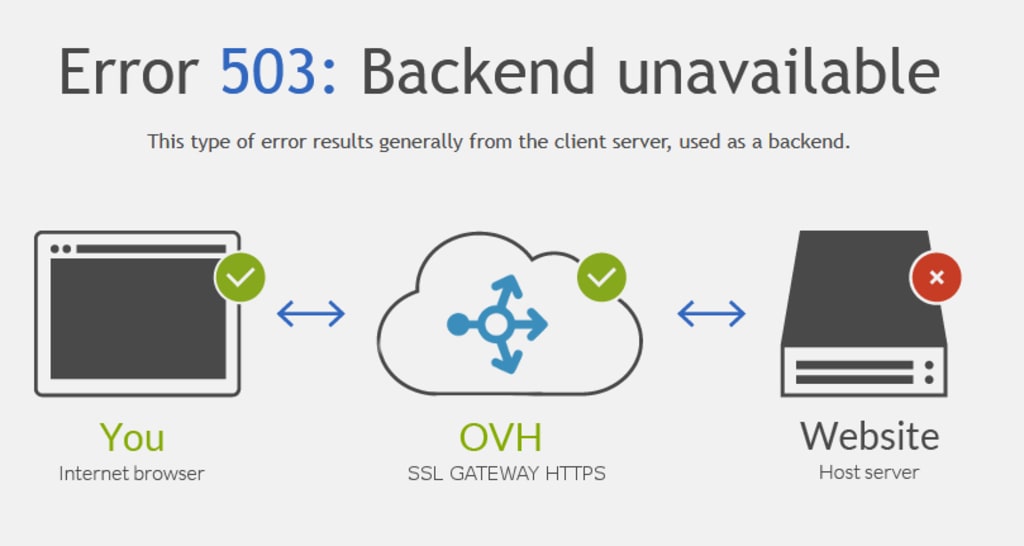
Backend software development is the powerhouse behind every great application. It connects databases, handles logic, and ensures smooth communication between systems. It’s the invisible engine that drives the visible product.
But backend development isn’t easy. Even experienced developers make mistakes that lead to system crashes, poor scalability, or serious security vulnerabilities.
In this blog, we’ll break down the major errors in backend software development—and how to avoid them. If you're a developer, tech lead, or business owner, this guide is for you.
1. Ignoring Scalability from Day One
Many developers build backend systems just to “make it work.” They ignore future growth. But what works for 100 users might break with 10,000.
The risks:
• Database overload.
• API timeouts.
• Infrastructure costs skyrocketing.
How to fix it: Design systems that scale horizontally. Use load balancers. Embrace caching. Plan for scale even in MVPs.
2. Poor API Design
Your backend API is the bridge between the frontend and your services. Poor design creates confusion, bugs, and wasted time.
Common API design mistakes:
• Inconsistent naming conventions.
• No versioning.
• Leaking internal logic.
How to fix it: Follow REST or GraphQL best practices. Version your APIs (v1, v2). Keep them consistent and predictable. Document everything using Swagger or Postman.
3. Hardcoding Configuration and Secrets
Hardcoding database URLs, credentials, or API keys into your source code is a recipe for disaster.
Why it’s dangerous:
• You risk exposing secrets in version control.
• Environments (dev, test, prod) become unmanageable.
• You can’t scale or automate deployments easily.
How to fix it: Use environment variables (.env files). Leverage secret management tools like Vault, AWS Secrets Manager, or HashiCorp.
4. Poor Database Schema Design
The database is the foundation of your backend. A flawed schema can lead to performance issues, redundant data, and painful migrations.
Common mistakes:
• No normalization or too much of it.
• Missing indexes.
• Poor naming conventions.
How to fix it: Plan your schema carefully. Normalize until it hurts—then denormalize where needed. Use indexing wisely. Keep column names descriptive and meaningful.
5. No Error Handling Strategy
Errors are inevitable. But many backend systems fail to handle them gracefully. They crash, return generic messages, or expose sensitive stack traces.
What can go wrong:
• User frustration.
• Unclear debugging.
• Security leaks.
How to fix it: Use try-catch blocks. Return meaningful error codes and messages. Log errors centrally. Separate user-facing messages from internal logs.
6. Writing Monolithic Codebases
Monoliths are easy to start with—but hard to maintain as the project grows. If every feature lives in one giant codebase, updating one part can break another.
Side effects:
• Slower deployments.
• Tighter coupling.
• Difficult scaling.
How to fix it: Move toward modular architecture. Explore microservices or service-oriented design. Even in monoliths, separate concerns (auth, billing, users, etc.).
7. Lack of Input Validation
Trusting user input is one of the worst backend sins. Whether it’s a signup form or an API payload—unvalidated input can cause data corruption or worse, security breaches.
Real threats:
• SQL injection.
• Cross-site scripting (XSS).
• Application crashes.
How to fix it: Always validate and sanitize input. Use libraries or frameworks with built-in validation (e.g., Joi for Node.js, Hibernate Validator for Java). Don’t trust the frontend to do it for you.
8. Inefficient Querying
A beautiful backend can fall apart because of poorly optimized database queries. One unindexed column in a massive table? That’s a ticking time bomb.
Common issues:
• N+1 query problem.
• Fetching too much data.
• Missing joins or unnecessary joins.
How to fix it: Analyze query performance. Use EXPLAIN in SQL. Optimize indexes. Use ORM tools carefully—understand what they generate.
9. Missing Logging and Monitoring
If your backend breaks and you don’t know why—that’s a major failure. Logging and monitoring aren’t optional. They’re essential.
What you miss:
• Real-time alerts.
• Error tracking.
• Performance metrics.
How to fix it: Use structured logging. Tools like Winston (Node.js), Logback (Java), or Bunyan can help. Integrate with monitoring platforms like Datadog, Prometheus, Grafana, or New Relic.
10. Not Writing Tests
Code without tests is like a house without insurance. One bad push and things fall apart.
Testing gaps lead to:
• Bugs in production.
• Fear of refactoring.
• Broken deployments.
How to fix it: Write unit, integration, and functional tests. Use test runners (Jest, Mocha, PyTest, JUnit). Automate tests in your CI/CD pipeline.
11. Overengineering Early
Adding Kubernetes, Kafka, and microservices for a simple CRUD app? That’s overengineering. It adds complexity without value.
Results:
• Slower development.
• Higher cost.
• Confused developers.
How to fix it: Start simple. Build what you need. Optimize only when bottlenecks appear. Choose tools that match your current scale—not your fantasy scale.
12. Poor Deployment Practices
Manual deployments. No rollbacks. No staging. These are signs of a fragile backend ecosystem.
Deployment errors cause:
• Downtime.
• Broken builds.
• Lost data.
How to fix it: Use CI/CD tools like Jenkins, GitHub Actions, GitLab CI, or CircleCI. Automate builds, tests, and deployments. Use blue-green or canary deployments.
13. Not Securing Your APIs
Exposed APIs are vulnerable APIs. Without proper security, you invite attackers to exploit your system.
Typical mistakes:
• No authentication or weak tokens.
• Unencrypted data transmission.
• No rate limiting.
How to fix it: Use HTTPS. Secure APIs with OAuth2, JWT, or API keys. Set up rate limiting with tools like NGINX, API gateways, or middleware.
14. Ignoring Caching
If your backend recalculates or refetches data every time—it’s wasting resources.
Results:
• Slow performance.
• Increased database load.
• Higher infrastructure costs.
How to fix it: Implement caching layers. Use Redis, Memcached, or CDN edge caching. Cache heavy queries, session data, and static responses.
15. No Documentation
Your backend code isn’t self-explanatory. If no one understands your endpoints, schema, or services—it becomes a black box.
Consequences:
• Slower onboarding.
• More bugs.
• Increased dependency on single devs.
How to fix it: Document APIs with Swagger/OpenAPI. Maintain README files. Use inline code comments sparingly—but meaningfully.
16. Poor Session Management
Improper session handling creates both performance and security issues.
Signs of trouble:
• Sessions never expire.
• Tokens are reused insecurely.
• Sensitive data stored in session payloads.
How to fix it: Use secure session tokens. Set expiry rules. Avoid storing sensitive info in session. Use HttpOnly and Secure cookie flags.
17. Ignoring Background Jobs
If your backend does everything in real-time—like sending emails or resizing images—it will slow down user responses.
The issue:
• Users wait.
• Server threads get blocked.
• Latency increases.
How to fix it: Offload long-running tasks to background jobs. Use queues like RabbitMQ, Celery, Sidekiq, or Bull. Keep your API fast and responsive.
18. Not Handling Concurrency Properly
When multiple users hit your backend simultaneously, things can go wrong—especially if shared resources are not locked or isolated.
Examples:
• Race conditions.
• Data inconsistency.
• Deadlocks.
How to fix it: Understand concurrency in your language. Use transactions. Lock critical sections when needed. Avoid global shared states.
19. Relying Too Much on ORM "Magic"
ORMs are powerful. But many devs blindly rely on them without understanding what SQL is actually being executed.
Problems:
• Inefficient queries.
• Unexpected joins.
• Poor performance at scale.
How to fix it: Know your ORM inside out. Use raw queries when needed. Profile your queries. Don’t let abstraction become a blindfold.
20. No Graceful Shutdown Handling
When your server shuts down—do the requests finish processing? Or does everything just terminate?
What can go wrong:
• Lost data.
• Incomplete writes.
• Broken jobs.
How to fix it: Handle shutdown signals (SIGTERM, SIGINT). Complete in-flight requests. Close DB connections gracefully.
Conclusion
Backend development isn’t just about writing logic—it’s about building solid, secure, scalable foundations for everything else to stand on.
The errors discussed here are common but avoidable. From architecture to testing, from security to scalability, every decision matters.
Avoid shortcuts. Prioritize quality. Think long-term.
Because great backends aren’t just built. They’re engineered—carefully, thoughtfully, and responsibly.
About the Creator
About Binding Prometheus
I want to start actively advocating on behalf of my own work, and the most valuable part of my canon is, without a doubt, Binding Prometheus, the play I have been working on since 2019 and only finished in 2023 as part of my MA. The play itself is an amalgamation of a million different inspirations. On one end, it evokes the Ancient Greek myth-play, deriving its own title from the earliest extant work of Western drama we have, Aeschylus’s Prometheus Bound. On the other end, it borrows significantly from the sci-fi bulwarks from over the years, namely Mary Shelley’s Frankenstein and Karel Capek’s Rossum’s Universal Robots. The play could be an episode of Black Mirror, I fear. I don’t know. I’ve only ever seen one episode of Black Mirror.
By Steven Christopher McKnight26 days ago in Futurism
Saudi Arabia Renewable Energy Market: Clean Power Expansion, Investment Momentum & Outlook
According to IMARC Group's latest research publication, Saudi Arabia renewable energy market size reached 2.09 Gigawatt in 2025. The market is projected to reach 40.42 Gigawatt by 2034, exhibiting a growth rate of 35.07% during 2026-2034.
By Faisal Al-Harbi4 days ago in Futurism


Comments
There are no comments for this story
Be the first to respond and start the conversation.