
Virtual Reality vs. Augmented Reality: A Battle of Immersive Technologies
Unveiling the Future: The Clash of Immersive Realities
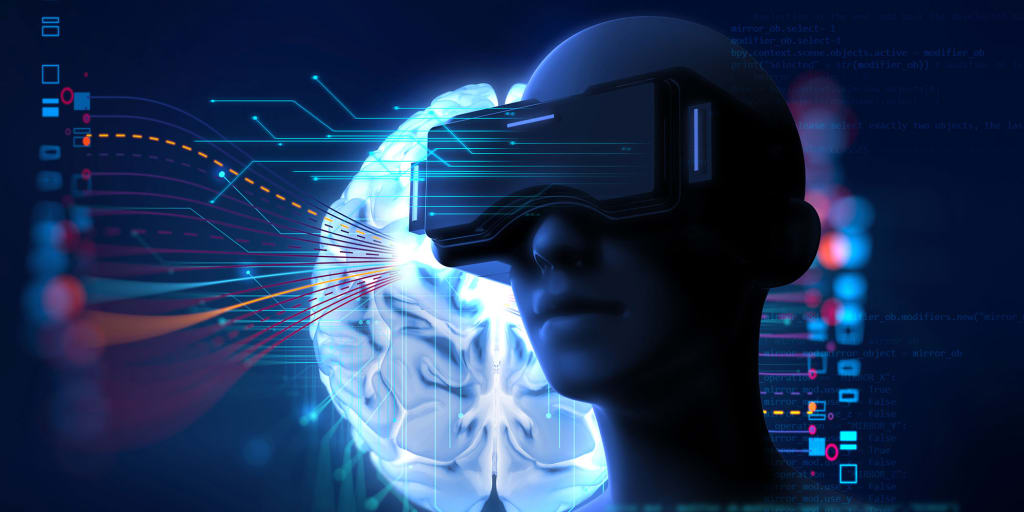
Introduction:
The advent of virtual reality (VR) and augmented reality (AR) has revolutionized the way we perceive and interact with the digital world. These immersive technologies have opened up exciting possibilities in various fields, including gaming, entertainment, education, healthcare, and more. As VR and AR continue to evolve, a question arises: Which technology will emerge victorious in the battle for dominance? In this article, we will explore the strengths, limitations, and potential applications of both VR and AR to unravel the likely winner of this immersive technology showdown.
Understanding Virtual Reality:
Virtual reality is a technology that simulates an entirely artificial environment, transporting users to a computer-generated world that can be both visually and audibly immersive. With the help of headsets and controllers, users can interact and navigate through this simulated environment, feeling as if they are truly present in a different reality. VR has gained significant popularity in gaming, where players can experience breathtaking adventures and engage in highly immersive gameplay.
Strengths and Limitations of Virtual Reality:One of the biggest strengths of VR is its ability to create a completely immersive experience. By shutting out the real world and providing users with a simulated environment, VR can transport individuals to places they may never physically reach. This technology has immense potential in fields like architecture, training simulations, and therapy, where realistic and controlled environments can be incredibly valuable.
However, VR also faces some limitations. One major hurdle is the requirement for dedicated hardware, including high-performance computers and expensive headsets, which can be a barrier to entry for many users. Additionally, prolonged usage can lead to discomfort or even motion sickness, limiting the time users can spend in VR environments. These challenges have somewhat hindered the widespread adoption of VR outside of gaming and specialized industries.

Exploring Augmented Reality:
Augmented reality, on the other hand, overlays digital content onto the real world, enhancing the user's perception of their environment. AR can be experienced through various devices, such as smartphones, tablets, or specialized glasses. This technology seamlessly blends the real and virtual worlds, allowing users to interact with digital elements while maintaining a connection to their physical surroundings.
Strengths and Limitations of Augmented Reality:
AR's greatest strength lies in its potential for practical applications in everyday life. By integrating digital information into our physical environment, AR can enhance productivity, assist with navigation, and provide real-time contextual information. For instance, AR can revolutionize industries like manufacturing, where workers can receive real-time instructions or overlay digital models on physical objects, improving accuracy and efficiency.
Compared to VR, AR has the advantage of being more accessible, as it often requires only a smartphone or tablet with a camera. This accessibility has facilitated AR's integration into mobile apps and allowed it to penetrate various sectors like education, retail, and advertising. However, AR's limitations include the potential for distractions, such as information overload or intrusive advertisements, which can disrupt the user experience. Achieving seamless integration between the digital and physical realms remains a challenge for AR developers.
Applications and Future Outlook:
Both VR and AR have showcased their potential in different domains. VR has already made a significant impact in gaming and entertainment, offering immersive experiences that captivate players. It has also found applications in training simulations, enabling professionals to practice high-risk procedures or experience real-life scenarios in a safe environment. However, VR's limitations and hardware requirements have restricted its widespread adoption in consumer markets.
AR, on the other hand, has gained traction in industries like e-commerce, allowing customers to visualize products in their own environment before making a purchase. In education, AR enhances learning experiences by providing interactive and engaging content. Furthermore, AR has the potential to revolutionize fields such as healthcare, where surgeons can overlay vital patient data during operations
About the Creator
About Binding Prometheus
I want to start actively advocating on behalf of my own work, and the most valuable part of my canon is, without a doubt, Binding Prometheus, the play I have been working on since 2019 and only finished in 2023 as part of my MA. The play itself is an amalgamation of a million different inspirations. On one end, it evokes the Ancient Greek myth-play, deriving its own title from the earliest extant work of Western drama we have, Aeschylus’s Prometheus Bound. On the other end, it borrows significantly from the sci-fi bulwarks from over the years, namely Mary Shelley’s Frankenstein and Karel Capek’s Rossum’s Universal Robots. The play could be an episode of Black Mirror, I fear. I don’t know. I’ve only ever seen one episode of Black Mirror.
By Steven Christopher McKnight27 days ago in Futurism
Saudi Arabia Die Casting Components Market: Lightweight Components & Manufacturing Expansion
According to IMARC Group's latest research publication, Saudi Arabia die casting components market size reached USD 590.6 Million in 2024. The market is projected to reach USD 916.2 Million by 2033, exhibiting a growth rate of 5% during 2025-2033.
By Faisal Al-Harbi7 days ago in Futurism



Comments
There are no comments for this story
Be the first to respond and start the conversation.