
Vestal Virgins were prominent members of ancient Roman society
These women were respected and honored until they were banned after the rise of Christianity.

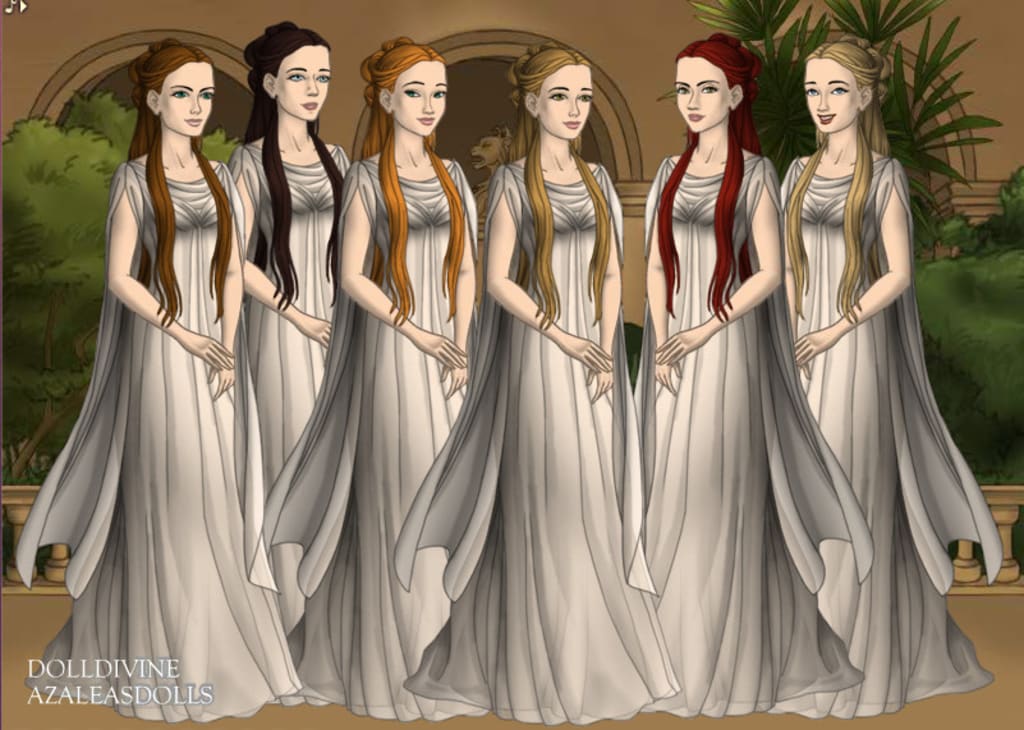
I first heard the term "Vestal Virgins" in the 1967 film Cassino Royale. I did not think much about it even though I have watched the movie at least 25 times and heard the character of Mata Hari's daughter (Joanne Pettit) utter these two words every time. Recently I was watching the 1932 version of The Mummy and a male character mentioned the Vestal Virgins. This time I was curious about these women so I decided to find out all I could about them. It is said that in ancient Rome, the Vestals or Vestal Virgins were priestesses of Vesta, who was the mytohological goddess of the hearth.
The chaste Vestals are considered to have been the most powerful priestessess in Rome and their main duty was to cultivated the sacred fire in Vesta's temple because it was not allowed to ever go out. By maintaining Vesta's sacred fire, the virgins functioned as surrogate houekeepers for all of Rome, in a religious sense. Anyone could receive fire for their household use from Vesta's sacred fire, and during Imperia times it was treated, as the emperor's household fire. This is why the College of the Vestals, was regarded as being quite fundamental to the security of the Roman Empire.
The virgins were chosen between the ages of 6 and 10 by the chief priest and after completing 30 years of service they were allowed to marry, but most did not. In addition to the age requiement, the Vestals had to be born of freeborn and respectable parents. In later years the daughters of freedmen became eligible. The virgins had to have both parents still living and they had to be free from defects, both physical and mental. The young women lived in the House of the Vestal Virgins which was on the Roman Forum, nearby Vesta's Temple. In addition to maintaining their virginity and tending to the sacred fire, the virgins had to fetch water from a sacred spring.
They also prepared the ritual food and cared for objects in the temple’s inner sanctuary. This was similar to the priests of Israel who were the only ones allowed to maintain the Jerusalem temple, prepared\\ animal sacrifices and were the only ones designated to go into the Most Holy Place. The virgins also officiated at the Vestalia which was celebrated on June 7–15. This was the specific period when the public worshiped Vesta.
If the priestesess failed to attend to their duties they were severely punished with a beating. If they violated their vows of chastity, they were buried alive because the blood of Vestal Virgins could not be spilled. The priestesses of Vesta also enjoyed many privileges that were not available to other women, whether married or single. This included being emancipated from their fathers’ rule and gave them the ability to marriage their own property.
The reason the virgins took a 30-year vow of chastity and were not expected to marry and have children was so they could devote themselves to the study of state rituals. These studies were forbidden in colleges where there were male priests. According to the great scholar Marcus Varro, the first Vestal virgins were named Tarpeia, Gegania, Canuleia and Veneneia. Greek historian, Theo Livy said the Vestals were created as a state-supported priestesshood for King Numa Pompilius, who reigned from 717–673 BC.
According to Livy, King Numa first introduced the Vestals and paid them salaries from the public treasury. The historian also said that the priestesshood of Vesta had its origins at Alba Longa which was an ancient Latin city in Central Italy, 12 miles southeast of Rome. The Vestals became both powerful and influential in the Roman state as Augustus included the virgins in all major dedications and ceremonies.
They were held in high regard and certain magical powers were attributed to them. There is also a general belief, that Vestal virgins have power, by uttering a certain prayer, to stop the flight of runaway slaves. It is believed they could stop runnaways on the spot, provided they have not gone beyond the the City limits. This obviousy indicates that they had no power outside of Roman.
There were only four women named as the initial Vestal Virgins, and there are images of numerous females serving in Vesta's temple. In actuality there were six priestesses, who represented the daughters of the royal house, who took care of what the early Christians call the state cult of Vesta. The origin of the Vestals is believed to date back to the 7th century BC and wassbanned in AD 394. Once Theodosius I became a Christian he banned all cults in the area and that was the end of Vesta's virginal priestesses.
About the Creator
Cheryl E Preston
Cheryl is currently pursuing a Bachelor of Science in Psychology. She enjoys writing about current events, history and baby boomer nostalgia. Tips are greatly appreciated.
Keep reading
More stories from Cheryl E Preston and writers in Futurism and other communities.
Star Trek: Remembering Charlie X
Star Trek: Meet Charlie Evans The second episode of season one of Star Trek was titled Charlie X and aired on September 25, 1966. It was written by Gene Roddenberry, directed by Lawrence Dobkin, and the character who is the main focus has left a lasting impression on many Trekkies. In this episode, the USS Enterprise picks up a 17-year-old boy named Charlie Evans (Robert Walker) who spent 14 years alone on a deserted planet.
By Cheryl E Preston4 years ago in Futurism
Rivian R2: A New Chapter in Electric Adventure Vehicles
Electric vehicles are no longer rare sights on the road, yet some announcements still capture public imagination in a powerful way. The Rivian R2 is one of those moments. When people first heard about this upcoming SUV, curiosity spread quickly. Drivers who love outdoor travel, quiet roads, and modern technology started wondering what Rivian might create next. The company already built a reputation for electric trucks and SUVs designed for exploration. Now the Rivian R2 promises something different: a vehicle that could bring that spirit to a wider audience. It represents more than a new model. For many people watching the electric vehicle market, the Rivian R2 signals a shift toward practical adventure, everyday usability, and a future where electric driving feels natural.
By Muqadas khan4 days ago in Futurism
AI in Recruitment Market to hit USD 2.6 Billion By 2033
The global AI in Recruitment Market is expanding steadily as organizations adopt intelligent technologies to improve hiring efficiency and workforce planning. The market is projected to reach approximately USD 2.6 billion by 2033, increasing from USD 0.8 billion in 2023, reflecting a 12.4% CAGR during the forecast period from 2024 to 2033.
By Roberto Crumabout 8 hours ago in Futurism


Comments
There are no comments for this story
Be the first to respond and start the conversation.