
🧭 Vanished: Unexplained Mysteries from the Bermuda Triangle
⚓ Part 7: The Antikythera Shipwreck – Ancient Technology Lost to Time

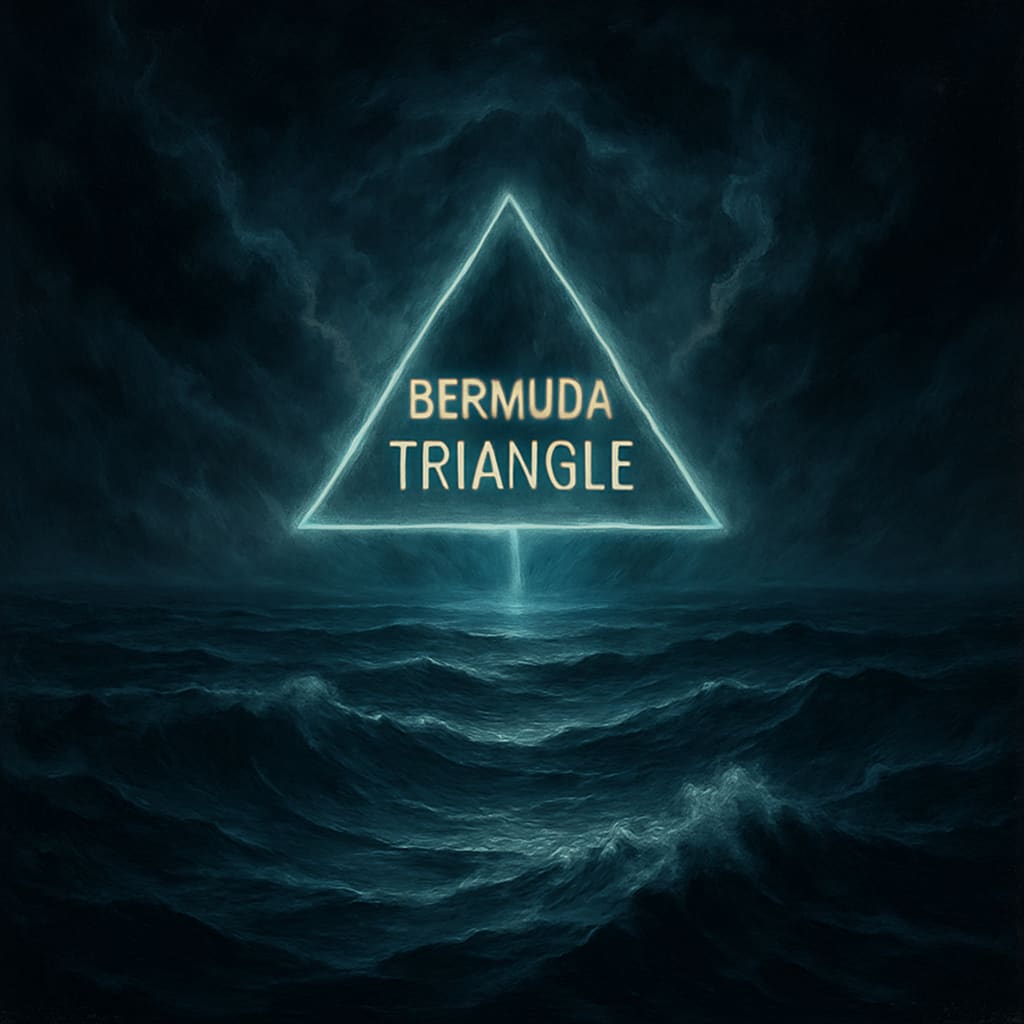
🌊 A Chance Discovery That Changed History
In 1900, off the coast of the small Greek island of Antikythera, a team of sponge divers stumbled upon a world frozen in time. As they explored the seabed, they discovered a wreck unlike anything they'd seen before—an ancient Roman cargo ship loaded with treasures from more than 2,000 years ago.
It was the beginning of one of the most astonishing underwater archaeological discoveries in history.
What they pulled from the deep would include marble statues, golden jewelry, and bronze artifacts—but one object in particular would go on to challenge everything we thought we knew about ancient science.
🗿 A Gallery Beneath the Sea
The initial haul included life-sized marble horses, hundreds of coins, and intricately detailed sculptures. Among them stood a 7-foot-tall statue of Hercules, imposing even in silence, his stone gaze lost beneath the sea for millennia.
But it wasn’t just beauty these relics offered—it was mystery.
One statue, nicknamed the “Antikythera Youth,” caught the attention of scholars. Cast in bronze and holding a spherical object, he defied categorization. No matching iconographic model exists, and no known copies have ever been found. To this day, experts debate who he might have been—and why he was lost at sea.
🔧 The Machine That Shouldn’t Exist
Decades later, Jacques Cousteau and his team returned to the site and unearthed even more artifacts. But the most extraordinary discovery was a corroded mass of bronze gears—what would later be called the Antikythera Mechanism.
This ancient device turned out to be an analog computer—built over a thousand years before the next comparable technology.
With more than 30 interlocking gears, it could track the positions of the sun and moon, predict eclipses, and even mark the dates of the Olympic Games. It’s the kind of thing you’d expect in a Renaissance observatory—not aboard a Roman-era shipwreck.
Scientists now believe it was used for calendrical, astrological, and navigational purposes. Some even consider it the world’s first known computer.
⛓️ Secrets Still Buried
Despite the magnitude of what’s already been found, the wreck remains largely unexplored. The ship lies in a precarious location—too deep for regular scuba diving, too shallow for submersibles. This has left much of the site undisturbed for over a century.
In 2012, a seafloor survey revealed evidence of a second shipwreck nearby, just 800 feet to the south. What secrets it might hold is still unknown.
The Antikythera discovery has rewritten our understanding of ancient technology. What else is still waiting to be discovered, just out of reach?. What is waiting to be found? What other mysteries does the seas hide? how do we uncover them? Are they just legends and myths, or an accident that happened?. What we know about ancient civilizations. And yet—we've only scratched the surface. Perhaps the next great mystery is already lying beneath the waves, silently waiting for the right current… or the right storm.
The oceans have always held secrets far beyond our comprehension—fragments of forgotten civilizations, vessels swallowed whole, and objects that defy explanation. Each storm that churns the water might stir a hidden truth loose, each shifting current may someday carry a lost piece of history into the light. It could be a message in a bottle, a barnacle-covered relic, or a sunken ship's final logbook. And yet, the sea keeps its silence.
What remains buried beneath layers of sediment and salt is more than debris—it is a silent archive of human endeavor, tragedy, and wonder. The mysteries waiting below may answer long-standing questions or raise even more compelling ones. Just as the Antikythera Mechanism shocked historians with its complexity, and the wrecks of Endurance and Cyclops left us awestruck with their preservation or absence, the next revelation may shift our understanding of the ancient world—or even the universe itself.
In the Bermuda Triangle and beyond, the ocean remains a realm of shadowed truths. Somewhere beneath its endless waves, the next great discovery lies in wait—patient and motionless—until the world is finally ready to find it.
What else waits in the deep?
🧭 Next in the Series
In Part 8, we’ll travel thousands of miles south—to the icy bottom of the Weddell Sea—where the long-lost ship of Sir Ernest Shackleton, the Endurance, was discovered in near-perfect condition 107 years after it was swallowed by Antarctic ice.
What secrets does it hold beneath the frozen surface?
About the Creator
Victor B
From the thrill of mystery to the expanse of other genres, my writing offers a diverse journey. Explore suspenseful narratives and a wide range of engaging stories with me.
Microcontroller Market Trends: IoT Expansion, Smart Devices Growth & Forecast to 2034
Rising integration of microcontrollers across smart devices, connected vehicles, and industrial automation is reshaping the global electronics landscape. Backed by explosive IoT growth, accelerating electric vehicle production, and the rapid shift toward edge intelligence, the microcontroller market is entering a new and sustained growth phase. According to IMARC Group's latest data, the global microcontroller market size reached USD 28.7 Billion in 2024. Looking forward, IMARC Group expects the market to reach USD 58.3 Billion by 2033, exhibiting a growth rate (CAGR) of 7.55% during 2025-2033. Asia Pacific currently dominates the market, holding the largest market share.
By Suhaira Yusuf2 days ago in Futurism
Specialty Polymers Market: Automotive & Aerospace Lightweighting Trends & Market Forecast
According to IMARC Group's latest research publication, the global specialty polymers market size reached USD 92.19 Billion in 2025. Looking forward, IMARC Group expects the market to reach USD 159.33 Billion by 2034, exhibiting a growth rate (CAGR) of 5.74% during 2026-2034.
By sujeet. imarcgroup3 days ago in Futurism



Comments (1)
The discovery of the Antikythera Mechanism is mind-blowing. It's crazy to think an analog computer was built so long ago. I wonder how they managed to create such a complex device with the technology available back then. And those other artifacts, like the "Antikythera Youth," add to the mystery. What else could be hidden in the depths?