
Understanding Application Layer Encryption and How It Works
Learn application layer encryption basics. Discover why ALE protects sensitive data better than TLS. Get implementation tips now.

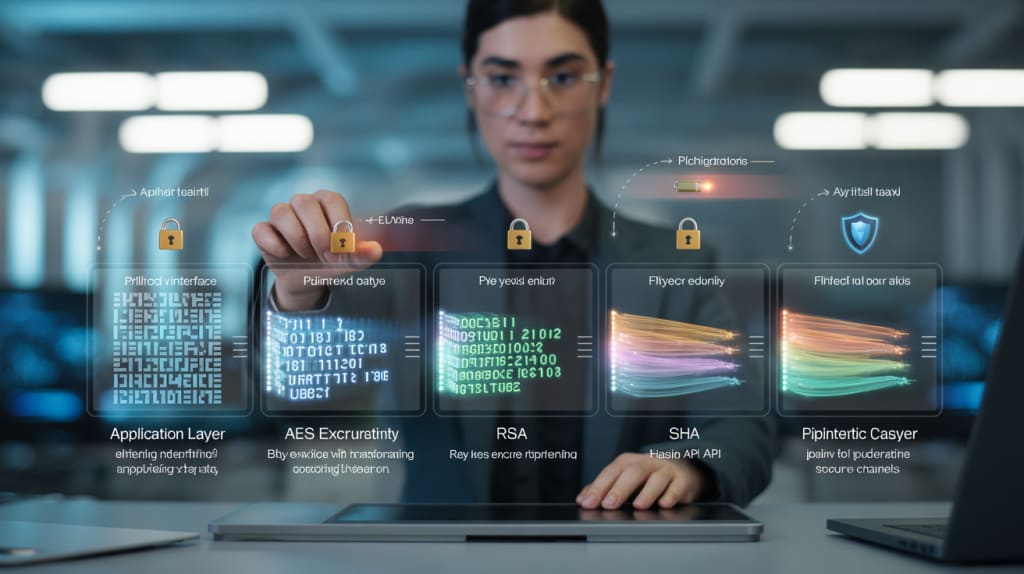
So here's the thing about application layer encryption... most people reckon HTTPS keeps everything safe, yeah? Wrong. Dead wrong.
Wait, let me back up. 166 million people got their data compromised in just the first half of 2025. That's not some far-off problem—that's happening right bloody now. And here's the kicker... TLS does jack once your request lands on the server.
What Actually Is Application Layer Encryption
Application layer encryption happens inside your code—you control encryption keys, which cipher to use, where data gets encrypted. Unlike TLS protecting data during transit, ALE encrypts before writing to databases, so even if someone nicks your database... encrypted data stays locked tight.
Think of it like this. TLS is the armored truck moving your valuables. Application layer encryption? That's the safe-deposit box INSIDE that truck. Truck gets hijacked? Your stuff's still proper secure.
Here's what gobsmacked me last year... PCI v4 now mandates cryptographically keyed hashes for payment data. Banks finally caught on that network security alone isn't cutting it.
As Bruce Schneier, renowned cryptographer and security technologist, puts it: "Encryption protects our data when it's sitting on our computers and in data centers, and it protects it when it's being transmitted around the Internet." That's the difference—TLS only handles the transmission part.
Encryption Type: TLS/SSL
- Protects During: Data in transit
- Vulnerable To: Server compromise, database theft
- Best For: Basic transport security
Encryption Type: Application Layer
- Protects During: Storage & processing
- Vulnerable To: Still secure even with server access
- Best For: Sensitive data at rest
Encryption Type: End-to-End
- Protects During: Entire lifecycle
- Vulnerable To: Only key holders access
- Best For: Maximum security needs
The Part Everyone Gets Wrong
Walk into any dev meeting and someone's gonna say "we use SSL, we're sorted." No. You're not.
87.2% of threats in 2024 were hidden in TLS/SSL traffic. Attackers know SSL exists. They work around it. Application-layer encryption creates a backstop—stops network breaches, SQL injection attacks, misconfigurations from exposing your customer data.
Transport layer encryption decrypts the second data reaches your server. Database admin? Full access. Server logs? Might contain sensitive info. Memory dumps? Everything exposed. ALE keeps data encrypted until the exact microsecond your application needs it, yeah?
How the Technology Actually Works
Let me break this down without textbook rubbish.
Your app takes sensitive data—credit cards, health records, whatever needs protecting. Before writing anything to the database, encrypt it using keys YOUR APPLICATION controls. Not the database. Not the network layer. Your code.
# Real implementation example
from cryptography.fernet import Fernet
import os
class SecureDataHandler:
def __init__(self):
self.key = self.load_encryption_key()
self.cipher = Fernet(self.key)
def load_encryption_key(self):
# Load from secure key management (AWS KMS, HashiCorp Vault)
return os.environ.get('ENCRYPTION_KEY').encode()
def encrypt_field(self, data):
return self.cipher.encrypt(data.encode())
def decrypt_field(self, encrypted_data):
return self.cipher.decrypt(encrypted_data).decode()
# Usage
handler = SecureDataHandler()
encrypted_ssn = handler.encrypt_field("123-45-6789")
db.store(user_id, encrypted_ssn) # Stored encrypted
# Later retrieval
retrieved = db.fetch(user_id)
plain_ssn = handler.decrypt_field(retrieved) # Decrypted only when needed
Real implementations need proper key rotation, hardware security modules, field-level encryption. But you get the gist.
Schneier also warns: "Anyone can create an algorithm that he himself can't break. What is hard is creating an algorithm that no one else can break, even after years of analysis." That's why we use proven libraries, not homebrew crypto.
Why 2025 Changed Everything
TLS 1.3 is table stakes now. For data at rest, AES-256 meets federal benchmarks. But here's where it gets proper interesting...
Post-quantum cryptography is coming. NIST released finalized standards, pushing system administrators to transition immediately. When quantum computers break current encryption—and they will—ALE implementations can swap algorithms without redesigning entire systems.
Companies winning at security aren't using one encryption layer. They're stacking them. TLS for transport. ALE for storage. Field-level encryption for ultra-sensitive bits.
Real Problems Nobody Mentions
Key management will destroy you. Seriously. Lost encryption key equals lost data forever. No recovery. No do-overs. Mate of mine lost a key once... 50,000 customer records gone. Just... poof.
Performance takes a hit. Each compromised record costs about $150 on average, so yeah, spending CPU cycles on encryption beats paying breach costs. One company I consulted for saw 40ms added latency per request. Solved it with caching encrypted data, batching operations.
Developer experience suffers too. Reading logs becomes harder when everything's encrypted. Debugging production issues? Archaeological expedition, innit. Build proper tooling or your team will proper hate you.
When to Actually Use This
Not every application needs ALE. Blog posts? Probably fine without it. Medical records? Absolutely need it. Financial transactions? Non-negotiable, mate.
1,732 data compromises were reported in the first half of 2025—that's already 55% of the entire 2024 total. If you're handling payment cards, protected health info, or PII—implement ALE. If regulatory fines would bankrupt you—implement ALE yesterday.
For mobile app development houston projects, we reckon ALE for any app storing user credentials, payment methods, location data. Mobile devices get lost, stolen, compromised. ALE is your last line of defence.
Getting Started Without Losing Your Mind
Start with field-level encryption for most sensitive data. Don't encrypt everything day one. Credit card numbers, social security numbers first. User preferences, analytics can wait.
Choose proven libraries. Don't roll your own crypto. Ever. Use established implementations:
- libsodium - Modern, easy-to-use encryption
- OpenSSL - Industry standard, battle-tested
- AWS KMS - Managed key services
- HashiCorp Vault - Enterprise key management
As cybersecurity expert Kevin Mitnick noted, "Companies spend millions on firewalls and secure access devices, but they leave the employee on the desk with the ability to compromise the system." Application layer encryption protects even when human error happens.
Implement key rotation from the start. Keys should change regularly. Have a plan for re-encrypting data when rotating keys. Test this process before you need it in production, yeah?
Monitor performance continuously. Add metrics around encryption operations. Watch for bottlenecks. Optimize hot paths where encryption happens thousands of times per second.
The Path Forward
Application layer encryption used to be optional. Something only paranoid enterprises bothered with. That era? Properly dead.
Between increasing regulations, sophisticated attacks, justified customer expectations about privacy—ALE moved from nice-to-have to requirement. Only question is when you'll implement it, not if.
Technology matured too. Modern frameworks make ALE easier than ever. Cloud providers offer managed key services. Open source libraries handle hard cryptography parts.
Still gonna see breaches in 2025 where companies lost millions of records. Almost guaranteed the ones making headlines skipped application layer encryption. The ones that implemented it? You'll never hear about them because attackers walked away with useless encrypted blobs.
That's the whole point really. Make your data worthless to attackers. Application layer encryption does exactly that.
Key Takeaways:
- 166 million individuals affected by data breaches in H1 2025 alone
- Application layer encryption protects data even when databases get compromised
- 87.2% of 2024 threats were hidden in SSL/TLS encrypted traffic
- Average cost per compromised record is $150
- PCI v4 mandates cryptographic hashing for payment data
- Implementation requires careful key management and rotation
- Start with encrypting most sensitive fields first
- Use established cryptography libraries like libsodium or OpenSSL
- Plan for post-quantum cryptography migration now
- Mobile applications especially need ALE due to device security risks
- Monitor encryption operation performance continuously
Data breaches in 2025 already hit 55% of entire 2024 totals
About the Creator
Keep reading
More stories from Devin Rosario and writers in Futurism and other communities.
90% Code AI Written by 2026 Reality Check
41% of code right now comes from AI. That's 256 billion lines written in 2024. And everyone's talking about hitting 90% by 2026 like it's some inevitable thing. But what does that actually mean when you strip away the hype?
By Devin Rosario5 months ago in Futurism
Lignans Market Outlook: Functional Food Demand and Nutraceutical Growth Opportunities
According to IMARC Group's latest research publication, The global lignans market size reached USD 463.2 Million in 2024. Looking forward, IMARC Group expects the market to reach USD 794.6 Million by 2033, exhibiting a growth rate (CAGR) of 5.69% during 2025-2033.
By James Whitman5 days ago in Futurism




Comments
There are no comments for this story
Be the first to respond and start the conversation.