
Trump’s Budget Proposal Could Leave NASA’s Mars Samples Stranded: A Setback for Space Science?
Trump’s 2026 budget proposal could halt NASA’s landmark Mars Sample Return mission, risking billions in investments and jeopardizing U.S. leadership in space exploration.

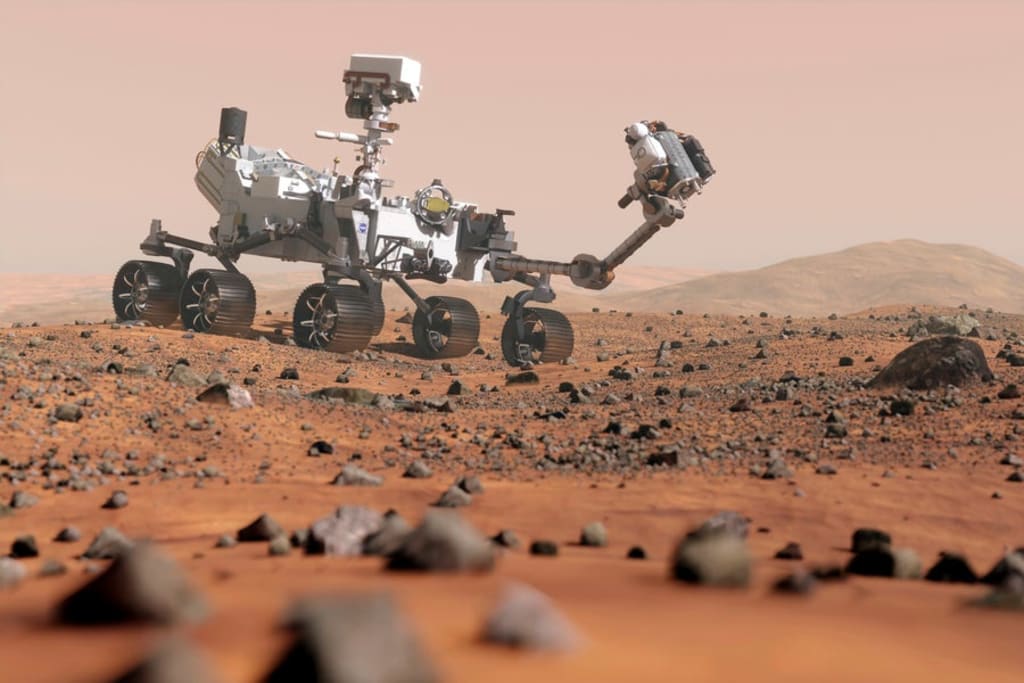
In a move that has sparked significant concern across the scientific and aerospace communities, the Trump administration’s newly proposed budget for fiscal year 2026 threatens to derail one of NASA’s most ambitious projects: the Mars Sample Return (MSR) mission. With sweeping budget cuts across the board, the proposed plan slashes NASA’s funding by 25%, and its science division by nearly 50%. These cuts, if implemented, could leave precious Martian samples—painstakingly gathered by the Perseverance rover—stranded on the Red Planet indefinitely.
This budget proposal marks a dramatic pivot in U.S. space policy, one that prioritizes short-term financial savings over long-term scientific advancement. It also raises critical questions: What is the future of NASA’s Mars exploration program? Will the United States relinquish its leadership role in planetary science? And what does this mean for humanity’s quest to understand Mars—and potentially discover life beyond Earth?
Let’s dive into the implications of this controversial decision and explore why abandoning the Mars Sample Return mission could be a costly mistake, not just for NASA, but for global science and exploration.
What Is the Mars Sample Return Mission?
The Mars Sample Return (MSR) mission is a collaborative effort between NASA and the European Space Agency (ESA), designed to retrieve soil and rock samples collected by NASA’s Perseverance rover. Launched in 2020, Perseverance has already gathered a collection of Martian samples in sealed tubes, stored in preparation for future retrieval.
The MSR mission involves multiple complex stages: a future lander would retrieve the cached samples, launch them into Mars orbit, and transfer them to an Earth-bound spacecraft. The return of these samples, expected by the mid-2030s, could provide critical insights into Mars’ geological history and the possible presence of ancient microbial life.
Scientists have long considered the MSR mission a top priority for planetary science. It has been consistently endorsed by the National Academies’ Decadal Surveys, which guide U.S. space science investments. The samples would represent the first-ever materials brought back from another planet—a historic achievement with vast implications for science, technology, and international collaboration.
Budget Cuts That Jeopardize the Mission
The Trump administration’s proposed budget deals a severe blow to this vision. The new fiscal plan calls for drastic cost-cutting measures, including the near-elimination of funding for the Mars Sample Return program. Officials behind the proposal cite the mission’s ballooning budget—now estimated to exceed \$11 billion—as a primary reason for its cancellation.
Proponents of the budget argue that human missions to Mars in the future could accomplish similar goals at lower costs. They also point to current delays and technical challenges within the MSR mission as justification for shelving the project.
However, many in the scientific community view these justifications as shortsighted. Billions have already been invested in the mission, and canceling it now could squander decades of planning, research, and international partnership. Moreover, waiting for human missions to Mars—still many years, if not decades, away—could mean losing momentum and leadership in planetary science.
A Shocking Turn of Events
What makes this development even more surprising is its timing. Just days before the budget announcement, NASA officials publicly expressed optimism about the MSR’s progress. They discussed plans to streamline mission operations, cut costs, and potentially accelerate the sample return timeline from 2040 to 2035.
According to NASA insiders, various strategies were being considered to make the mission more efficient. These included reducing the number of spacecraft involved and optimizing payload designs to lower costs and logistical complexity.
The sudden proposal to abandon the MSR mission appears to contradict these efforts—and has left many NASA scientists stunned. “It’s like building the first half of a bridge and then walking away,” said one mission engineer anonymously. “We’ve come too far to just give up now.”
The Stakes: Scientific and Strategic
Beyond the loss of knowledge, canceling the Mars Sample Return mission carries significant strategic risks. Mars exploration is no longer the sole domain of the United States. China has announced plans for its own Mars sample return mission, potentially as soon as 2031. If the U.S. steps back, it may find itself ceding scientific leadership to competing space programs.
Moreover, the mission represents a rare example of international cooperation in space exploration. NASA and ESA have worked closely on MSR, and the project has created opportunities for thousands of scientists and engineers around the world. Abandoning it could damage international relationships and dampen future collaborative efforts.
A Decision in Congress’ Hands
The good news for space advocates is that the President’s budget proposal is not the final word. Congress has the power to approve, reject, or amend the federal budget, and many lawmakers have already voiced strong support for maintaining NASA’s science programs.
Historically, Congress has rejected similar cuts to NASA proposed by previous administrations. Advocates hope this pattern will continue, especially as pressure mounts from scientific institutions, space industry leaders, and the general public.
Several advocacy groups are already mobilizing to lobby for the MSR mission’s preservation. Public campaigns and petitions are gaining traction online, urging Congress to protect NASA’s science division and keep the Mars mission alive.
Why It Matters
At its core, the debate over the Mars Sample Return mission is about more than just dollars and cents. It’s about whether the United States is willing to lead in the grand pursuit of knowledge, exploration, and innovation. The MSR mission is not only a scientific endeavor—it’s a symbol of what humanity can achieve through curiosity, collaboration, and ambition.
Stranding these Martian samples would not only halt a generational opportunity—it would send a message that short-term savings matter more than long-term discovery.
As the budget process moves forward, the world will be watching to see if the U.S. chooses to invest in its future—or leave it buried in Martian soil.
Mars Sample Return
NASA budget cuts
Trump administration NASA
Perseverance rover samples
NASA Mars mission
space exploration budget
planetary science
ESA Mars collaboration
2026 NASA funding
Martian soil s
About the Creator
NextGen Mobile Tech
- I review the latest smartphones, mobile accessories, and tech essentials to help you make smart buying decisions. Explore my curated kits for phones and gear here: [Kit.co link].
Keep reading
More stories from NextGen Mobile Tech and writers in Futurism and other communities.
Google Unleashes Powerful AI Tools to Protect Chrome Users from Online Scams
In an era where cybercrime and online scams are on the rise, Google is stepping up its efforts to safeguard users by integrating cutting-edge artificial intelligence (AI) technology directly into its Chrome browser. On May 8, 2025, Google officially announced the rollout of new AI-powered tools aimed at protecting Chrome users on both desktop and mobile devices. The move is part of a broader initiative to combat online fraud and make the internet a safer place for everyday users.
By NextGen Mobile Tech10 months ago in Futurism
Flywheel Energy Storage Systems Market Worth USD 1003.3 Million by 2034 at 9.3% CAGR
Overview The Global Flywheel Energy Storage Systems (FESS) Market is on a robust growth trajectory, with projections indicating a rise from USD 412.3 million in 2024 to USD 1,003.3 million by 2034. This expansion represents a steady CAGR of 9.3% throughout the forecast period from 2025 to 2034. A significant catalyst for this growth is North America's USD 204.9 million investment in grid modernization, which has substantially accelerated the adoption of advanced FESS technologies.
By Hayden Kulas4 days ago in Futurism
GCC Generic Drug Market Outlook: Growth Drivers, Competitive Landscape & Emerging Trends
According to IMARC Group's latest research publication, "GCC Generic Drug Market: Industry Trends, Share, Size, Growth, Opportunity and Forecast 2025-2033", The GCC generic drug market size reached USD 6.4 Billion in 2024. Looking forward, IMARC Group expects the market to reach USD 15.9 Billion by 2033, exhibiting a growth rate (CAGR) of 10.04% during 2025-2033.
By Abhay Rajput6 days ago in Futurism




Comments
There are no comments for this story
Be the first to respond and start the conversation.