
Transforming Healthcare: The Role of Retinal Scanning Technology
Unveiling the Potential of Advanced Eye Imaging

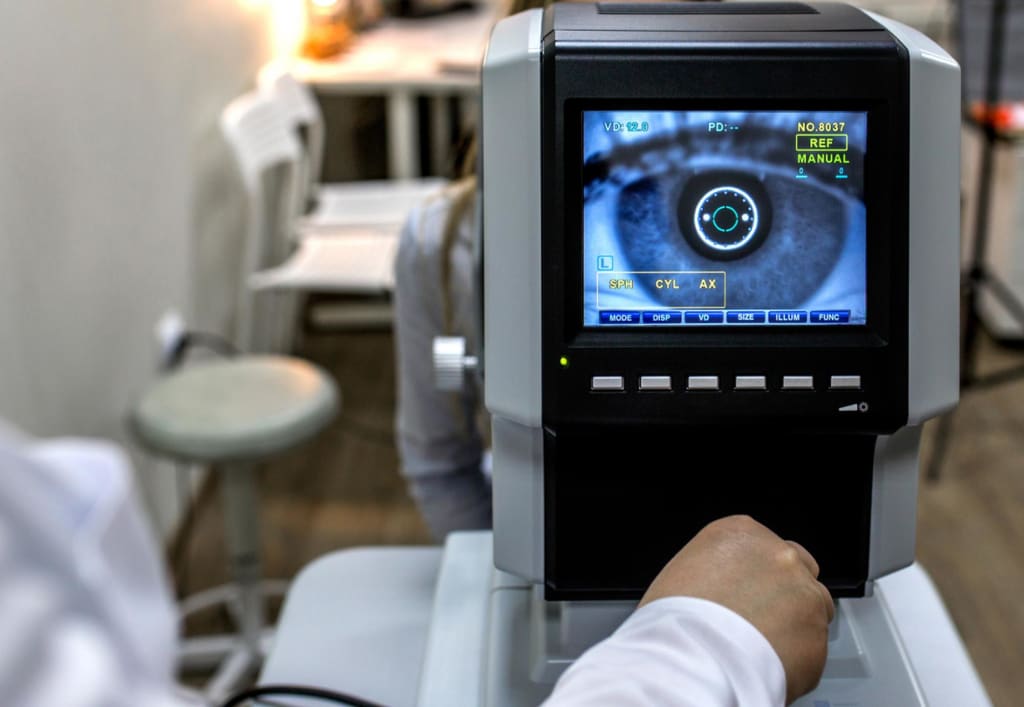
In the movie Never Say Never Again, the bad guy gets surgery to match his retina to the US presidents in order to trick a retinal scanner and access nuclear weapons. James Bond saves the day in his usual dashing manner. In real life, we have retinal scanners, but they aren't great spy gadgets. Instead, this technology is now used by eye doctors to improve your health. Let's explore how it can benefit you in the long run.
The retina, found at the back of your eye, contains rods and cones which convert light into signals for the brain. It is nourished by many blood vessels that supply oxygen and energy. The eye structures must be transparent for light to pass through. Doctors can easily view the retina using non-invasive tools.
When your optometrist uses drops and gives you sunglasses, they are checking your retina. Being able to see your retina helps them assess the health of your eye. But the tech in Bond movies may eliminate the need for those annoying drops. The first retinal camera in 1926 could only image a small part of the retina. Since each person's retina is unique, spy movies and real spies imagine using this technology for identification.
Yes, they do work, but using them can be a pain. Looking through a device that close to your eye can lead to issues like pinkeye. However, these types of devices are becoming more popular in healthcare settings and even in optometrists' offices. They are also improving rapidly. Anything that allows for over 100 degrees of visibility is considered ultra-widefield retinal imaging. The latest instrument available can show doctors 200 degrees of the retina in a single image, which is 82% of it.
Seeing more of the outer part of the retina is good for our health. Fancy cameras can take pictures and store them in our file for comparison over time. This helps doctors track changes and spot issues early on, like glaucoma. Glaucoma often has no symptoms, so early detection is crucial. Ultra-widefield imaging is showing promise in catching early signs of glaucoma. So, with better retinal imaging, we can "Eye Another Day" and protect our vision.
Ultra-widefield retinal imaging systems can do more than just look at your eyes. They can also provide information about diseases in other parts of your body. For example, diabetes can cause changes in the retina, known as diabetic retinopathy. This happens because high blood sugar can damage blood vessels all over the body, including those in the retina. Having more lesions towards the edges of the retina can be a risk factor for the progression of diabetic retinopathy, which ultra-widefield imaging can help us see. In fact, about 20% of the time, using ultra-widefield imaging can lead to a more severe diagnosis of diabetic retinopathy compared to traditional screening methods. It's important to remember that between 10 and 20 percent of adult diabetes cases are undiagnosed, so getting your eyes checked regularly can help catch any potential issues early on.
Optometrists may use retinal imaging to detect diabetic retinopathy in patients who do not know they have diabetes. This helps identify and provide care for these individuals. The health of the retina can also provide insights into heart health. The blood vessels in the retina are connected to those in the body, giving clues about cardiovascular disease. Imaging the retina can offer new opportunities for early detection and treatment.
Ultra-widefield retinal imaging has multiple benefits. Firstly, it provides detailed information on a patient's level of risk, helping doctors plan accordingly. Secondly, it allows for easy comparison of images over time to track changes. Additionally, including this test in a standard eye exam may encourage more people to get screened for cardiovascular disease. Our eyes can also offer insights into our brains. Retinal imaging shows promise in studying and diagnosing central nervous system disorders, such as Alzheimer's disease. By measuring the thickness of the retina, this imaging can indicate if neurons are degenerating. Yet, diagnosing Alzheimer's while a patient is alive remains challenging. Ultra-widefield retinal imaging could offer a more accessible and cost-effective diagnostic option, leading to earlier detection and treatment. So while this technology may not help you unlock your door or board a plane, it holds great potential for monitoring overall health, not just eye health.
Regular visits to the eye doctor can help catch small changes early on. Many people wear glasses and visit the eye doctor frequently. It's really important because doctors can't help if they don't see the problem. The eye doctor can screen for issues and get them treated. We are learning more about how the eye is connected to our overall health. Retinal imaging in optometrists' offices is just starting to help people, and hopefully, it will continue to do so in the future. Live and Let Eye, right? Sorry, couldn't resist a pun!
About the Creator
Keep reading
More stories from Kathy Houston and writers in Futurism and other communities.
CRISPR Gene Therapy Is Here
Have you heard this science story before? Scientists used CRISPR to modify gene X in mice to do thing Y, with hopes for a treatment for disease Z. It usually takes at least ten years for a new innovation to go from theory to clinical practice. CRISPR is now over ten years old and has made its way into the hands of doctors, specifically for treating blood disorders. It's actually helping real people. It's a small number for now, but it's a good start. Let's see how researchers turned a powerful tool into medicine.
By Kathy Houston2 years ago in Futurism
About Binding Prometheus
I want to start actively advocating on behalf of my own work, and the most valuable part of my canon is, without a doubt, Binding Prometheus, the play I have been working on since 2019 and only finished in 2023 as part of my MA. The play itself is an amalgamation of a million different inspirations. On one end, it evokes the Ancient Greek myth-play, deriving its own title from the earliest extant work of Western drama we have, Aeschylus’s Prometheus Bound. On the other end, it borrows significantly from the sci-fi bulwarks from over the years, namely Mary Shelley’s Frankenstein and Karel Capek’s Rossum’s Universal Robots. The play could be an episode of Black Mirror, I fear. I don’t know. I’ve only ever seen one episode of Black Mirror.
By Steven Christopher McKnight25 days ago in Futurism
Exploring New Frontiers: Innovative Methods to Find Exoplanets Around Red Dwarfs
In the quest to understand our place in the universe, one of the most exciting frontiers is the search for planets beyond our solar system. Among the most promising targets are red dwarf stars, also known as M-dwarfs.
By Holianyk Ihor7 days ago in Futurism



Comments
There are no comments for this story
Be the first to respond and start the conversation.