
The Truth About the 4th Dimension
Unveiling the Hidden Dimensions of Reality

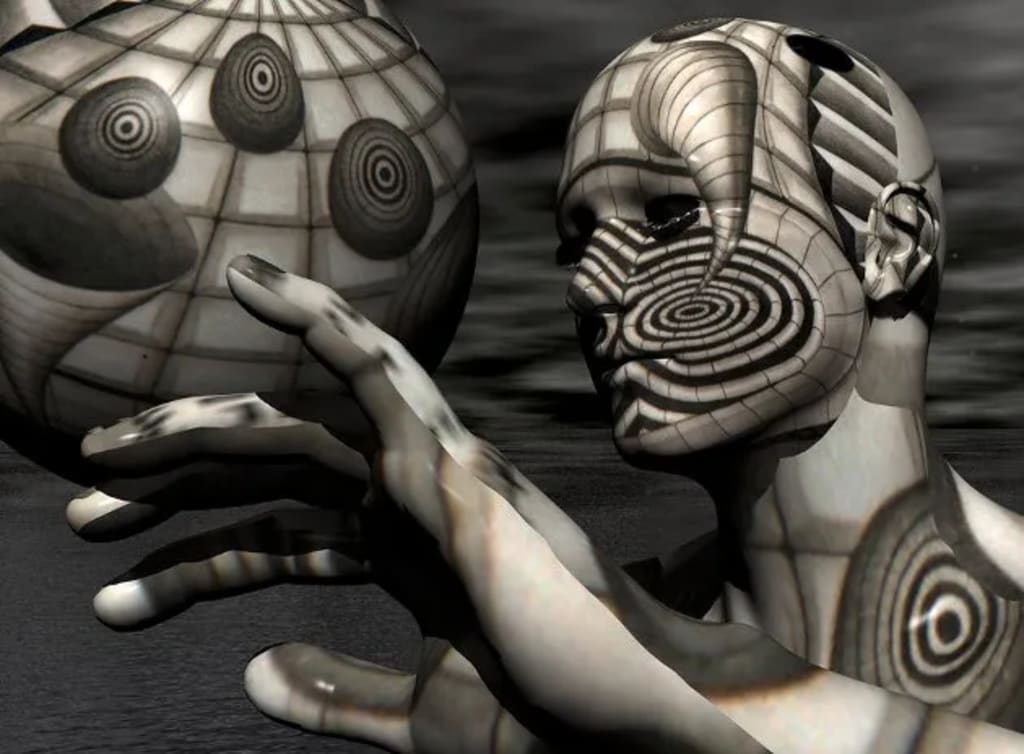
The concept of dimensions has captivated human curiosity for centuries, but it is the elusive fourth dimension that continues to fascinate and challenge our understanding of reality. In this essay, we will delve into the truth about the fourth dimension, exploring its origins, its theoretical implications, and its significance in the realms of science, mathematics, and philosophy. While the fourth dimension remains largely abstract and intangible, we will unravel its secrets, examining the ways in which it has been conceptualized, studied, and speculated upon throughout history. Brace yourself for a journey into the mysterious depths of the fourth dimension.
The Fourth Dimension's beginnings
Ancient civilizations were the first to consider the existence of dimensions outside of our familiar three-dimensional universe. The idea of the fourth dimension, however, didn't really take off until the late 19th century, as a result of ground-breaking research by mathematicians like Bernhard Riemann and Henri Poincaré. A new understanding of space and dimensions was made possible by the study of complex functions by Poincaré and non-Euclidean geometry by Riemann. Mathematicians started to wonder if there might be a fourth spatial dimension in addition to length, breadth, and height around this time.
Representations in Math
The language of mathematics was developed to investigate and comprehend the fourth dimension. The tesseract, or hypercube, which Charles Howard Hinton first proposed in 1880, was one of the first mathematical models used to represent the fourth dimension. In the fourth dimension, a tesseract is a cube that has been stretched to include more perpendicular directions in addition to those we are familiar with from our three-dimensional surroundings.
Mathematician Hermann Minkowski developed the idea of spacetime at the beginning of the 20th century, fusing the time dimension with the three dimensions of space. This ground-breaking hypothesis implies that time might be thought of as the fourth dimension, intimately intertwined into the fabric of the cosmos. Albert Einstein eventually developed this idea in his theory of general relativity.
Theoretical Consequences
The implications of the presence of a fourth dimension cut across many fields of science and philosophy. Physics theories of higher-dimensional spacetime, like string theory and M-theory, heavily depend on the fourth dimension. These theories postulate the presence of spatial dimensions other than the fourth, which, though they are not now perceptible to us, may exist. These dimensions may be able to explain the behavior of subatomic particles and other fundamental cosmological phenomena.
The fourth dimension is also important for comprehending phenomena like time dilation and the universe's expansion. Higher dimensions are also necessary for ideas like wormholes and multidimensional travel, which allow for hypothetical travels past the confines of three-dimensional space.
In the realm of philosophy, the fourth dimension raises profound questions about the nature of reality and perception. It challenges our intuitive understanding of space and forces us to question whether our three-dimensional experiences are merely projections of a higher-dimensional reality. It also encourages contemplation on the possibility of parallel universes and alternate dimensions coexisting alongside our own.
Visualization and experiential challenges
When talking about the fourth dimension, it can be difficult to imagine and experience it. It is extremely challenging to imagine or actually perceive the fourth spatial dimension because our human senses are limited to just detecting three of them. However, a number of graphic representations, animations, and mathematical models have been used to make it easier for us to understand its abstract character.
Artistic undertakings like "Crucifixion (Corpus Hypercubus)" by Salvador Dali and M.C. Escher's elaborate spatial designs offer hints about how the fourth dimension might seem visually. These pieces arouse feelings of perspective, depth, and non-Euclidean geometry.
About the Creator
Jomari Sarabia
My proficiency with the typewriter enables me to be a dependable partner in the pursuit of written expression, whether it be for telling stories, creating poetry, or simply communicating ideas.
Keep reading
More stories from writers in Futurism and other communities.
About Binding Prometheus
I want to start actively advocating on behalf of my own work, and the most valuable part of my canon is, without a doubt, Binding Prometheus, the play I have been working on since 2019 and only finished in 2023 as part of my MA. The play itself is an amalgamation of a million different inspirations. On one end, it evokes the Ancient Greek myth-play, deriving its own title from the earliest extant work of Western drama we have, Aeschylus’s Prometheus Bound. On the other end, it borrows significantly from the sci-fi bulwarks from over the years, namely Mary Shelley’s Frankenstein and Karel Capek’s Rossum’s Universal Robots. The play could be an episode of Black Mirror, I fear. I don’t know. I’ve only ever seen one episode of Black Mirror.
By Steven Christopher McKnightabout a month ago in Futurism
Saudi Arabia Metal Powder Market: Powder Metallurgy, Automotive & Market Expansion
According to IMARC Group's latest research publication, Saudi Arabia metal powder market size reached USD 79.4 Million in 2025. The market is projected to reach USD 113.7 Million by 2034, exhibiting a growth rate of 4.08% during 2026-2034.
By Faisal Al-Harbia day ago in Futurism
One Hard Thing
Stop me if you’ve heard this one before: You have the number, you know your schedule- you’ve even picked out the perfect day and time to make this appointment. Shoot, you’ve even picked out alternative days and times just in case their schedules can’t accommodate you!
By Taylor Rigsby6 days ago in Motivation



Comments (1)
Cool article man