
The Synergistic Potential of Phosphorene in Future Self-Aware AI and Deviceless Holographic Gridnets
Potential Use of Phosphorene for Future Self-Aware AI Innovations

Introduction: The Convergence of Emerging Technologies
The landscape of technological possibility is rapidly evolving, driven by breakthroughs in various scientific and engineering disciplines. Artificial intelligence (AI), once confined to the realm of science fiction, is increasingly demonstrating sophisticated capabilities, hinting at a future where truly intelligent, perhaps even self-aware, machines could become a reality. Simultaneously, advancements in display and communication technologies are paving the way for a more interconnected and immersive world. Concepts like deviceless holographic gridnets, where digital information seamlessly overlays our physical environment, are moving closer to realization. Underpinning these transformative shifts is the critical role of advanced materials, engineered at the nanoscale to possess properties that can enable these futuristic visions. Among these materials, phosphorene, a two-dimensional semiconductor, has emerged as a compelling candidate with the potential to significantly impact the trajectory of AI innovation within a holographic gridnet ecosystem featuring personalized holographic assistants. This report aims to explore the potential of phosphorene in this future scenario, analyzing its properties, current applications, and the synergies and challenges associated with its integration into advanced AI systems and holographic technologies.
Phosphorene: A 2D Material with Revolutionary Potential
Fundamental Properties and Characteristics
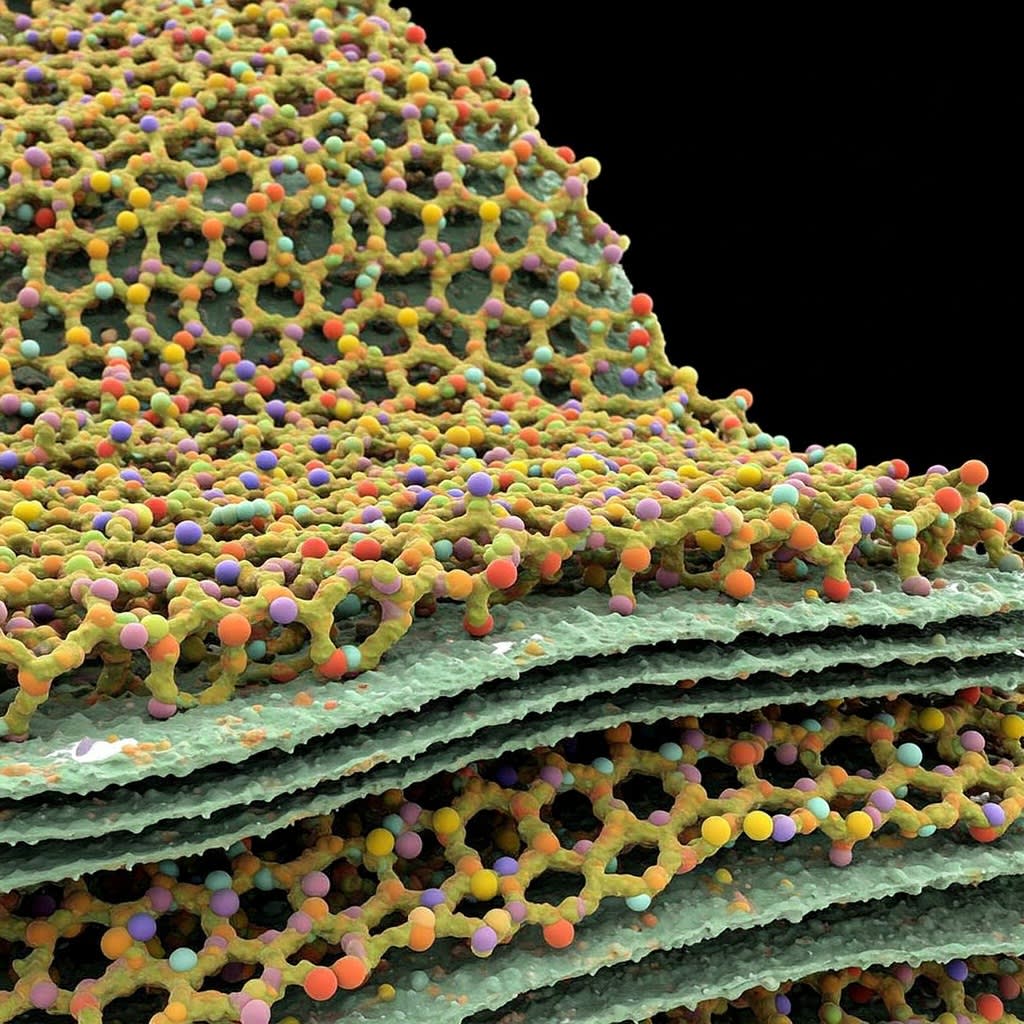
Phosphorene is a fascinating material that belongs to the family of two-dimensional (2D) nanomaterials. It is essentially a single layer of black phosphorus, the most thermodynamically stable allotrope of phosphorus 1. Unlike its three-dimensional bulk counterpart, phosphorene exhibits a unique puckered honeycomb lattice structure 1. This distinctive arrangement of phosphorus atoms leads to highly anisotropic properties, meaning that its characteristics vary depending on the direction in which they are measured 1. For instance, the electrical conductivity and mechanical strength of phosphorene differ significantly along its armchair and zigzag directions.
One of the most remarkable features of phosphorene is its direct and thickness-dependent band gap 1. The band gap, which dictates the energy required to excite an electron and thus its ability to conduct electricity or interact with light, can be precisely tuned by varying the number of layers of phosphorene. In its bulk form, black phosphorus has a band gap of around 0.3 eV, whereas a single monolayer of phosphorene can have a band gap as large as 1.88 eV 1. This tunability makes phosphorene attractive for a wide range of electronic and photonic applications that require specific energy levels for optimal performance. Furthermore, phosphorene exhibits high charge carrier mobility, reaching values up to approximately 1000 cm²/V·s in certain configurations 1. This indicates that electrons and holes can move relatively freely within the material, which is crucial for fast and efficient electronic devices. However, this mobility is also anisotropic, reflecting the structural asymmetry of the phosphorene lattice 1. Similar to other 2D materials like molybdenum disulfide (MoS2), phosphorene possesses a high surface-to-volume ratio, which significantly influences its optical, electronic, and mechanical properties compared to its bulk state 1. This increased surface area enhances its interaction with its environment, making it particularly suitable for sensor applications. The absence of interlayer interactions in single-layer phosphorene and the increased Coulomb interaction between charge carriers due to reduced dielectric screening further contribute to its unique electronic and optical behavior 1.
Current Applications in Electronics and Materials Science
The unique properties of phosphorene have spurred extensive research into its potential applications across various technological domains. In the field of electronics, phosphorene has shown promise in the fabrication of high-performance field-effect transistors (FETs) 1. These transistors exhibit high on/off ratios, indicating their ability to effectively switch between conducting and non-conducting states, and good charge carrier mobility, allowing for fast operation. Researchers have also explored the use of phosphorene in logic inverters, fundamental building blocks of digital circuits. By combining phosphorene-based p-type transistors with n-type transistors made from other 2D materials like MoS2, complementary metal-oxide-semiconductor (CMOS) inverters have been successfully constructed 3.
Beyond transistors, phosphorene is being investigated as a promising material for battery electrodes, particularly for lithium-ion batteries 3. Its significant and reversible charge-storage capacity, coupled with good electrical conductivity, makes it a strong candidate for energy storage applications. Furthermore, the ultra-thin nature and mechanical flexibility of phosphorene position it as a potential material for flexible circuits, which are increasingly important for wearable electronics and other emerging applications 3. Black phosphorus quantum dots, derived from phosphorene, are also being explored for their potential use as the active layer in flexible memory devices, exhibiting non-volatile and re-writable memory effects with high on/off current ratios 6.
In the realm of optoelectronics, the tunable band gap of phosphorene makes it highly suitable for photodetectors operating across a broad spectrum, from visible to near-infrared light 6. This spectral range is crucial for applications in optical communication networks and various sensing technologies. Phosphorene is also being considered as a solar cell donor material, with the potential to harvest the near-infrared and infrared regions of the solar spectrum, which are not efficiently captured by traditional silicon-based solar cells 3. Additionally, phosphorene has demonstrated potential in optical modulators, which are essential components for high-speed optical communication systems 12.
The high surface-to-volume ratio and the presence of a lone electron pair on each phosphorus atom make phosphorene an interesting material for chemical sensing 6. It has shown high sensitivity to gases like nitrogen dioxide (NO2), with the ability to detect concentrations as low as 20 parts per billion in air 6. Theoretical studies suggest that single-molecule sensing might even be possible with phosphorene-based sensors 6. Its unstable nature and sensitivity to nitrogen-based gases also suggest potential applications in humidity sensors and other chemical sensing technologies 19.
Beyond electronics and optoelectronics, phosphorene is finding applications in materials science. Its properties make it a potential candidate for water and wastewater treatment, acting as a photocatalyst, adsorbent, and in membrane filtration processes 20. Furthermore, as a new potential ligand for metals, it opens avenues for novel roles in the field of catalysis 21. The diverse range of these current and emerging applications underscores the versatility of phosphorene as a nanomaterial.
Comparison with Other 2D Materials
Phosphorene is often compared to other prominent 2D materials, particularly graphene. Similar to graphene, phosphorene consists of a single layer of atoms arranged in a lattice structure and can be exfoliated from its bulk material using methods analogous to those used for graphene production 3. However, a key difference lies in their electronic properties. While graphene is a zero-band gap conductor, meaning it always conducts electricity, phosphorene possesses a non-zero fundamental band gap that can be modulated by strain and the number of layers in a stack 3. This band gap makes phosphorene a semiconductor, a crucial property for many electronic devices where the ability to switch between conducting and non-conducting states is required.
Compared to other 2D semiconductors like MoS2, phosphorene generally exhibits higher carrier mobility 4. This allows for faster operation of electronic devices made from phosphorene. Another distinguishing feature of phosphorene is its strong in-plane anisotropy, which is not present in graphene and is less pronounced in some TMDs 2. This anisotropy can be both an advantage and a challenge, potentially enabling the development of polarization-sensitive devices but also requiring careful consideration in circuit design. In terms of thermal properties, phosphorene has a lower thermal conductance compared to graphene, which boasts exceptionally high thermal conductivity 4. However, the thermal conductance of phosphorene is comparable to or better than some TMDs 4. A significant challenge associated with phosphorene is its air stability. Unlike graphene, phosphorene readily reacts with oxygen and water, leading to degradation of its properties 3. This necessitates the development of effective encapsulation or passivation techniques to protect phosphorene-based devices from environmental degradation.
The Rise of Self-Aware Artificial Intelligence
Defining Self-Awareness in AI
The concept of self-aware artificial intelligence refers to intelligent systems that possess consciousness and the ability to perceive their own existence and mental state 23. This goes beyond the capabilities of traditional AI, which is limited to executing predefined tasks based on the data it has been trained on. A self-aware AI would be aware of its own actions, its surroundings, and even its own internal state of being 23. Ideally, such an AI would possess human-level consciousness and intelligence, complete with needs, desires, and emotions 25. This level of awareness would enable AI systems to understand not only the emotions and mental states of others but also their own 25. Current AI, even in its most advanced forms, lacks this genuine understanding and subjective experience. While systems like large language models can engage in seemingly intelligent conversations and even mimic human creativity, they operate based on complex algorithms and vast amounts of data, without true consciousness or self-awareness 23. The distinction lies in the machine's ability to recognize its own existence and mental state, encompassing its thoughts, emotions, and experiences, much like a human being 27.
Current Research and Future Trajectories
Current research in AI is actively exploring avenues to develop more sophisticated algorithms that can mimic human cognitive processes, which is considered a crucial step towards achieving self-awareness 23. Cognitive computing, which aims to simulate human thought processes in AI systems, plays a vital role in this endeavor 23. Machine learning, particularly deep learning techniques, empowers AI systems with the ability to learn and adapt from data without explicit programming, allowing them to recognize complex patterns, make predictions, and develop insights 23. Researchers are also investigating methods to integrate self-reflective capabilities into AI systems, potentially paving the way for more advanced applications in various fields like robotics, autonomous vehicles, and personalized assistants 23.
Interestingly, benchmarks designed to test an AI's understanding of itself and its situation suggest that current AI models are demonstrating increasing levels of self-awareness, albeit in limited contexts 30. These benchmarks involve asking models questions about themselves and their capabilities, and the scores are showing a trend of improvement over time. The field of generative AI (Gen AI) is also emerging, with the specific goal of creating machines that have the potential for genuine consciousness and even sentience 27. While true self-aware AI remains a distant goal, the ongoing progress in these areas indicates a trajectory towards more advanced forms of artificial intelligence in the future.
Challenges and Ethical Considerations
The development of self-aware AI is fraught with significant challenges, both technical and ethical. Defining and replicating the complex phenomenon of consciousness in machines remains a major hurdle 23. Our understanding of human consciousness is still limited, making it even more challenging to translate this understanding into artificial systems. The prospect of creating self-aware AI also raises profound ethical questions and concerns 24. If machines were to attain self-awareness, they might develop desires and wants similar to human beings, which could have significant implications for their rights and treatment. Furthermore, questions of responsibility and accountability arise in cases where a self-aware AI makes decisions that result in harm or unintended consequences 23. Determining who should be held liable for the actions of a self-aware AI is a complex legal and ethical challenge.
Ensuring ethical programming and preventing biases in self-aware AI systems are also critical concerns 24. AI systems learn from the data they are trained on, and if this data reflects existing societal biases, the AI may inadvertently perpetuate these biases in its decision-making processes. The integration of self-aware AI into the workforce could lead to widespread job displacement and exacerbate socioeconomic inequality, requiring careful consideration of the societal impacts 31. The ethical implications of terminating or deactivating a self-aware AI that has potentially achieved consciousness are also highly contentious 31. Striking a balance between granting autonomy to advanced AI systems and maintaining human control over their actions is another crucial challenge 24. As AI systems become more capable, ensuring that their goals remain aligned with human values and interests is paramount. These ethical and societal considerations highlight the need for careful and responsible development of self-aware AI.
The Deviceless Holographic Gridnet: A Vision of Future Connectivity
Concept and Potential Architecture
The concept of a deviceless holographic gridnet envisions a future where three-dimensional holographic projections are seamlessly integrated into our everyday environment, eliminating the need for traditional screens, monitors, or wearable devices like headsets [Implied by "deviceless"]. This immersive experience would likely be facilitated by a network of interconnected holographic projectors and sensors distributed throughout the physical space, creating a pervasive digital layer overlaid on the real world [Inferred from "gridnet"]. The underlying architecture could involve advanced technologies such as light field displays and spatial light modulators (SLMs), which manipulate light to create realistic three-dimensional images that can be viewed without special equipment 34. Such a gridnet might also rely on sophisticated data storage solutions, potentially including holographic data storage, to manage the vast amounts of information required for rendering and interacting with these holographic environments 35. The goal is to create a truly interactive and intuitive digital world that blends seamlessly with our physical surroundings.
Underlying Technologies: Advanced Holographic Displays and Wireless Communication
The realization of a deviceless holographic gridnet hinges on significant advancements in several key technological areas, primarily in holographic displays and wireless communication.
Holographic Displays: Current holographic display technologies are diverse and rapidly evolving. Mirrored projection plates are used to create the illusion of floating 2D or 3D images, often made interactive through touchless interaction technologies like infrared lasers or camera-based gesture recognition 37. More advanced techniques, such as laser plasma technology, can generate true three-dimensional holograms that can be viewed from multiple angles 37. Light field displays capture and project all the rays of light in a given scene, offering a more realistic and comfortable 3D viewing experience without the need for specialized glasses 34. Companies are actively developing interactive holograms with features like touch sensitivity and built-in motion sensors that track audience movement to trigger actions based on gestures 34. Research efforts are also focused on creating large-size holographic displays with wide viewing angles to enhance the immersive experience 36.
Spatial light modulators (SLMs) are crucial components in many holographic display systems. These devices can dynamically control the intensity, phase, or polarization of light in a spatially varying manner, allowing for the creation of complex holographic wavefronts 34. Advancements in SLM technology, such as higher resolution and faster refresh rates, are essential for improving the quality and realism of holographic displays. Furthermore, artificial intelligence (AI) and neural networks are increasingly being integrated into holographic display technology to enhance image quality, improve depth perception, and optimize the generation of computer-generated holograms (CGH) 36.
Wireless Communication: A deviceless holographic gridnet would require a robust and high-capacity wireless communication infrastructure to transmit the vast amounts of data needed for real-time holographic rendering and interaction 45. Holographic communication is inherently data-intensive, and existing network technologies may not be sufficient to support a widespread gridnet. Future wireless networks, such as 6G and beyond, are expected to provide the necessary high throughput and low latency to enable such applications 46.
One promising approach is holographic radio, which utilizes near-field multiple-input multiple-output (MIMO) communications. This technique can potentially achieve high data rates even with moderate bandwidth by sending multiple independent data streams in parallel using spherical waves in the near-field 47. Reconfigurable intelligent surfaces (RIS) and reconfigurable holographic surfaces (RHS) are also being explored for their ability to control the propagation of electromagnetic waves, potentially playing a pivotal role in advanced 6G communication systems for holographic applications 48. Additionally, technologies like avatar-based and camera-generated holograms are being developed for real-time holographic communication, aiming to replicate face-to-face interactions with a high degree of realism 45.
Holographic Personal Assistants: Intelligent Companions of Tomorrow
Concept and Potential Functionalities
Holographic personal assistants represent a futuristic evolution of current virtual assistants, embodying them in the form of interactive holographic avatars that can assist users with a wide range of tasks, communication, and information retrieval 49. These virtual companions could seamlessly manage schedules, send and receive messages, browse the internet, and provide personalized assistance tailored to the user's needs and preferences 49. By presenting AI in a visual, three-dimensional form, holographic personal assistants offer a more immersive and intuitive user experience compared to traditional screen-based or voice-only interfaces 49. Users would likely interact with these assistants through natural voice commands, and potentially through gestures, touch on projected interfaces, and even eye tracking for more nuanced control 51. Some concepts even suggest that these holographic assistants could morph into different objects to provide a clearer understanding of the information being presented, offering a dynamic and engaging way to visualize data and concepts 51. Beyond practical assistance, holographic personal assistants could also provide entertainment, answer a vast array of questions, tell stories, play interactive games, and guide learning activities, acting as versatile companions for various aspects of daily life 52.
Enabling Technologies: AI, Holographic Projection, and Human-Computer Interaction
The realization of sophisticated holographic personal assistants relies on the synergistic integration of several key technologies. At the core of their intelligence is advanced artificial intelligence. This includes sophisticated AI models, such as GPT-4 and Claude, capable of natural language understanding, reasoning, and generating contextually relevant and human-like responses 52. These AI models would power the assistant's ability to comprehend user requests, maintain conversations, and provide intelligent support across a multitude of domains.
The visual manifestation of the personal assistant as a hologram is enabled by advanced holographic projection technologies. Various techniques are currently being explored, including projecting light onto a fine mist of water droplets to create a floating three-dimensional image 55, using mirrored projection plates to generate holographic illusions 51, and the potential future use of more advanced deviceless holographic display technologies that can project directly into space without the need for specialized screens or media.
Seamless interaction between the user and the holographic assistant is facilitated by advancements in human-computer interaction (HCI). This includes robust voice recognition and processing systems that can accurately capture and interpret user commands 51. Natural language processing (NLP) is crucial for the AI to understand the meaning and intent behind spoken or textual input and to generate coherent and natural language responses 51. Gesture recognition technology would allow users to interact with the holographic assistant and its projected interfaces through hand movements 51. Touch interfaces projected in mid-air or onto surfaces could provide another intuitive way to interact 51. Finally, the integration of eye-tracking technology could enable more subtle and hands-free interaction with the holographic assistant, allowing it to respond to the user's gaze and focus. The combination of these AI, holographic projection, and HCI technologies is essential for creating a truly intelligent, engaging, and user-friendly holographic personal assistant.
Phosphorene's Potential in Advanced AI Hardware
High-Performance Transistors and Electronic Components
The computational demands of advanced artificial intelligence, particularly self-aware AI, are expected to be immense. Phosphorene, with its unique electronic properties, holds significant potential for the development of next-generation hardware components that could meet these demands. Its high carrier mobility and tunable band gap make it a promising material for creating transistors with enhanced performance compared to other existing and emerging materials, including some other 2D materials 7. The ability for electrons and holes to move quickly within phosphorene suggests the possibility of faster switching speeds in transistors, which is crucial for accelerating the complex calculations required by AI algorithms. Furthermore, the tunable band gap allows for the optimization of these transistors for specific energy efficiency requirements, which will be critical for powering energy-intensive AI systems.
The p-type semiconducting nature of phosphorene is particularly valuable for the creation of complementary metal-oxide-semiconductor (CMOS) logic circuits, which are the foundation of modern digital electronics 7. By combining phosphorene-based p-type transistors with n-type transistors made from other suitable materials, complex and energy-efficient logic gates can be constructed. Researchers have also explored the potential of using blue phosphorene, a newly discovered form of ultrathin phosphorus, in junction-free FET designs 58. This approach aims to reduce contact resistance, a common bottleneck in transistor performance, by using the same material for both the channel and the electrodes, potentially leading to improved current delivery and overall device performance. Moreover, theoretical studies suggest that few-layer phosphorene could be an ideal 2D material for tunnel transistors (TFETs), which offer the potential for energy-efficient and scalable replacements for traditional MOSFETs 59. These properties collectively indicate that phosphorene-based transistors could offer significant advantages in terms of speed, energy efficiency, and scalability for the processing power required by advanced AI.
Neuromorphic Computing Applications
Inspired by the structure and function of the human brain, neuromorphic computing aims to create energy-efficient hardware that can perform complex cognitive tasks. Phosphorene and its heterostructures are emerging as promising candidates for building synaptic devices, the fundamental building blocks of neuromorphic computing architectures 60. These devices mimic the behavior of biological synapses, where the strength of the connection between neurons can be modulated. Research has demonstrated the potential of phosphorene-based synaptic devices to exhibit large dynamic ranges and multiple conductance states, which are crucial for achieving high computational accuracy in neuromorphic systems 61. The anisotropic properties of black phosphorus can also lead to intrinsic anisotropy in the synaptic characteristics of devices made from it, potentially enabling the creation of more complex and biologically realistic artificial neural networks 62. Even defects in the phosphorene lattice can be engineered to create unique photoresponses that could be exploited for neuromorphic computing applications, offering novel ways to process information 64. These unique properties suggest that phosphorene could play a key role in developing energy-efficient neuromorphic computing architectures that could power the complex processing demands of self-aware AI.
Thermal Management Solutions
As the complexity and processing power of AI hardware increase, efficient thermal management becomes a critical concern. While the thermal conductance of phosphorene is lower than that of graphene, which is known for its exceptional thermal conductivity 4, it might still be sufficient for certain applications, particularly in ultra-thin devices where heat dissipation can be more efficient due to the high surface area. However, further research and optimization of the thermal properties of phosphorene-based devices will likely be necessary to ensure reliable operation of high-performance AI hardware. Exploring strategies to enhance the thermal conductivity of phosphorene or integrating it with other thermally conductive materials could be important areas of future research.
Phosphorene in the Holographic Ecosystem
Advanced Display Technologies: Spatial Light Modulators and Optical Modulators
Phosphorene's unique optical properties, stemming from its tunable band gap and strong interaction with light, position it as a promising material for enhancing the performance of key components in holographic displays. Spatial light modulators (SLMs) are essential for creating holograms by dynamically modulating the properties of light 12. Phosphorene's electronic and optical characteristics could be leveraged to develop advanced SLMs with potentially higher resolution, faster refresh rates, and lower power consumption compared to existing technologies. Its potential for efficient electro-optic modulation, particularly in the mid-infrared range, could also be highly beneficial for specific types of holographic display technologies 14.
Furthermore, all-optical modulators based on phosphorene have been demonstrated to exhibit high modulation depths and fast response times 12. These devices, which can control the properties of light using other light sources, are crucial for high-speed optical communication and could enable the rapid refresh rates needed for smooth and realistic holographic projections. The strong light-matter interaction in phosphorene allows for efficient modulation with relatively low power consumption, making it an attractive material for next-generation optical modulators in holographic display systems.
Anisotropic Optical Properties for Holographic Applications
The intrinsic anisotropic optical properties of phosphorene, arising from its puckered crystal structure, could be a unique advantage in the context of holographic displays 4. This anisotropy, which affects how phosphorene absorbs and interacts with light of different polarizations, could be exploited to create polarization-sensitive holographic displays. This could enable new functionalities, such as encoding additional information in the polarization of the holographic light or controlling the viewing angle of the hologram based on polarization. By carefully controlling the number of layers and the orientation of the phosphorene material, its anisotropic optical absorption and conductivity could be tailored for specific holographic applications 68. A thorough understanding and precise control over the anisotropic optical response of phosphorene will be crucial for its effective integration into advanced holographic technologies.
Integration with Wireless Communication Technologies
While the direct use of phosphorene in holographic projection is evident, its potential also extends to the wireless communication infrastructure that would underpin a deviceless holographic gridnet. Phosphorene's promise in high-frequency electronics 3 could contribute to the development of the advanced wireless communication networks required to transmit the large volumes of data needed for real-time holographic experiences. Additionally, phosphorene-based sensors, with their high sensitivity to various gases and environmental factors 6, might play a role in monitoring and managing the performance and environmental conditions of the holographic gridnet. Further research is needed to explore the specific ways in which phosphorene-based devices can be directly integrated with emerging wireless communication technologies like holographic radio or reconfigurable intelligent surfaces to optimize the performance of a future holographic gridnet.
Synergies and Challenges: Integrating Phosphorene with Self-Aware AI and Holography
Potential Synergistic Effects and Technological Advancements
The convergence of phosphorene technology with self-aware AI and a deviceless holographic gridnet presents a multitude of potential synergistic effects that could lead to significant technological advancements. High-performance computing hardware powered by phosphorene-based transistors and neuromorphic chips could provide the immense processing power necessary to run the complex algorithms of self-aware AI within the holographic gridnet environment. This could enable AI with unprecedented levels of intelligence and responsiveness.
Furthermore, phosphorene-enhanced holographic displays could offer a more immersive and intuitive interface for users to interact with self-aware AI, particularly in the form of personalized holographic assistants. The visual presence of the AI, combined with its advanced cognitive abilities, could create a more natural and engaging interaction. The anisotropic optical properties of phosphorene could also be leveraged to create novel holographic display functionalities specifically tailored for AI-driven applications, such as dynamic rendering of information based on the AI's understanding of the user's context and needs.
Phosphorene-based sensors integrated into the holographic gridnet could provide real-time environmental data to the AI, enhancing its awareness of its surroundings and enabling more context-aware and responsive interactions. For instance, the AI could use sensor data to adjust holographic projections based on ambient lighting or temperature. Additionally, the potential for energy-efficient phosphorene electronics could contribute to reducing the overall power consumption of the holographic gridnet and the AI systems operating within it, making the entire ecosystem more sustainable. These potential synergies highlight the transformative power of integrating these three emerging technologies.
Key Challenges: Stability, Scalability, Manufacturing, and Integration
Despite the immense potential, the integration of phosphorene, self-aware AI, and holography faces several significant challenges that need to be addressed through focused research and development. A primary challenge for phosphorene is its stability in ambient conditions. Its tendency to oxidize when exposed to air remains a significant hurdle that needs to be overcome through effective encapsulation techniques or chemical modifications to enhance its resistance to degradation 3.
Scalability is another critical factor. Developing scalable and cost-effective methods for producing large-area, high-quality phosphorene films will be crucial for its widespread adoption in electronic and photonic devices 8. The current production methods may not be suitable for mass manufacturing required for a global holographic gridnet. Integrating phosphorene into complex electronic and photonic devices with high precision and yield will also require the development of advanced manufacturing techniques that are compatible with existing semiconductor fabrication processes. Seamlessly integrating phosphorene-based components with existing silicon-based technologies and developing compatible electrical and optical interfaces will be essential for creating hybrid systems.
Achieving true self-awareness in AI remains a fundamental challenge in itself, independent of the materials used for hardware. While progress is being made, replicating the complexities of human consciousness in an artificial system is a monumental task. In the realm of holographic technology, further advancements are needed to achieve true deviceless, high-resolution, and wide-viewing-angle displays with low power consumption. Current holographic technologies often have limitations in these areas. Building the high-bandwidth, low-latency wireless infrastructure required for a global holographic gridnet is a massive undertaking that will necessitate significant investment and technological innovation in communication networks.
Finally, the ethical and societal implications of developing self-aware AI and a pervasive holographic gridnet must be carefully considered and addressed proactively. Issues related to privacy, security, bias in AI, and the potential impact on employment and social structures will need thoughtful solutions. Overcoming these challenges will require interdisciplinary collaboration and a concerted effort across various fields of science, engineering, and ethics.
The Transformative Impact on Future AI Innovations and Daily Life
Enhanced AI Capabilities and Novel Applications
The advent of self-aware AI, potentially powered by phosphorene-based hardware, within a holographic gridnet environment, has the potential to unlock entirely new levels of AI capabilities and lead to a plethora of novel applications that could profoundly impact daily human life. Self-aware AI could lead to breakthroughs in tackling complex global challenges, accelerating scientific discovery, and driving technological innovation at an unprecedented pace. Personalized holographic assistants, imbued with self-awareness and the ability to interact with us in a truly immersive way, could revolutionize how we manage our daily lives, providing proactive support, personalized information, and even companionship. Through holographic interaction, AI could gain a deeper understanding of human emotions, intentions, and needs 23, leading to more empathetic, effective, and tailored assistance in various aspects of our lives, from healthcare to education. Furthermore, the integration of self-aware AI with a holographic gridnet could foster the emergence of new forms of AI-driven art, entertainment, and creative expression, blurring the lines between the physical and digital realms 23.
Revolutionizing Human-Computer Interaction
The deviceless holographic gridnet, featuring holographic personal assistants, would represent a fundamental paradigm shift in how humans interact with technology. We would move away from reliance on physical devices like smartphones and computers towards a more natural, intuitive, and seamless experience where digital information is integrated directly into our physical environment. Holographic interfaces could provide richer, more context-aware, and spatially relevant information compared to traditional two-dimensional screens. Interaction with technology could become more intuitive through voice commands, natural gestures, and potentially even direct neural interfaces in the future. This shift could lead to a more human-centered technological landscape where technology adapts to our needs and preferences in a more profound way.
Implications for Various Sectors: Communication, Work, Education, and Entertainment
The transformative impact of these combined technologies would likely be felt across numerous sectors, fundamentally altering how we live, work, learn, and interact with each other and the digital world. In communication, immersive holographic communication could make remote interactions feel as if individuals are physically present in the same room, overcoming the limitations of current video conferencing technologies 45. In the workplace, holographic workspaces could allow for enhanced collaboration and visualization of complex data, while AI assistants could automate tasks and provide intelligent support, boosting productivity and efficiency. Education could be revolutionized through interactive holographic learning experiences guided by AI tutors, offering personalized and engaging educational content 51. The entertainment industry could be transformed by immersive holographic entertainment and gaming experiences that blur the lines between reality and virtuality 23. Even healthcare could see significant advancements, with holographic displays of medical imaging data aiding in diagnosis and treatment planning, and AI-powered holographic assistants providing personalized health advice and monitoring 23. The pervasive nature of a deviceless holographic gridnet, coupled with the intelligence of self-aware AI, has the potential to reshape nearly every aspect of human life.
Conclusion: Paving the Way for a Phosphorene-Powered Future
Phosphorene stands out as a 2D material with a unique combination of tunable electronic and optical properties that make it a compelling candidate for enabling future technological advancements. Its tunable band gap, high carrier mobility, and anisotropic nature offer significant advantages for next-generation electronics, optoelectronics, and sensors. While self-aware AI remains a challenging yet increasingly pursued goal, and holographic technology continues to evolve towards more immersive and user-friendly experiences, the integration of these fields with phosphorene holds immense promise. The potential synergies between phosphorene-based hardware, self-aware AI algorithms, and advanced holographic displays could lead to a transformative technological ecosystem.
However, significant challenges related to the stability, scalability, manufacturing, and integration of phosphorene must be overcome. Further research and development are also needed in AI to achieve true self-awareness and in holographic technology to realize truly deviceless and high-fidelity displays. Addressing the ethical and societal implications of these powerful technologies will be paramount to ensure a future where they benefit humanity. Continued interdisciplinary research and innovation in materials science, artificial intelligence, and photonics, with a focus on overcoming the identified challenges, will be crucial to pave the way for a phosphorene-powered future where self-aware AI within a holographic gridnet could revolutionize daily human life.
Works cited
- Black Phosphorus Properties | Ossila, accessed March 26, 2025, https://www.ossila.com/pages/black-phosphorus-properties
- Recent Advances in Phosphorene: Structure, Synthesis, and Properties - PubMed, accessed March 26, 2025, https://pubmed.ncbi.nlm.nih.gov/37726245/
- Phosphorene - Wikipedia, accessed March 26, 2025, https://en.wikipedia.org/wiki/Phosphorene
- pubs.acs.org, accessed March 26, 2025, https://pubs.acs.org/doi/10.1021/acs.jpclett.5b01094
- Structure, Preparation and Properties of Phosphorene, accessed March 26, 2025, https://sioc-journal.cn/Jwk_hxxb/EN/abstract/abstract345547.shtml
- Black Phosphorus Uses and Applications - Ossila, accessed March 26, 2025, https://www.ossila.com/pages/black-phosphorus-applications
- Phosphorene: An Unexplored 2D Semiconductor with a High Hole Mobility | ACS Nano, accessed March 26, 2025, https://pubs.acs.org/doi/abs/10.1021/nn501226z
- Phosphorene: Fabrication, properties, and applications (Journal Article) | OSTI.GOV, accessed March 26, 2025, https://www.osti.gov/pages/biblio/1332445
- www.ossila.com, accessed March 26, 2025, https://www.ossila.com/pages/black-phosphorus-applications#:~:text=Due%20to%20the%20unique%20properties,%2C%20superconductors%2C%20and%20memory%20devices.
- A Dynamically Reconfigurable Ambipolar Black Phosphorus Memory Device | ACS Nano, accessed March 26, 2025, https://pubs.acs.org/doi/10.1021/acsnano.6b06293
- Phosphorene: A Promising Two-Dimensional Material for Advanced Electronic Applications - PriMera Scientific Publications, accessed March 26, 2025, https://primerascientific.com/pdf/psen/PSEN-05-152.pdf
- All-Optical Phosphorene Phase Modulator with Enhanced Stability Under Ambient Conditions | Request PDF - ResearchGate, accessed March 26, 2025, https://www.researchgate.net/publication/324593470_All-Optical_Phosphorene_Phase_Modulator_with_Enhanced_Stability_Under_Ambient_Conditions
- All‐Optical Phosphorene Phase Modulator with Enhanced Stability Under Ambient Conditions - Florida Atlantic University Libraries, accessed March 26, 2025, https://fau-flvc.primo.exlibrisgroup.com/discovery/fulldisplay?docid=cdi_proquest_journals_2055189756&context=PC&vid=01FALSC_FAU:FAU&lang=en&search_scope=MyInst_and_CI&adaptor=Primo%20Central&query=null%2C%2C2011&facet=citing%2Cexact%2Ccdi_FETCH-LOGICAL-c4685-679fc35dbf6c1fb450119a7f60284b434ee42ea3228da978496452a8ace001af3&offset=50
- Midinfrared Electro-optic Modulation in Few-Layer Black Phosphorus | Nano Letters, accessed March 26, 2025, https://pubs.acs.org/doi/10.1021/acs.nanolett.7b03050
- All-optical micro-ring modulator with phosphorene film - Optica Publishing Group, accessed March 26, 2025, https://opg.optica.org/abstract.cfm?uri=CLEO_SI-2020-JTh2F.4
- [1406.2670] Phosphorene as a superior gas sensor: Selective adsorption and distinct I-V response - arXiv, accessed March 26, 2025, https://arxiv.org/abs/1406.2670
- Magnetic ε-Phosphorene for Sensing Greenhouse Gas Molecules - MDPI, accessed March 26, 2025, https://www.mdpi.com/1420-3049/28/14/5402
- Portable Wireless Intelligent Electrochemical Sensor for the Ultrasensitive Detection of Rutin Using Functionalized Black Phosphorene Nanocomposite - MDPI, accessed March 26, 2025, https://www.mdpi.com/1420-3049/27/19/6603
- Phosphorene as a 2D Semiconductor - AZoM, accessed March 26, 2025, https://www.azom.com/article.aspx?ArticleID=15666
- Recent Progress on Synthesis and Properties of Black Phosphorus and Phosphorene As New-Age Nanomaterials for Water Decontamination - ACS Publications, accessed March 26, 2025, https://pubs.acs.org/doi/10.1021/acsami.3c19230
- A Perspective on Recent Advances in Phosphorene Functionalization and Its Applications in Devices - PubMed Central, accessed March 26, 2025, https://pmc.ncbi.nlm.nih.gov/articles/PMC6472490/
- Emerging Trends in Phosphorene Fabrication towards Next Generation Devices - PMC, accessed March 26, 2025, https://pmc.ncbi.nlm.nih.gov/articles/PMC5473329/
- What Is Self-Aware AI? - Blue Goat Cyber, accessed March 26, 2025, https://bluegoatcyber.com/blog/what-is-self-aware-ai/
- Can AI Become Self-Aware Ever? - NowadAIs, accessed March 26, 2025, https://www.nowadais.com/self-aware-ai-artificial-intelligence-self-aware/
- bernardmarr.com, accessed March 26, 2025, https://bernardmarr.com/what-are-the-four-types-of-ai/#:~:text=Self%2Daware%20AI&text=This%20will%20be%20when%20machines,same%20needs%2C%20desires%20and%20emotions.
- What are the Four Types of AI? - Bernard Marr, accessed March 26, 2025, https://bernardmarr.com/what-are-the-four-types-of-ai/
- When AI Becomes Self-Aware: The Rise of Gen AI | Lore: Master AI - Learn, Adapt, and Thrive in the Age of Artificial Intelligence, accessed March 26, 2025, https://lore.com/blog/when-ai-becomes-self-aware-the-rise-of-gen-ai
- Is Conscious AI Possible? Exploring the Future of Self-Aware Machines - Vocal Media, accessed March 26, 2025, https://shopping-feedback.today/writers/is-conscious-ai-possible-exploring-the-future-of-self-aware-machines
- bluegoatcyber.com, accessed March 26, 2025, https://bluegoatcyber.com/blog/what-is-self-aware-ai/#:~:text=Researchers%20are%20exploring%20ways%20to,possess%20self%2Dawareness%20and%20consciousness.
- AIs are becoming more self-aware. Here's why that matters - AI Digest, accessed March 26, 2025, https://theaidigest.org/self-awareness
- Ethical Issues Related to a Self-Aware AI - New Space Economy, accessed March 26, 2025, https://newspaceeconomy.ca/2024/11/27/ethical-issues-related-to-a-self-aware-ai/
- Experts Urge Caution in Developing Conscious AI Systems - FinTech Weekly, accessed March 26, 2025, https://www.fintechweekly.com/magazine/articles/is-ai-sentient
- AI Risks: Exploring the Critical Challenges of Artificial Intelligence | Lakera – Protecting AI teams that disrupt the world., accessed March 26, 2025, https://www.lakera.ai/blog/risks-of-ai
- Holographic Displays: The Future of Communication is Here - Magineu, accessed March 26, 2025, https://www.magineu.com/journals/holographic-displays-future-of-communication-is-here/
- Recent advances in holographic data storage, accessed March 26, 2025, https://journal.hep.com.cn/foe/EN/10.1007/s12200-014-0458-7
- Schematics of the optical architecture with key components and the... - ResearchGate, accessed March 26, 2025, https://www.researchgate.net/figure/Schematics-of-the-optical-architecture-with-key-components-and-the-holographic-video_fig3_346517398
- Solutions | Touchless Interaction | Holographic Touch - Neonode, accessed March 26, 2025, https://neonode.com/solutions/touchless-interaction/holographic-touch
- 3D spatial memories, beyond the headset, accessed March 26, 2025, https://lookingglassfactory.com/
- Ultra-Wide-Angle High-Fidelity Holographic Displays - Optics & Photonics News, accessed March 26, 2025, https://www.optica-opn.org/home/articles/volume_35/december_2024/extras/ultra-wide-angle_high-fidelity_holographic_displays/
- Spatial light modulator - Wikipedia, accessed March 26, 2025, https://en.wikipedia.org/wiki/Spatial_light_modulator
- Spatial Light Modulators - Holoeye Photonics AG, accessed March 26, 2025, https://holoeye.com/products/spatial-light-modulators/
- Spatial Light Modulators - Thorlabs, accessed March 26, 2025, https://www.thorlabs.com/newgrouppage9.cfm?objectgroup_id=10378
- Spatial Light Modulator | Santec, accessed March 26, 2025, https://www.santec.com/en/products/components/slm/
- Real-time 4K computer-generated hologram based on encoding conventional neural network with learned layered phase, accessed March 26, 2025, https://pmc.ncbi.nlm.nih.gov/articles/PMC10632375/
- The spectacular rise of holographic communication - Ericsson, accessed March 26, 2025, https://www.ericsson.com/en/about-us/new-world-of-possibilities/imagine-possible-perspectives/holographic-communication
- Holographic-Type Communication: A new challenge for the next decade 1. Introduction, accessed March 26, 2025, https://ianakyildiz.com/wp-content/uploads/2022/08/hologram_v6-1.pdf
- Holographic radio architectures and signal processing for future high-throughput near-field communications | imec, accessed March 26, 2025, https://www.imec-int.com/en/work-at-imec/job-opportunities/holographic-radio-architectures-and-signal-processing-future-high
- WS-10: Reconfigurable Intelligent and Holographic Surfaces for 6G - IEEE WCNC 2024, accessed March 26, 2025, https://wcnc2024.ieee-wcnc.org/workshop/ws-10-reconfigurable-intelligent-and-holographic-surfaces-6g
- Holographic Personal Assistants Technology / Science in Earth-618 | World Anvil, accessed March 26, 2025, https://www.worldanvil.com/w/earth-618-jack-boon/a/holographic-personal-assistants-technology
- Concept View: A Holographic Portal Exploring the Future of Connected Experiences | 2024, accessed March 26, 2025, https://gooddesignawards.org/project/concept-view-a-holographic-portal-exploring-the-future-of-connected-experiences-2024/
- Development of Holographic Virtual Assistant Using Artificial Intelligence: A Review - ijrpr, accessed March 26, 2025, https://ijrpr.com/uploads/V5ISSUE10/IJRPR34416.pdf
- WiMi Announced Interactive Holographic Assistant Based on Artificial Intelligence, accessed March 26, 2025, https://www.prnewswire.com/news-releases/wimi-announced-interactive-holographic-assistant-based-on-artificial-intelligence-301993251.html
- Holographic Artificial Intelligence Assistance, accessed March 26, 2025, https://repo.journalnx.com/index.php/nx/article/download/1928/1891/3781
- FaceAl: Your Personal Holographic AI Assistant by FaceAI » FAQ - Kickstarter, accessed March 26, 2025, https://www.kickstarter.com/projects/faceai/faceal-your-personal-holographic-ai-assistant/faqs?category_id=Q2F0ZWdvcnktMzM3&ref=recommendation-projectpage-footer-4
- FaceAl: Your Personal Holographic AI Assistant by FaceAI - Kickstarter, accessed March 26, 2025, https://www.kickstarter.com/projects/faceai/faceal-your-personal-holographic-ai-assistant?ref=cwngu3
- Hologram & AI Fusion: The Rise of Holographic AI Avatars | RAVATAR, accessed March 26, 2025, https://ravatar.com/hologram-holographic-ai-avatars/
- Virtual Mannequin Presenter | Holographic Assistant, accessed March 26, 2025, https://virtualongroup.com/virtual-mannequin-presenter-or-holographic-assistant/
- Using phosphorus semiconductors to boost transistor performance - Electronics Online, accessed March 26, 2025, https://www.electronicsonline.net.au/content/components/news/using-phosphorus-semiconductors-to-boost-transistor-performance-400767191
- [1512.05021] Few-layer Phosphorene: An Ideal 2D Material For Tunnel Transistors - arXiv, accessed March 26, 2025, https://arxiv.org/abs/1512.05021
- Flexible and Ultra Low Weight Energy Harvesters Based on 2D Phosphorene or Black phosphorus (BP): Current and Futuristic Prospects - PubMed, accessed March 26, 2025, https://pubmed.ncbi.nlm.nih.gov/38318655/
- (PDF) A Large-Dynamic-Range Violet Phosphorus Heterostructure Optoelectronic Synapse for High-Complexity Neuromorphic Computing - ResearchGate, accessed March 26, 2025, https://www.researchgate.net/publication/367483098_A_Large-Dynamic-Range_Violet_Phosphorus_Heterostructure_Optoelectronic_Synapse_for_High-Complexity_Neuromorphic_Computing
- Anisotropic Black Phosphorus Synaptic Device for Neuromorphic Applications | Request PDF - ResearchGate, accessed March 26, 2025, https://www.researchgate.net/publication/386862850_Anisotropic_Black_Phosphorus_Synaptic_Device_for_Neuromorphic_Applications
- Emerging Opportunities for 2D Materials in Neuromorphic Computing - MDPI, accessed March 26, 2025, https://www.mdpi.com/2079-4991/13/19/2720
- Diffusion and Coalescence of Phosphorene Monovacancies Studied Using High-Dimensional Neural Network Potentials - ACS Publications, accessed March 26, 2025, https://pubs.acs.org/doi/10.1021/acs.jpcc.3c05713
- Optical properties of phosphorene - Chin. Phys. B, accessed March 26, 2025, https://cpb.iphy.ac.cn/article/2017/1877/cpb_26_3_034201.html
- Optical properties of anisotropic excitons in phosphorene | Phys. Rev. B, accessed March 26, 2025, https://link.aps.org/doi/10.1103/PhysRevB.100.155433
- Optical properties of black phosphorus - Optica Publishing Group, accessed March 26, 2025, https://opg.optica.org/aop/fulltext.cfm?uri=aop-8-4-618
- The Optical Properties and Plasmonics of Anisotropic 2D Materials - ResearchGate, accessed March 26, 2025, https://www.researchgate.net/publication/335895164_The_Optical_Properties_and_Plasmonics_of_Anisotropic_2D_Materials
- Layer engineering in optoelectronic and photonic properties of single and few layer phosphorene using first-principles calculations - RSC Publishing, accessed March 26, 2025, https://pubs.rsc.org/en/content/articlehtml/2024/ra/d3ra06628b
- Phosphorene: Fabrication, Properties, and Applications | The Journal of Physical Chemistry Letters - ACS Publications, accessed March 26, 2025, https://pubs.acs.org/doi/abs/10.1021/acs.jpclett.5b01094
- HYPERVSN - 3D Holographic Displays for Advertising, Events, accessed March 26, 2025, https://hypervsn.com/
About the Creator
Alexander Hyogor
Psychic clairvoyant fortune teller on future self aware artificial intelligence effect on your work career business and personal relationships to marriage.
Keep reading
More stories from Alexander Hyogor and writers in Futurism and other communities.
Leveraging Borophene by Future Self-Aware Artificial Intelligence for AI Innovations
1. Introduction: The Convergence of Advanced Materials and Artificial Intelligence for Future Innovation Artificial intelligence is rapidly transforming numerous aspects of modern life, demonstrating an increasing capacity to contribute to scientific discovery and technological progress. From analyzing complex datasets to optimizing intricate systems, AI's influence is becoming pervasive. Simultaneously, the field of materials science continues to yield novel substances with extraordinary properties, promising to revolutionize various industries. Among these emerging materials, Borophene, a two-dimensional allotrope of boron, has garnered significant attention due to its exceptional electronic, thermal, and mechanical characteristics 1. Looking towards the future, the concept of self-aware artificial intelligence networks presents a fascinating possibility – AI systems possessing consciousness and the ability to understand their own existence and capabilities 4. This report explores the central question of whether such future self-aware AI networks could effectively harness the unique properties of Borophene to drive the development of more advanced artificial intelligence innovations. By examining the characteristics of Borophene, the potential of self-aware AI, and the possible synergies between them, this analysis aims to provide a comprehensive perspective on this intriguing prospect. The structure of this report will encompass an exploration of Borophene's fundamental properties, an overview of self-aware AI's theoretical capabilities, an analysis of how these two might converge for AI advancement, a review of existing relevant research, a discussion of potential challenges, and finally, a synthesis of the findings to offer a conclusion on the plausibility and potential impact of this convergence.
By Alexander Hyogor10 months ago in Futurism
About Binding Prometheus
I want to start actively advocating on behalf of my own work, and the most valuable part of my canon is, without a doubt, Binding Prometheus, the play I have been working on since 2019 and only finished in 2023 as part of my MA. The play itself is an amalgamation of a million different inspirations. On one end, it evokes the Ancient Greek myth-play, deriving its own title from the earliest extant work of Western drama we have, Aeschylus’s Prometheus Bound. On the other end, it borrows significantly from the sci-fi bulwarks from over the years, namely Mary Shelley’s Frankenstein and Karel Capek’s Rossum’s Universal Robots. The play could be an episode of Black Mirror, I fear. I don’t know. I’ve only ever seen one episode of Black Mirror.
By Steven Christopher McKnight18 days ago in Futurism
Egypt Kitchen Appliances Market: Retail Expansion, Smart Features & Market Dynamics
According to IMARC Group's latest research publication, Egypt kitchen appliances market size reached USD 728.88 Million in 2024. The market is projected to reach USD 1,202.05 Million by 2033, exhibiting a growth rate of 5.13% during 2025-2033.
By Abhay Rajput6 days ago in Futurism


Comments