
The Silent Collapse of Ambition
Why Remote Work Is the Most Brilliant Psychological Trap of the 21st Century

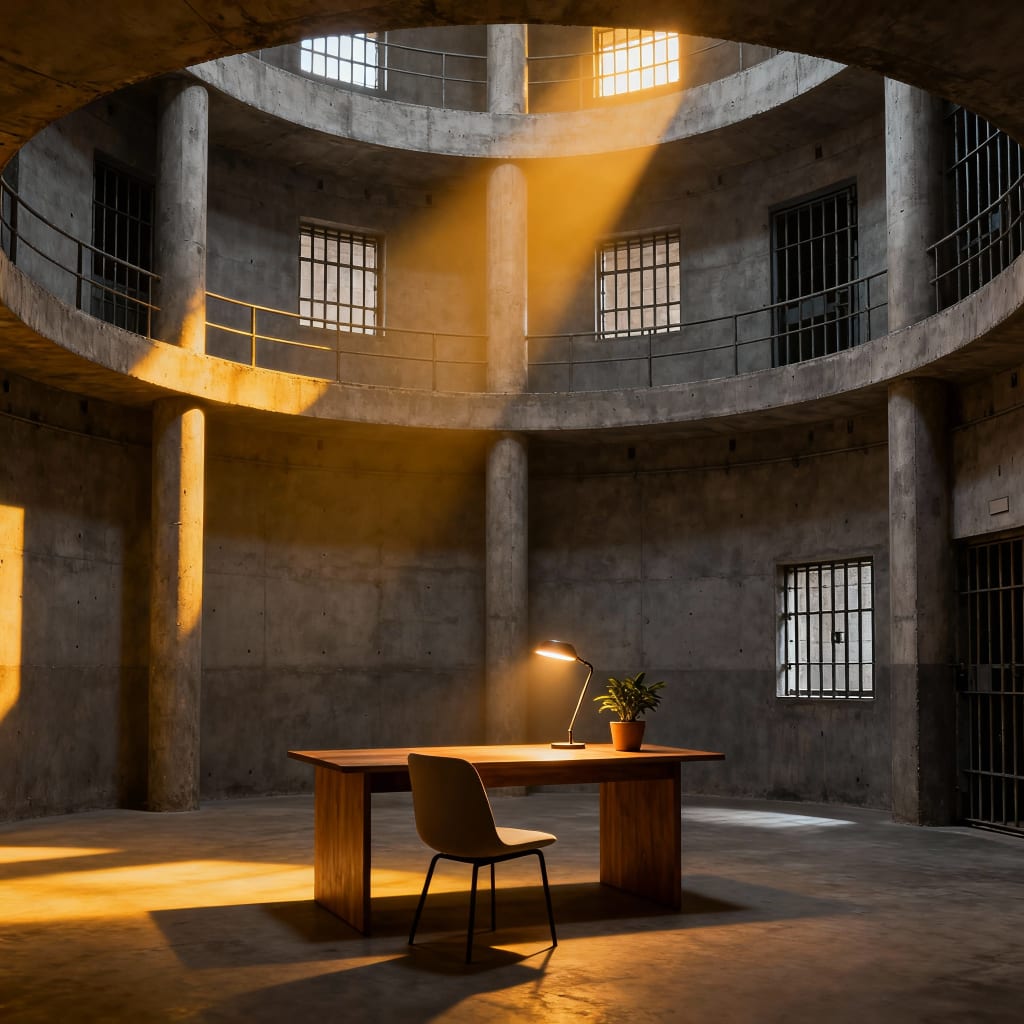
I. The 'Digital Dystopia' Introduction
We have been sold a beautiful lie. It has slick marketing, an endless stream of cheerful, sunlit Instagram posts, and a compelling name: Remote Work.
For years, it was the gold standard of professional freedom, the ultimate goal for the overworked and the under-appreciated. The promise was simple: trade the soul-crushing commute for yoga mats, exchange fluorescent lighting for natural sun, and finally achieve that elusive "work-life balance" we were always told was possible.
But beneath the veneer of flexibility and comfort, a darker, more insidious reality has taken root. The four walls of our home offices have become the highly polished interior of a psychological trap—one that quietly drains our ambition, degrades our professional identity, and makes us easier and cheaper to manage.
This article is not a nostalgic plea for the return of the office cubicle. That era is dead and largely unmissable. This is a cold, hard look at the hidden psychological and economic costs of permanent, unstructured remote work, detailing how this seemingly liberating revolution has instead orchestrated The Silent Collapse of Ambition across the modern workforce. We’ve traded a visible chain for an invisible leash, and the result is a deep, profound void in professional fulfillment that no amount of pajama comfort can fill. We must understand this trap before it becomes the new, immutable standard of white-collar existence.
II. The Loss of the "Third Place"
The brilliance of the remote work trap lies in its elimination of the "Third Place."
Coined by sociologist Ray Oldenburg, the Third Place is defined as the social environment separate from the two primary places of life—the home ("First Place") and the workplace ("Second Place"). Historically, this was the pub, the café, the town square, the church, or even just the water cooler area at the office. These spaces were essential for building community, fostering casual social interactions, and allowing for identity fluidity.
In the past, the commute, the noisy coffee machine, the impromptu chat by the elevator—these were not mere wastes of time; they were the unstructured friction that facilitated crucial cognitive and social processes.
The Cognitive Cost of Isolation
When the Second Place (the office) is absorbed entirely by the First Place (the home), the Third Place vanishes. There is no neutral territory. We are left only with our professional, productive self and our domestic, private self, and the two are forced into an unnatural, continuous marriage.
The immediate consequence is a form of cognitive entropy. Innovation and problem-solving rarely happen during scheduled Zoom meetings; they emerge from weak ties—the casual, non-essential interactions with colleagues from other departments. These random collisions spark what economists call "serendipitous knowledge transfer." When you’re isolated, your brain works in a closed loop, endlessly recycling the same input. The "aha!" moment, which often requires breaking away from the problem space, becomes increasingly rare.
Furthermore, the loss of the physical environment limits our identity. The office provided a space for professional theater—a performance of competency and ambition. Removing this stage forces all social performance onto the sterile, 2D screen of a video call, where body language is clipped, context is minimal, and the ability to project influence is severely diminished. This erosion of professional identity chips away at long-term ambition, leaving many to coast on efficiency rather than strive for excellence. The "comfort" of working in sweats quickly morphs into the apathy of working without a clear professional self.
III. The Blurring of Boundaries & The 24/7 Self
The foundational pillar of the remote work illusion is "flexibility." In reality, this "flexibility" is a one-way street, benefiting the employer far more than the employee, leading directly to the creation of the 24/7 Self.
Before the pandemic, the most effective psychological defense against corporate creep was the physical boundary of the office door. When you left the building, you were psychologically "off the clock."
The Perpetual Availability Tax
The removal of the physical boundary, ironically, eliminated the psychological one. The home, which should be a sanctuary of rest and personal life, has been effectively rezoned into a satellite office. The laptop is always there, the notifications are always one click away, and the expectation of perpetual availability subtly infiltrates every facet of non-work life.
Studies have shown that remote workers tend to work longer hours, often skipping breaks and eating lunch at their desks. This isn't evidence of superior dedication; it's a symptom of guilt and overcompensation. Without the visible presence of colleagues, many remote workers feel compelled to prove their productivity through visibility and responsiveness, leading to a relentless digital performance. This is the Perpetual Availability Tax—the non-negotiable mental charge levied for the privilege of working from home.
The Rise of Chronic Burnout
This continuous state of low-level anxiety—of being "always on"—is the perfect recipe for chronic burnout. Burnout is not simply being tired; it is the erosion of engagement and a complete disconnection from professional purpose.
The phenomenon is exacerbated by the lack of Recovery Capital. Recovery Capital is the time and space needed to fully disconnect and recharge. When the workplace is always visible—the desk is in the bedroom, the work phone is next to the remote control—the brain cannot truly switch off. The body is home, but the mind is still at the office. This continuous cognitive load leads to:
Increased insomnia and sleep degradation.
Deterioration of relationships due to constant low-level work intrusion.
The paradoxical feeling of being exhausted while simultaneously feeling unproductive.
The illusion of a relaxed schedule is shattered by the reality of a life where the "off" switch has been permanently disabled. We become the company asset that is always charged and ready for deployment, regardless of the human cost. This is not freedom; it is voluntary servitude to the notification bell.
The Erosion of Personal Health
Furthermore, the remote setup has unintended consequences for physical and mental health. The elimination of the commute, while seemingly positive, removed two crucial elements:
Forced Movement: The walking, cycling, or public transport changes provided low-effort daily exercise.
Transitional Ritual: The act of dressing and leaving the house was a critical mental separator between the "home self" and the "work self."
Now, many workers transition directly from bed to screen, maintaining the same relaxed posture and mental state, which further blurs the line between rest and work, leading to decreased physical activity and increased mental stasis. The result is a workforce that is comfortable, but fundamentally less healthy, more isolated, and less driven.
IV. The Surveillance Economy Disguised as Flexibility
One of the most profound shifts enabled by remote work is the subtle transition from trust-based management to surveillance-based control. While employees enjoy the "flexibility," corporations gain unprecedented access to monitor and measure every keystroke, click, and metric.
The Panopticon of Productivity
The modern remote worker resides in a digital panopticon. The workplace is no longer defined by a physical building; it is defined by the data streams an employee generates. The technology that enables the connection—Zoom, Slack, Teams, and the dedicated monitoring software—is also the technology that controls it.
Companies are now deploying sophisticated "Tattleware" or "Bossware"—software that tracks activity metrics like:
Keystroke frequency (Are you typing enough?)
Mouse movement (Are you truly active?)
Screenshots and camera activation (What are you looking at?)
Analysis of communication volume and sentiment (Are you collaborating?)
The justification is "ensuring productivity," but the psychological effect is the antithesis of ambition: it fosters a culture of performative activity. Employees are incentivized to look busy rather than be effective. The focus shifts from generating high-quality outcomes to maintaining high-frequency metrics.
The Death of Deep Work
This environment of constant monitoring and performative visibility directly attacks Deep Work—the ability to focus without distraction on a cognitively demanding task. Deep Work requires uninterrupted time and a state of low anxiety. The constant stream of notifications, scheduled check-ins, and the fear of a system flag disrupts this state, forcing workers into Shallow Work: answering emails, attending unnecessary meetings, and updating status reports.
Ambition is built on the challenge and mastery of difficult, deep tasks. If the workplace environment prevents prolonged concentration, it effectively caps the potential for excellence and reduces the worker's role to a purely transactional function. We become cogs in a machine designed for monitoring, not for mastery.
AI and the Future of Managerial Control
Looking ahead, the integration of Artificial Intelligence into remote work systems is poised to tighten this trap. AI is not just tracking keystrokes; it is analyzing conversations, meeting transcripts, and project timelines to predict performance, flag "disengagement," and even recommend resource allocations—i.e., suggesting who is expendable.
This automation of management removes the human element of mentorship and genuine leadership, replacing it with an algorithmic demand for conformity. Ambition requires risk, experimentation, and occasionally, visible failure. When the AI manager penalizes any deviation from the predictable norm, it extinguishes the very spirit of innovation and daring required for true career advancement. The most "successful" remote worker, under this system, will not be the most brilliant, but the most predictable and compliant.
V. The Solution: Reclaiming the Ritual and Building Digital Walls
The remote work revolution is irreversible. The goal is not to abolish it, but to redefine its terms, reclaim the psychological territory ceded to the employer, and break the cycle of ambition erosion. The solution lies in consciously reintroducing the friction and structure that the home environment naturally lacks.
1. The Intentional Commute (Psychological Separation)
Since the physical distance between home and work has vanished, we must create a psychological distance through deliberate ritual.
The "Mini-Commute": Spend 15-20 minutes before starting work doing a focused activity outside your home: a walk around the block, a session at the gym, or reading a physical book at a park bench. This physically and mentally separates the sleeping self from the working self.
The Wardrobe Shift: Even if you wear comfortable clothes, establish a distinct "work uniform." Do not wear the clothes you slept in, and do not wear the clothes you will lounge in later. This signals to your brain that the professional day has begun.
The 30-Minute Transition: At the end of the day, replicate the "leaving the office" ritual. Close all work programs, put the laptop in a designated drawer, and perform a specific, non-work activity for 30 minutes (meditation, playing an instrument, cooking). This is the hard stop that prevents the 24/7 self from taking over.
2. Physical and Digital Boundary Setting (The Home Office Fortress)
The workspace must be treated as a segregated entity, both physically and digitally.
The Non-Negotiable Space: If possible, designate a room or corner that is only used for work. When you leave that spot, you are officially "off the clock." Crucially, do not conduct work in your bedroom or on your sofa.
Dedicated Hardware: Use separate devices, or at least separate user profiles, for work and personal life. The work browser should not have Facebook tabs. The work phone should be silenced, or even placed in a different room, outside of work hours.
The "Do Not Disturb" Shield: Employ technology to fight technology. Actively use "Do Not Disturb" functions on all devices. Train colleagues and managers that messages sent after a certain time will not be seen until the next morning. Set clear email auto-responders that define your working hours.
3. Re-establishing the Third Place (The Serendipity Loop)
To revive the cognitive sparks lost with the water cooler, you must actively seek out the Third Place and the unstructured friction that fuels ambition.
The Co-working Day: Schedule one or two days a week to work from a local café, a library, or a dedicated co-working space. This reintroduces novelty, background activity (which boosts creativity), and a sense of shared purpose that isolation erodes.
Intentional Weak Ties: Instead of relying on accidental office encounters, schedule 15-minute, non-work-related virtual coffee breaks with colleagues from different teams. The agenda should be: No agenda. Just talk about hobbies, books, or anything other than the Q3 budget. This rebuilds the cross-functional social capital necessary for large-scale innovation.
Non-Digital Skill Acquisition: Engage in complex hobbies that demand deep, non-screen-based concentration (e.g., carpentry, painting, learning a musical instrument). This trains the brain for the deep work state that the digital panopticon is constantly trying to destroy.
4. Fighting the Performance Trap (Measuring Value, Not Volume)
The most potent weapon against the silent collapse of ambition is a clear, self-defined metric of value.
The Output Contract: Negotiate with your manager to define your value based solely on three measurable, high-impact outcomes per week, rather than hours logged or messages sent. Focus on achieving these three things, even if it means being completely silent for half a day.
Time-Boxing Deep Work: Use the Pomodoro Technique or dedicated software to carve out large blocks of 2-4 hours dedicated solely to Deep Work. Turn off all chat apps and emails during this time. Announce your Deep Work session to your team—you are "offline" because you are doing your most valuable work. This establishes a boundary of respect for your focused time.
Active Goal Setting: Reconnect with your career trajectory outside of your current tasks. Write down a "Five-Year Ambition Statement" and review it monthly. Ask yourself: "Is my current, comfortable routine helping me achieve this ambition, or simply helping me maintain the status quo?"
VI. Conclusion: The Real Cost of Comfort
The greatest threat posed by the remote work trap is not lost productivity, but the slow, silent erosion of potential. We have traded the highly visible, sometimes stressful, but always motivating environment of shared ambition for a comfortable prison of compliance and maintenance.
The comfort of the home office is a potent anesthetic, dulling the competitive edge and replacing the hunger for growth with a passive acceptance of the status quo. The 21st-century corporation has learned that a compliant, remotely monitored, and perpetually available worker is cheaper, easier to control, and less likely to pose an ambitious threat.
To break this cycle requires more than just a comfortable chair; it requires an active, conscious effort to re-establish the boundaries, rituals, and cognitive friction that fuel human ambition. We must be fiercely intentional about carving out spaces for Deep Work, demanding that our value be measured by impact, not activity, and rebuilding the social capital that sparks true innovation.
The digital utopia of the remote worker is, in fact, a digital dystopia of the soul. Only by acknowledging this trap and deliberately building our own structures of friction and purpose can we reclaim our ambition and ensure that our freedom remains a reality, and not just a comfortable illusion.
About the Creator
Stefano D'angello
✍️ Writer. 🧠 Dreamer. 💎 Creator of digital beauty & soul-centered art. Supporting children with leukemia through art and blockchain innovation. 🖼️ NFT Collector | 📚 Author | ⚡️ Founder @ https://linktr.ee/stefanodangello
Keep reading
More stories from Stefano D'angello and writers in Futurism and other communities.
Awaken Your Inner Warrior: How to Transform Hidden Fear into Unbreakable Calm and Lasting Strength
Introduction: Society’s Myth of Unshakable Strength We live in a world that often confuses the performance of confidence with true inner peace. At school, in the workplace, and even on social media, we are taught to show strength—to project boldness, certainty, and control. And yet, beneath even the most iron-willed exteriors, many struggle with private, persistent fears. Sometimes, it’s a sudden anxiety before a big meeting, a shaky voice during conflict, or a restless heart at night. Fear, though deeply human, is still mistakenly seen as a flaw. But what if fear were not our enemy? What if it could become our most powerful inner ally?
By Stefano D'angelloExclusive • 6 months ago
Smart Home Technology: What Life Looks Like When Your Home Can Actually Think
It is seven in the morning and the kitchen already knows. The blinds have lifted just enough to let in soft light without waking anyone who is still sleeping. The kettle began heating two minutes ago.
By CurlsAndCommasabout 22 hours ago in Futurism
Magnet Market Outlook: Industrial Machinery Demand, Automation Growth & Industry Forecast to 2025
The global magnet industry is undergoing a significant transformation, evolving from a traditional component sector into a strategic pillar of the modern green economy. According to IMARC Group’s latest data, the global magnet market size reached USD 41.75 Billion in 2024. Looking forward, IMARC Group estimates the market to reach USD 58.7 Billion by 2033, exhibiting a CAGR of 3.82% during 2025-2033.
By Andrew Sullivan6 days ago in Futurism



Comments
There are no comments for this story
Be the first to respond and start the conversation.