
The role of AI in our society
Effects and remedies

Artificial intelligence (AI) has the potential to play a significant role in society by automating various tasks and making them more efficient. It can be used in a wide range of industries, such as healthcare, finance, transportation, and manufacturing. In healthcare, for example, AI can assist with diagnostics and treatment planning, while in finance it can aid with fraud detection and investment management. Additionally, AI can be used in natural language processing (NLP) and computer vision applications, such as virtual assistants and self-driving cars. However, there are also concerns about the impact of AI on job displacement and privacy. As such, it is important for society to consider the potential benefits and drawbacks of AI and develop responsible policies for its use.
Artificial intelligence (AI) has the potential to bring about both positive and negative effects on society. Some of the positive effects include:
Increased efficiency and productivity: AI can automate repetitive tasks and make them faster and more accurate, which can lead to increased productivity and cost savings.
Improved decision-making: AI can analyze large amounts of data and provide insights that can inform better decision-making in various industries.
Enhanced healthcare: AI can assist with diagnostics and treatment planning, which can lead to better patient outcomes.
Improved personalization: AI can be used to personalize products and services, making them more tailored to individual preferences.
However, there are also potential negative effects of AI, such as:
Job displacement: As AI automates tasks, it can lead to job losses in certain industries.
Bias and discrimination: AI systems can inadvertently perpetuate existing biases and discriminate against certain groups of people.
Privacy concerns: As AI systems collect and analyze large amounts of personal data, there are concerns about how this data is used and protected.
Security concerns: AI can be used for malicious purposes, such as cyberattacks.
Overall, it is important for society to carefully consider the potential impacts of AI and develop responsible policies for its use. This includes investing in research to mitigate negative effects and ensure that the benefits of AI are widely shared.
There are several remedies that can be implemented to mitigate the negative effects of artificial intelligence (AI) on society and ensure that its benefits are widely shared. Some of these remedies include:
Investing in retraining and education programs: As AI automates certain tasks, it can lead to job displacement. Investing in retraining and education programs can help workers acquire the skills they need to transition to new roles.
Addressing bias and discrimination: AI systems can inadvertently perpetuate existing biases and discriminate against certain groups of people. To address this, it is important to ensure that data used to train AI systems is diverse and free from bias, and that the systems are regularly audited for bias.
Developing strong privacy and security regulations: As AI systems collect and analyze large amounts of personal data, it is important to have strong regulations in place to protect individuals' privacy and prevent misuse of data.
Encouraging public-private collaboration: AI can have a significant impact on society, so it is important for governments, businesses, and other stakeholders to work together to ensure that its benefits are widely shared and negative effects are mitigated.
Increase transparency and accountability: AI systems are complex, and it can be difficult for individuals to understand how they work and the decisions they make. Increasing transparency and accountability can help build trust in the technology.
Overall, it is important to approach the development and use of AI in a responsible and ethical manner, taking into account the potential negative impacts and working to mitigate them, while at the same time, promoting the positive effects for the benefit of society
About the Creator
Keep reading
More stories from 4MECH702 Udhaya Kumar V and writers in Futurism and other communities.
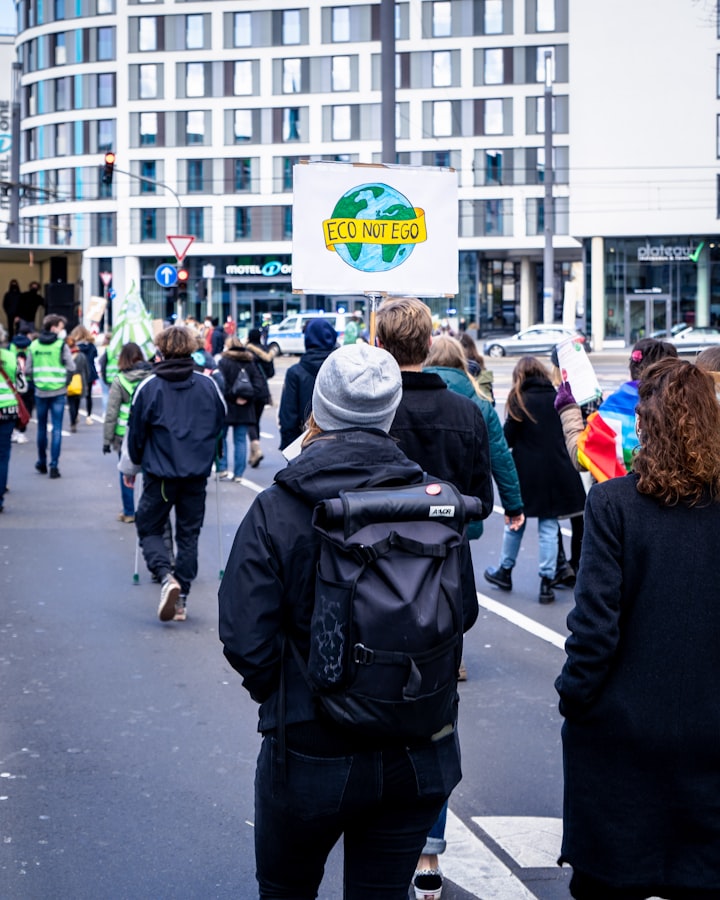
Effects of "Climate change"
Climate change refers to the long-term changes in temperature, precipitation, wind patterns, and other measures of climate that occur over several decades or longer. Climate change is primarily caused by human activities such as the burning of fossil fuels, deforestation, and agriculture.
By 4MECH702 Udhaya Kumar V3 years ago in Futurism
About Binding Prometheus
I want to start actively advocating on behalf of my own work, and the most valuable part of my canon is, without a doubt, Binding Prometheus, the play I have been working on since 2019 and only finished in 2023 as part of my MA. The play itself is an amalgamation of a million different inspirations. On one end, it evokes the Ancient Greek myth-play, deriving its own title from the earliest extant work of Western drama we have, Aeschylus’s Prometheus Bound. On the other end, it borrows significantly from the sci-fi bulwarks from over the years, namely Mary Shelley’s Frankenstein and Karel Capek’s Rossum’s Universal Robots. The play could be an episode of Black Mirror, I fear. I don’t know. I’ve only ever seen one episode of Black Mirror.
By Steven Christopher McKnight17 days ago in Futurism



Comments
There are no comments for this story
Be the first to respond and start the conversation.