
The Role of AI in Enhancing Network Security
Harnessing AI for Smarter, Stronger Network Security: From Threat Detection to Automated Defense


As the digital landscape grows in complexity, businesses and individuals are focusing more on network security to stay ahead of the increasingly sophisticated cyber threats. With advanced tools to counter these risks, artificial intelligence (AI) continues to drive conversations about cybersecurity. AI is not only reshaping approaches to network security but also overcoming challenges in creating more resilient infrastructures by enabling proactive threat detection, automated defenses, and dynamic access controls.
AI-Driven Threat Detection and Prevention
Ransomware and phishing scams are well known, but advanced persistent threats (APTs) are presenting challenges for traditional security systems, which tend to rely on signature-based detection that often fails to pinpoint evolving threats. The problem of traffic volume, coupled with increasingly complex attack patterns, makes detecting cyberattacks even more difficult. By harnessing the power of machine learning, AI tools are becoming adept at locating malicious attacks. Google’s AI security platform Chronicle, for example, analyzes large amounts of security data to reveal hidden threats quickly and precisely. Algorithms can scan huge data sets in real-time—much faster and more efficiently than human analysts—to determine whether patterns indicate malware or phishing attempts.
Beyond just detection, AI-driven security solutions that integrate Zero Trust Network Access (ZTNA) and Automated Moving Target Defense (AMTD) go a step further. These advanced security models not only identify potential threats but also limit attack surfaces dynamically, making unauthorized access significantly harder for attackers.
AI’s Role in Identifying Threats
AI also automates tasks that used to be complex and time-consuming. By managing firewalls and preventing intrusions automatically, AI helps actively prevent threats to a network. For example, some systems employ machine learning techniques to build behavioral models of normal network operations, establishing an intrinsic “pattern of life” for a network, which enables them to detect and neutralize anomalies before they escalate into larger attacks. Cloud-native security architectures, like those used in Personal SASE, leverage AI-driven risk assessments to enforce least-privilege access dynamically.
Additionally, utilizing edge-native platforms allows AI systems to offload processing to distributed edge servers, enhancing both performance and security for remote users. This is particularly crucial for hybrid and remote work environments where network agility and security must go hand in hand.
Behavioral Analytics for Threat Identification
To understand how machine learning uses behavioral analytics to detect threats, it’s important to consider that traditional security approaches generally rely on predefined signatures to identify threats. Once a predetermined threshold is reached in a signature anomaly, the system triggers an alert of a potential threat. Machine learning, however, introduces a paradigm shift by understanding and modeling “normal” behavior in a network, allowing for greater accuracy once an anomaly appears.
AI’s Role in Analyzing Behavior
To determine normal behavior, machine learning algorithms improve performance by continuously collecting data and processing records of how users interact with their networks, and how network traffic and system activities operate. By understanding regular system activity, AI can find risks that might otherwise go unnoticed, such as when trusted employees or other authorized users engage in unusual or suspicious activities.
User Behavior Analytics (UBA) programs recognize abnormal behavior signs by monitoring when users access the system at unusual times or when they move data outside the normal range. For example, American software company Splunk states that their UBA product establishes “baseline behaviors of users, devices, and applications, then searches for deviations to detect unknown and insider threats.” Behavioral analytics can help visualize threats across multiple phases of an attack to give an understanding of the cause, scope, severity, and timelines of an attack, allowing for a rapid response.
Automated Incident Report
Once a cyberattack happens, time is of the essence, as any delays in response can worsen damage to the network, system, or organization. Manual processes are naturally slower, often contributing to extended network vulnerability during security breaches. Saving time is critical for minimizing risks and the damage breaches cause.
How AI Enables Automation
AI improves incident response operations because it performs repetitive duties automatically, limiting human error and ensuring consistency. Systems use automated response features to limit the spread of compromised devices by isolating them and stopping malicious IP addresses in real time. The combination of Natural Language Processing (NLP) with decision-tree models strengthens AI systems to classify and handle incidents more efficiently. AI-powered solutions that leverage Automated Moving Target Defense (AMTD) enhance security by dynamically shifting network configurations, making it difficult for attackers to locate and exploit vulnerabilities.
AI in Predictive Security
Security analysts and personnel use AI to detect potential cyber threats before they occur instead of reacting to them afterward. By studying data patterns to find critical vulnerabilities, AI learns and adapts to the changing dynamics of threats. In addition to processing network data in real-time, the technology can examine various threat intelligence from attacks in databases worldwide, harnessing anomaly detection algorithms and data clustering to predict future cyberattacks.
Impact on Cybersecurity
Predictive AI systems protect organizations from advanced persistent threats (APTs), botnets, and zero-day attacks. With AI organizations can secure their networks more effectively by spotting threats first and activating defense systems with as much automation as possible. This can help them protect themselves from cybercriminals not only by offering exact information but also by accelerating response times.
Cost Efficiency and Scalability
Automated detection is usually faster and more precise than manual processes, and can also lower the costs of detection, analysis, and response. Manual interventions are conducted by human security systems analysts, so they translate to higher labor costs. The more processes a business can automate, the greater the cost savings over time.
Also, AI detection and response systems are scalable to meet the needs of both small and large businesses, from entrepreneurial startups to Fortune 500 companies. These systems can handle massive amounts of network traffic and data volumes without reducing performance.
By integrating AI-powered security with scalable cloud networking, businesses can achieve enterprise-level protection without requiring complex hardware deployments, ensuring both security and performance at any scale.
Integration with Existing Infrastructure
Although artificial intelligence has the potential to enhance a network’s security posture, integrating it with existing frameworks and ensuring alignment with strategic security objectives can be challenging. Integrating AI into cybersecurity systems must include proper planning to guarantee compatibility and maximize efficiency. To implement AI in cybersecurity systems, organizations must follow these procedures:
- Thoroughly analyze its systems and processes.
- Verify all locations that would benefit substantially from AI applications.
- Define the appropriate AI models for relevant security data to enable them to recognize potential threats that specifically target the enterprise.
- Select and train the right AI models with enterprise-specific threat data to enable their precise detection of relevant threats faced by the organization.
- Frequently monitor and update AI systems on changing security threats and fresh threat information. This can help sustain cybersecurity effectiveness in a changing landscape.
AI technology can strengthen current security systems when integrated with Security Information and Event Management (SIEM) systems, firewalls, and endpoint protection solutions. A compatible framework creates comprehensive security defenses while also improving return on investment (ROI).
Conclusion
The increasing sophistication of digital threats makes artificial intelligence a useful partner in helping businesses upgrade their network protection systems. AI provides organizations with advanced security protection by using behavioral analytics to spot danger and automate both threat detection and incident response. Given its automated efficiency and increasing affordability, AI can offer benefits to businesses of every scale when seamlessly integrated with existing security frameworks.
Solutions that combine AI with Zero Trust Network Access (ZTNA), automated security models, and high-performance networking are essential in securing modern, distributed workforces. As businesses continue to navigate evolving cybersecurity challenges, integrating AI-powered networking solutions will be key to maintaining a resilient and adaptive security posture.
About the Creator
Prakash Mana
Prakash Mana is a seasoned technology executive with over 25 years of industry experience. As the CEO and co-founder of Cloudbrink, Prakash has a strong track record of success, having served as CPO and CTO at Pulse Secure.
Keep reading
More stories from writers in Futurism and other communities.
Kosher Food Industry Landscape: Regulatory Framework & Growth Potential
According to IMARC Group's latest research publication, the global kosher food market size reached USD 22.1 Billion in 2024. Looking forward, IMARC Group expects the market to reach USD 29.6 Billion by 2033, exhibiting a growth rate (CAGR) of 2.95% during 2025-2033.
By sujeet. imarcgroup3 days ago in Futurism
Australia Maritime Freight Market: Global Trade Routes, Logistics Strength & Economic Connectivity
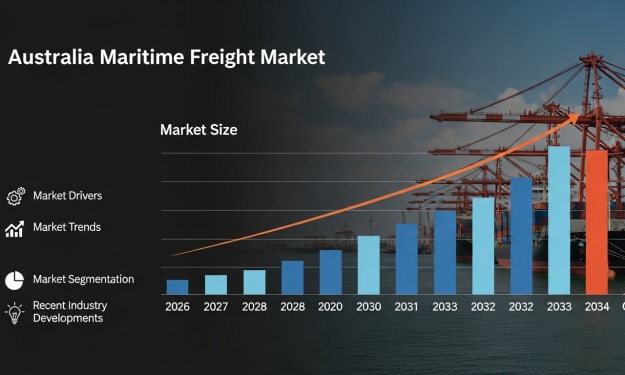
According to IMARC Group, the Australia maritime freight market reached a value of USD 10.4 Billion in 2024 and is projected to expand to USD 18.3 Billion by 2033, exhibiting a compound annual growth rate (CAGR) of 5.80% during 2025–2033. This growth reflects the maritime sector’s central role in supporting Australia’s trade-dependent economy and its integration into global supply chains. As an island nation with strong export and import reliance, maritime freight underpins the movement of raw materials, energy resources, agricultural products and manufactured goods. Increasing trade volumes, infrastructure modernization and technological innovation are transforming port operations and logistics efficiency across Australia. At the same time, rising focus on sustainability, decarbonization and supply-chain resilience is reshaping investment priorities within the maritime freight ecosystem, positioning the sector as a strategic enabler of long-term economic connectivity.
By Shrestha Roy4 days ago in Futurism
~ Fired ~
— Ai Intrusion ~ Are you Next ~ Is Ai Evolution after your job? — Few workplaces haven't been affected. Ai is in supermarkets, at doctors' offices, and even monitoring farms. I just can't think of anything this machine is not getting into, can you? For instance: Education ~ Law and Tech jobs will one day have a major influence or be taken over by these inanimate machines, with accuracy and vigor. From mechanics' diagnoses to a wide variety of everyday jobs, including fast food workers, with this input having the ability to cut their unnecessary work hours. I'm certain all of us have been touched by this with our short stories and colorful headings, have you? Even comments are very questionable 'Non-Robot' insertions.
By Jay Kantor6 days ago in Journal



Comments
There are no comments for this story
Be the first to respond and start the conversation.