
The Rise of DOOH: How Digital Out of Home Advertising Is Transforming Visual Communication
Exploring how DOOH displays, powered by optoelectronic innovation, are reshaping public engagement.


In recent years, advertising has evolved far beyond static posters and printed billboards. Today, brands communicate with audiences through dynamic digital screens that change content in real time, react to the environment, and deliver visuals that are brighter than ever before. This new wave of visual communication is known as DOOH, short for digital out of home advertising.
What Is DOOH Advertising?
Digital out of home, DOOH advertising refers to digital media that appears in public spaces. Unlike traditional posters or printed signage, DOOH displays rely on electronic screens to show multimedia content such as videos, animations, or rotating advertisements.
These screens appear in familiar locations like:
- Airports and train stations
- Shopping malls and supermarkets
- Bus stops and transit hubs
- Sports arenas and event venues
- Outdoor billboards in busy city centers
The goal is simple: to capture attention in the spaces where people move throughout their day. DOOH allows advertisers to update content remotely, schedule campaigns based on time of day, and even tailor content according to weather conditions or audience demographics.
Why DOOH Advertising Matters in Modern Marketing
Consumers today are inundated with content on mobile devices, computers, and social platforms. DOOH stands out because it reaches individuals when they are not actively scrolling or searching. People naturally notice bright visuals in physical environments.
- Unlike digital ads online, DOOH:
- Can't be blocked with ad blockers
- Doesn't interrupt the user experience
- Is viewed passively and effortlessly
This gives digital out of home displays a unique advantage in brand exposure and message retention.
The Technology Behind DOOH: More Than Just a Screen
Behind every DOOH display is a network of hardware components, including high-performance LEDs that ensure brightness and clarity. These LEDs are produced through the specialized field of optoelectronic technology, where light and electronics are integrated.
The companies that produce these components—such as an Optoelectronic Semiconductor Manufacturer—play a crucial role in the DOOH ecosystem. They create LEDs used in digital billboards, indoor display screens, stadium panels, and retail signage.
As DOOH installations continue to grow, the demand for high-resolution, energy-efficient LED technology increases. Optoelectronic innovation enables display screens to remain visible in direct sunlight, withstand outdoor weather conditions, and operate for long hours with reduced power consumption.
DOOH and LED Displays: A Perfect Partnership
The success of digital out of home advertising is tied closely to LED performance. LEDs offer benefits such as:
- High brightness for outdoor visibility
- Energy efficiency, reducing operational costs
- Color accuracy for impactful visuals
Durability in variable climates
Manufacturers specializing in LED technology—found in the optoelectronic sector—push the boundaries of what DOOH can accomplish. The development of smaller, sharper LED pixels allows digital billboards to display ultra-high-resolution content, even from close viewing distances.
These advancements enable visually impressive marketing campaigns that are impossible with traditional print media.
DOOH as a Data-Driven Medium
One of the most futuristic elements of DOOH is its ability to use automation and data. With modern software, advertisers can:
- Change ads based on audience demographics
- Schedule content depending on time of day
- Update multiple displays remotely
- Use real-time triggers such as weather or events
For example, a restaurant can promote breakfast specials in the morning and switch to dinner deals later in the evening—all without physically changing signage.
DOOH blends creativity with automation, making it a powerful marketing strategy for global brands.
The Future of Digital Out of Home
As technology evolves, DOOH is expected to become even more interactive. Future developments may include:
- Touch-enabled public screens for user interaction
- Smart sensors that adjust brightness based on environment
- Mixed reality and 3D content
- Integration with mobile apps and QR engagement
The continuous improvement of LED technology—supported by the work of optoelectronic semiconductor manufacturers—will accelerate the growth of DOOH networks around the world.
Conclusion
DOOH, or digital out of home advertising, represents the next stage of public communication. With LED-powered displays enabling bright and energy-efficient visual messaging, DOOH allows brands to reach audiences in the real world without interrupting their online experiences.
At the core of this transformation are advancements driven by the optoelectronic industry. Whether viewed on a massive outdoor billboard or a sleek indoor screen, DOOH content reflects how modern lighting and semiconductor technology continue to shape human engagement in public spaces.
Digital out of home advertising is not just a new marketing format—it is a reflection of how visual technology continues to evolve.
About the Creator
Keep reading
More stories from charliesamuel and writers in Futurism and other communities.
Understanding the Future of Digital Assets: What Shapes the Value of Cryptocurrencies?
The cryptocurrency market has transformed dramatically over the last decade. What once started as an experimental technology has now become a global financial ecosystem involving investors, developers, institutions, and regulators. Digital assets are now widely discussed not only as investment opportunities but also as tools that could redefine how financial systems operate.
By Ahmad Hassan3 days ago in Futurism
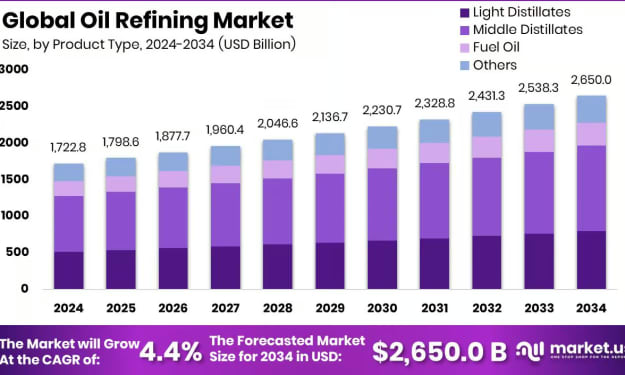
Oil Refining Market Significant Growth at 4.4%
The global oil refining market is witnessing steady growth due to rising global energy demand and advancements in refining technologies. The market is projected to reach approximately USD 2,650.0 billion by 2034, increasing from USD 1,722.8 billion in 2024, and is expected to grow at a CAGR of 4.4% between 2025 and 2034. Strong industrial demand, expanding transportation networks, and ongoing investments in refining infrastructure are major factors supporting this growth. Additionally, the adoption of digital technologies is helping refineries improve operational efficiency and production planning.
By Hayden Kulasabout 7 hours ago in Futurism



Comments
There are no comments for this story
Be the first to respond and start the conversation.