
The Rain That Refused to Fall: Britain’s Silent Climate Crisis
When clouds gather but never cry, what happens to the land, the people, and the truth beneath our skies

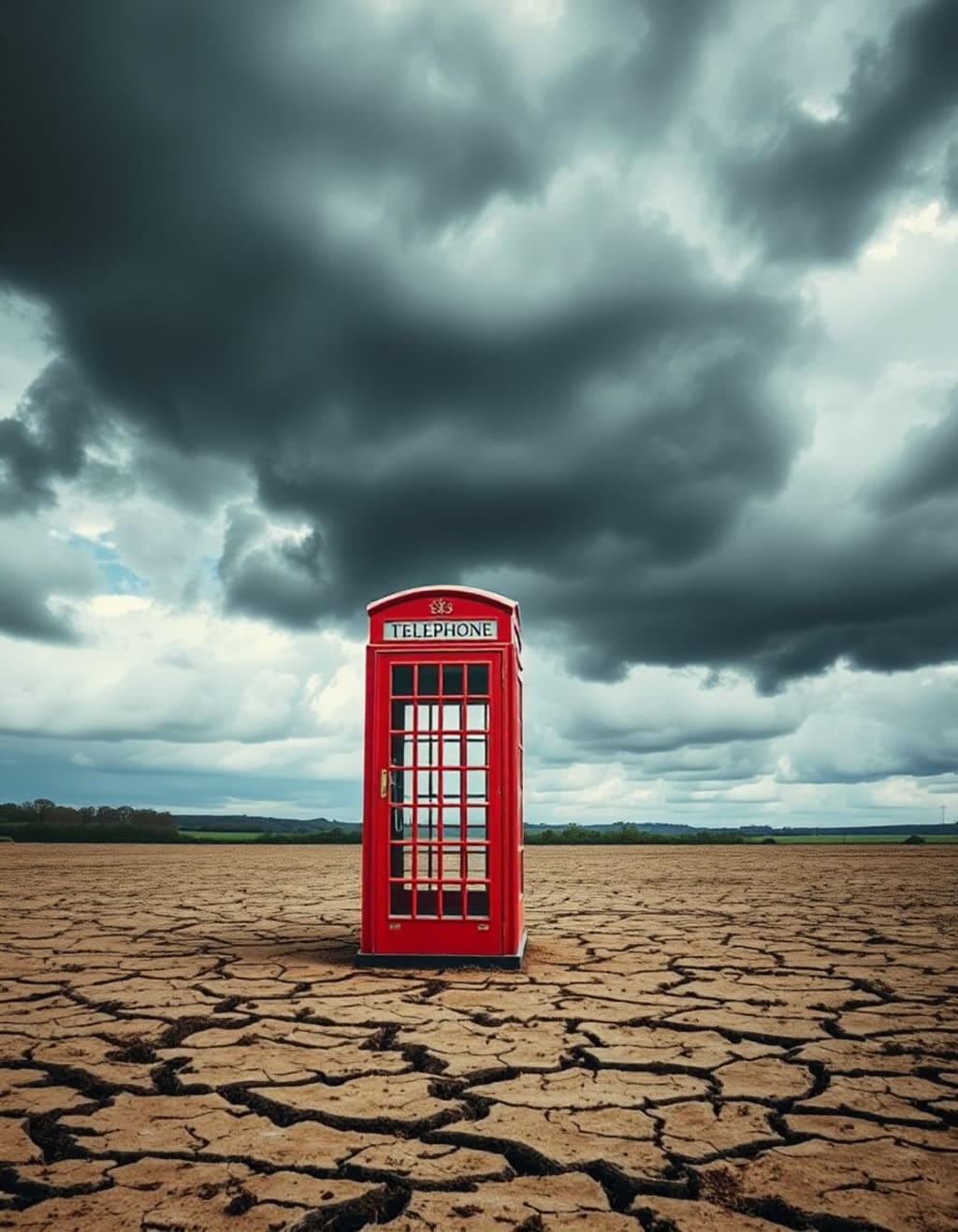
The British are known for talking about the weather. Rain, in particular, is almost a national identity—its gentle persistence, its cold comfort, its endless interruptions to cricket games, weddings, and school runs. But what if it stopped? Not with a dramatic thunderclap or a cinematic drought, but quietly—just a little less each year until it hardly came at all?
That is exactly what has been happening.
It began, not in headlines, but in hedgerows. The foxgloves bloomed too early, the nettles shriveled before June. Streams that once laughed through the Cotswolds turned silent. Reservoir levels dipped, unnoticed by anyone except the farmers who woke earlier and worried longer.
The Disappearing Rain
According to the Met Office and UK Centre for Ecology & Hydrology, parts of England have experienced a 20% drop in summer rainfall over the past two decades. The numbers might not shock at first glance, but in the ecology of a land so delicately balanced, the change is seismic.
Rain in Britain used to be predictable, even poetic. Soft drizzles over Devon hills, sudden squalls in Manchester, the moody foggy mist over the Lake District. But climate science has uncovered a shift: while some parts of the country now face intense downpours—flooding more than nourishing—other regions suffer a slow, quiet drought. This pattern is not chaos, but the result of jet stream disruptions caused by global warming.
And here lies the paradox: Britain, a land synonymous with rain, is facing a drought not of disaster movies, but of memory. The rain hasn’t vanished completely. It simply no longer behaves.
The Silent Drought
Dr. Miriam Goldsmith, a hydrologist at the University of Leeds, calls it a “silent drought.”
“It’s not just about rainfall totals—it’s about soil saturation, river flows, groundwater recharge,” she explains. “We’re seeing longer dry spells between rains, even if the total annual rainfall stays similar. The land dries, crops fail, ecosystems weaken. And because it doesn't ‘look’ like a crisis, it’s ignored.”
The year 2024 marked the driest spring in East Anglia in 50 years. Suffolk farmers reported that wheat yields had dropped by 30%. For the first time, the River Wensum—a vital chalk stream—ran dry for 19 consecutive days.
But perhaps most unsettling is what this does to people—not just farmers, but communities that have long defined themselves by green fields and garden rows.
British Identity and the Weather
In a small village near Dartmoor, 82-year-old Margaret Bell still remembers the “rainy season” of her childhood. “You could count on it,” she says, stirring her tea slowly. “The rains came in April, then again after midsummer. We never thought we’d have to water our lawns—or our souls.”
Margaret has lived through the war, the rationing, even the 1976 drought. But she says this feels different. “There’s something eerie about it. The clouds gather, but they don’t fall. They just… hang there. Like they’ve forgotten how to cry.”
That eerie feeling is echoed in mental health data. According to NHS reports, rural communities facing environmental shifts are seeing increased anxiety rates, especially among older populations who feel something deeper is disappearing—not just water, but a way of life.
What the Science Says
The underlying science reveals a disturbing truth: Britain’s climate is shifting toward Mediterranean patterns—hotter, drier summers with concentrated bursts of rainfall.
Professor Alan Schofield of the British Climate Institute explains, “Think of rain as a conversation between the sky and the earth. That conversation is breaking down.”
Urbanization, deforestation, and rising global temperatures all contribute to a cycle where moisture evaporates quickly, and rain clouds become too heavy to sustain themselves over land. This leads to fewer, more violent downpours—and long, dry silences in between.
The Cost of Waiting
Despite increasing warnings from scientists, the UK government has been slow to adapt. While billions are spent on flood defenses, drought strategies remain outdated or underfunded.
Meanwhile, farmers in Kent are switching from apples to wine grapes, as traditional British crops become unsustainable. Reservoirs like Grafham and Rutland are reaching critical low levels each summer, while hosepipe bans become the new norm—even in the north.
In 2023, the town of Scarborough experienced water rationing for the first time in its modern history. Residents queued for bottled water beside signs that read “Unexpected Dry Season – Please Conserve.”
Voices from the Ground
Tommy Greaves, a fourth-generation gardener in Oxfordshire, says he now relies on greywater systems and dew collectors just to keep his nursery alive.
“My grandfather used to say, ‘If the rain won’t come to you, plant something that calls it.’ Now, nothing calls it. Not the oak, not the daisy. Not even the bees.”
Even children are beginning to notice. A 9-year-old girl in Cornwall recently submitted a poem to a local newsletter titled “The Cloud That Forgot Me,” describing a sky that always watched but never helped.
The Coming Tipping Point
Climate scientists warn of a tipping point: if average summer rainfall in southern England falls by another 10%, it could lead to permanent damage to natural ecosystems. Ancient woodlands, peat bogs, and freshwater habitats may never recover.
Already, some amphibian species like the common toad and smooth newt are disappearing from traditional breeding sites. Bird migration patterns are shifting, and pollinators are in rapid decline—affecting not only biodiversity but food security.
The Thames, which has seen rising sea levels at its mouth, now faces shrinking tributaries at its source. Like the nation itself, it is being stretched thin at both ends.
A New Kind of British Rain
But it’s not all hopeless.
Across Britain, communities are fighting back—not with umbrellas, but with innovation. In Nottingham, a school has converted its rooftops into water-harvesting systems. In Wales, community groups are planting drought-resistant native trees. In Glasgow, rain gardens are being designed to catch and store rare showers.
Young climate activists are calling this era "The Age of Uncertain Rain"—a time where adaptability is key. And maybe, just maybe, this shift could teach the nation something deeper.
Because Britain’s love affair with rain was never just about weather. It was about rhythm, reliability, memory. And now, in its absence, there is space to rethink not only how we live, but why we cherish what we do.
Final Words
The rain may not return as it once did. But the conversation between land and sky is not over—it is only changing dialects.
And as Margaret Bell once put it, looking out of her cottage window onto a dry garden, “Maybe one day the clouds will speak again. And when they do, we’ll be ready to listen.”
About the Creator
rayyan
🌟 Love stories that stir the soul? ✨
Subscribe now for exclusive tales, early access, and hidden gems delivered straight to your inbox! 💌
Join the journey—one click, endless imagination. 🚀📚 #SubscribeNow
AI Avatar Market Projected to Reach USD 63.5 Billion By 2034
According to recent market.us analysis, the Global AI Avatar Market is projected to reach approximately USD 63.5 billion by 2034, increasing from nearly USD 2.5 billion in 2024. This expansion reflects a strong 38.2% compound annual growth rate (CAGR) during the period from 2025 to 2034.
By Roberto Crum2 days ago in Futurism




Comments (1)
The changing rainfall patterns in Britain are really concerning. You mention how some parts are getting less rain while others face floods. I've seen similar disruptions in water systems where I work. It makes me wonder how long it'll take for people to fully grasp the impact on agriculture and wildlife. What steps do you think should be taken to mitigate these effects? It's strange how the rain's behavior has changed so much. The idea of a "silent drought" is new to me. I can only imagine how tough it must be for farmers dealing with inconsistent water levels. Do you think there are any solutions that could help restore the balance without causing more problems?