


The Pulse, as it came to be known, took not only my family but also my memories of them. To speak their names is too painful. Even now, I refer to them as my wife and children, reducing them to mere nouns in the inner limits of my psyche. This trick makes the pain easier to suppress. I will not share the details of how they perished. I see no gain in others reliving my pain and anguish. What I will offer is a glimpse into the effects of such heartache. I am alone. Eaten alive by my disbelief (How could this happen?), my guilt (How could I let this happen?) and then the rage, the depression, and the helplessness. That is what I went through—what I am going through. My inability to save my family created in me an unquenchable wanderlust. I have become a post-apocalyptic man-shark, spending my nights traveling from place to place, never stopping, driven to survive. If I die, their memory dies with me. I cannot—will not—let them die a second death!
One night, at the end of a long day's trek, I sought refuge in an old train station. Before the Pulse, it had been a hub for travel from the northeast. Now, it lay in waste. A mausoleum. A memorial to the pulseless. A bank of commuter storage lockers caught my eye; most were empty, but one unopened locker was partially hidden by a man’s remains. His bones draped in wrinkled, rotted flesh, his skull cracked open. Upon closer inspection, I noted a small shiny object lodged in a hole where his throat used to be. It was a key, and this locker was its match. Turning the key, I wondered what I would find.

I removed the backpack from the locker, knocking a little black book onto the floor. It was a pocket-sized Moleskine. Not cheap, but durable. It looked brand new, preserved in this locker for what I assumed to be years, patiently waiting for me to indulge its contents. I could not help but feel a sense of excitement as I pondered the possibilities. Like an archeologist unearthing some fragile document, an ancient artifact from days of old, I slowly turned the pages. Unlike the scrolls of antiquity, however, no translation was needed. The words on these pages were familiar. The writing described a "sanctuary city" located north of the Canadian border. The exact coordinates were carefully noted inside: 46.8139° N, 71.2080°.
It was then that I realized the weight of the backpack over my shoulder. I knelt and slowly unzipped it. Inside was a brown paper bag holding contents wrapped in newspapers. On top of the bag were a map, ruler, and protractor. The spot circled on the map matched the longitude and latitude coordinates written in the book. I tore off the newspaper to expose four stacks of cash, each stack labeled “Five Thousand Dollars.”
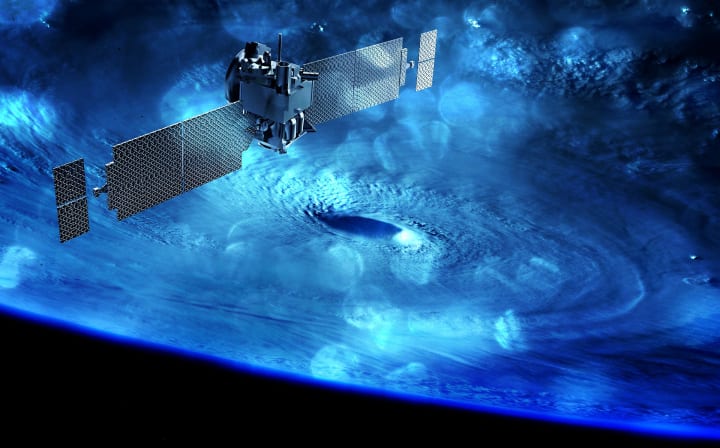
It has been seventeen years since the electromagnetic pulse took out the world’s collective power grid, disabling everything that relied on electronic power. All computers simultaneously ceased functioning. All electric motors and vehicles that used an electric spark stopped dead in their tracks. The world’s entire satellite and communications network was rendered utterly useless. Was this the work of the Russians or the Chinese? Or was our own government, right here in the United States, somehow responsible? Blame soon shifted to the planet itself, with experts claiming it was a malfunction in the Earth’s internal magnetic field or some cosmic event, like a massive solar flare. Others thought that our extraterrestrial progenitors abruptly turned off the switch. In the chaos that ensued, the scientific community struggled to make sense of it all, reasoning that this was certainly a temporary condition.
About three-quarters of the world’s population is gone. The survivors fled the cities in search of areas to rebuild. There are rumors that, beyond the border, more sophisticated populations exist. Free of digital currency, these communities trade in cold, hard cash. Going back to the "gold standard," they use precious metals as backing for the previously worthless bills, giving them real value. What's the catch? Entry into their sanctuary comes at a price. A hefty price. The new price of security.
Twenty thousand dollars. Was that the dead man's price of admission to the sanctuary city?
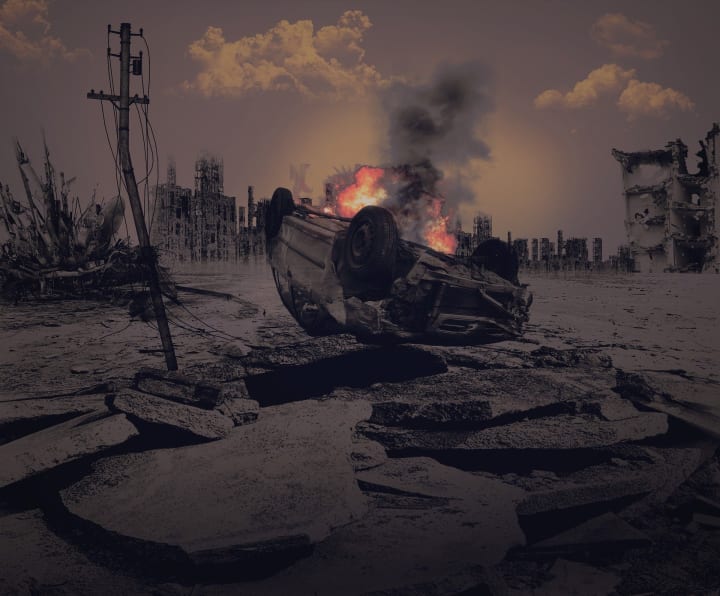
The world’s population quickly devolved to its baser instincts. The young and the old perished quickly. The young—especially those who had been born into technology—lacked the skills necessary to survive without it. The feebly old, when required to fend for themselves, could not. Previously developed countries experienced the most casualties. Too much resting on our laurels had made us soft, easy prey for those around who were better prepared for the end times. Even so-called survivalists succumbed to this new and unexpected environment when the planet's mutated DNA turned their generator-powered bunkers into crypts; once their canned food and supplies ran out, so did they. Unsurprisingly, less developed countries thrived in this new yet familiar landscape. Already living off the land, they were better equipped, barely blinking as the rest of the world navigated this modern-day global extinction event.
Then there were the people like me. Survivors. Young and fit enough to take care of ourselves, but old enough to remember life before technology dominated. Before computers and the internet. Before the EMP.

I gathered some snack food, bottled water, and pens from the ransacked concession stand, and at nightfall, I followed the tracks north, consulting the map throughout the night. It was much safer traveling at night. The darkness offered less exposure to those who would take advantage of a would-be traveler. The stars were much brighter now without human-made lights to compete with the spectacle of nature, my map illuminated by the moonlight. The sky was so clear, unpolluted from the toxins of humanity, that I could almost see the outlines of galaxies twinkling in the distant reaches of the universe.

It took some fifteen years before those great minds concluded that the disabling effects on electronics were, in fact, permanent. What was not readily apparent was why every subsequent attempt to rebuild technology failed. No matter what materials or scientific engineering methods were employed, the laws of physics and their proven mathematical equations no longer worked. The engineers were unable to build electric or gas engines that created power. Even basic microchip and processor technology evaded recreation. The physics of our planet changed on a subatomic level, leaving humankind to survive in a technological wasteland. The EMP did not just wipe out all technology on Earth in the present; it may have wiped out all technology in the future.

For several weeks I walked all night and hunkered down during daylight hours. I re-supplied when I could, miraculously finding more water and the occasional protein bar, at abandoned train stations along the way. I did not see or hear another soul, but I knew they were out there, waiting for me to lose focus and drop my guard. Yet it seemed destiny was guiding this journey. All I had to do was believe.
When the weather turned, it became bitterly cold, especially at night. Navigating the slippery tracks became difficult. The next station was just a few hours away. As the cold deepened, I planned to hole up there for a few days.
I woke up in a ditch. I pictured being attacked by a marauding horde of the undead, coming back to life due to the Pulse. Of course, this was pure fantasy. In reality, I had slipped on the track and fell down the hill. I sat up and realized that my right leg was pinned between two rocks. Screaming for help would expose me to others, including people meaning do me harm, to take my supplies, to steal my sanctuary fee.
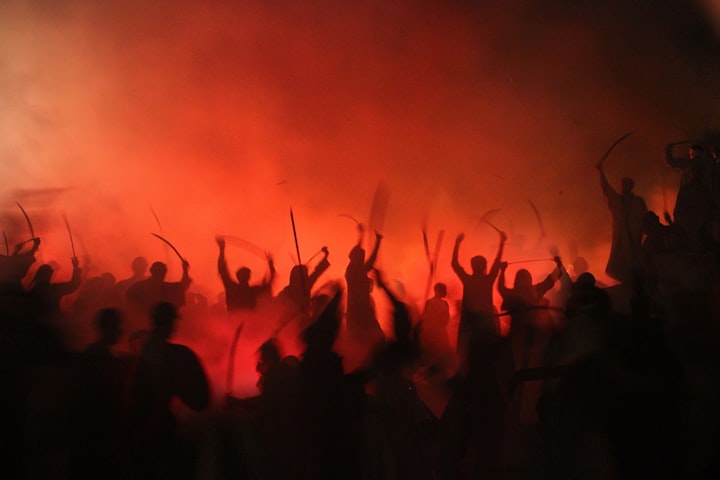
The temperature was well below freezing. I had to risk building a fire even if it would attract unwanted eyes. Fighting off others was preferable to freezing to death. But with no wood, twigs, or brush within arm's reach, my hand landed on the little black book. The thought of tearing out even one page was too much to fathom. I’d been journaling my travels in that book, chronicling my trek for posterity, I suppose. Instead, I shredded the newspaper and brown bag into small strips.
Unfortunately, as quickly as the fire began, it started dying out. I needed more fuel. I grabbed the map—surely I could remember the coordinates?—and tossed it into the flames. The fire barely flickered. My lower body was already numb. If I could hold on until morning, maybe I would survive. I screamed for help, hoping someone would see the rapidly dimming flames. With great anguish, I relented, tearing a few pages from the book at a time and tossing them into the flames.
The money! I peeled a few hundred dollar bills off one stack and fed them to the flames. The fire burned brightly. I waited until the flames had almost disappeared before adding a few more bills. If I timed it right, I wouldn’t need to burn it all. One by one, I added the bills to the fire. As each stack got smaller, the fire burned brighter and brighter until the money was almost gone. I struggled to keep my eyes from closing, but soon the brightness of the flames faded into the darkness of lost consciousness.
When I opened my eyes, the face of an angel hovered over me. My vision flickered as the face came into focus.
Sarah was no real angel, at least not in the biblical sense, but she was one of my saviors, drawn to the dying flames, where they had found me, having almost given into hyperthermia. The heat from the burning bills had saved me from that fate.
I listened to the sounds of a thriving community all around me. Had I made it to the sanctuary? How could I have gotten here? Had my saviors carried me the rest of the way? Did their altruistic nature compel them to let me in, even without being able to pay the fee, or was I now destined to a life of indentured servitude to pay off the debt?
The truth was much simpler. I never made it to the border. Sarah and her fellow survivors had built a self-sustaining ecosystem in upstate New York. They were now beyond surviving and actually thriving, growing fresh produce, herbs, spices, and pumping clean water from the river nearby. They housed livestock as well, but just for companionship, not sustenance, as the survivors were vegan.

As I helped with the community’s agricultural development by gardening, picking crops, and shoveling fertilizer, weeks turned into months and the purity of their motives stood the test of time. They held an unconditional fellowship whose sole purpose was to thrive with what was left of humanity. I no longer desired the "sanctuary" I had read about in the dead man's little black book.
By working the soil with my hands, I discovered that growth and progress cannot be bought. True progress is the result of like-minded individuals working toward the benefit of all—not all who have money, but all who have life, no matter how fragile and fleeting. Slowly I accepted the past and looked toward the future, no matter how strange or different. I saw Sarah's smile in my mind's eye and wondered what a life with her might look like.
The path I have chosen may not be certain, but that little black book gave me a purpose and the twenty thousand dollars literally saved my life, giving me a life now worth living if for no other reason than to honor the memory of my wife, Rebecca, and my sons, Julian and Justin. May they never be forgotten.
About the Creator
Keep reading
More stories from writers in Futurism and other communities.
About Binding Prometheus
I want to start actively advocating on behalf of my own work, and the most valuable part of my canon is, without a doubt, Binding Prometheus, the play I have been working on since 2019 and only finished in 2023 as part of my MA. The play itself is an amalgamation of a million different inspirations. On one end, it evokes the Ancient Greek myth-play, deriving its own title from the earliest extant work of Western drama we have, Aeschylus’s Prometheus Bound. On the other end, it borrows significantly from the sci-fi bulwarks from over the years, namely Mary Shelley’s Frankenstein and Karel Capek’s Rossum’s Universal Robots. The play could be an episode of Black Mirror, I fear. I don’t know. I’ve only ever seen one episode of Black Mirror.
By Steven Christopher McKnight28 days ago in Futurism
Edible Packaging Market: Seaweed, Starch & Protein-Based Materials & Growth Outlook
According to IMARC Group's latest research publication, global edible packaging market size reached USD 1,015.58 Million in 2024. Looking forward, IMARC Group expects the market to reach USD 1,670.18 Million by 2033, exhibiting a growth rate (CAGR) of 5.1% during 2025-2033.
By sujeet. imarcgroupa day ago in Futurism




Comments
There are no comments for this story
Be the first to respond and start the conversation.