
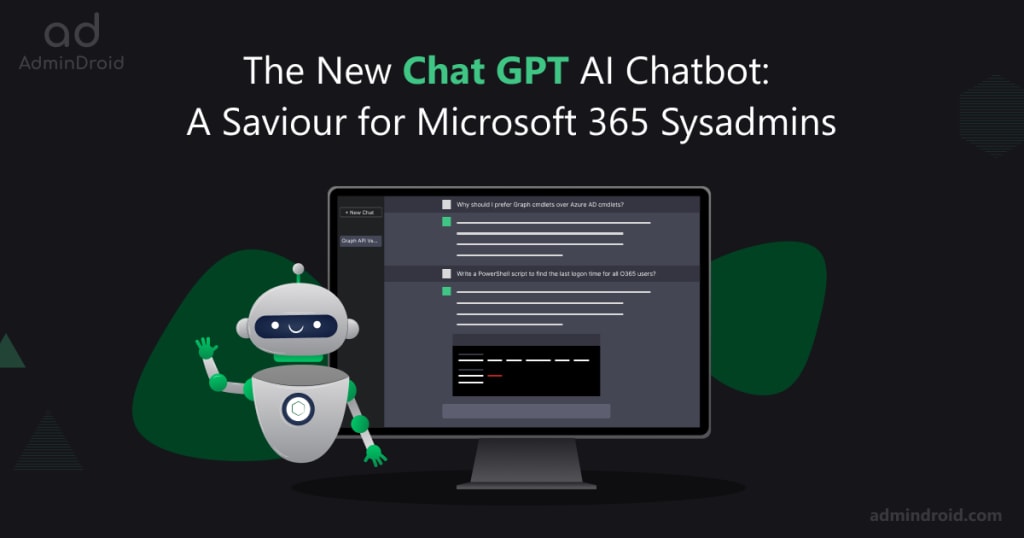
ChatGPT is a state-of-the-art language model developed by OpenAI. It is based on the transformer architecture, which was introduced in the paper "Attention Is All You Need" by Google Brain.
The transformer architecture allows ChatGPT to process text in a more efficient and effective way compared to traditional recurrent neural networks (RNNs). This is because it uses self-attention mechanisms to weigh the importance of different words in the input text, rather than processing them in a linear sequence.
One of the key features of ChatGPT is its ability to generate human-like text. This is achieved through a process called fine-tuning, where the model is trained on a large dataset of text and then fine-tuned on a smaller dataset specific to the task at hand. This allows the model to generate text that is more appropriate for the specific context in which it is being used.
ChatGPT can be used for a variety of natural language processing (NLP) tasks, such as text generation, text summarization, and text classification. It has been used in a number of applications, including chatbots, language translation, and content creation.
One of the most popular use cases of ChatGPT is in the development of chatbots. Chatbots are computer programs that can simulate conversation with human users through text-based or voice-based interfaces. By using ChatGPT, developers can create chatbots that are able to understand and respond to natural language input in a more human-like way.
Another popular use case of ChatGPT is in the field of language translation. The model can be fine-tuned on a dataset of bilingual text to generate translations that are more accurate and natural-sounding than those produced by traditional machine translation systems.
In addition to these practical uses, ChatGPT is also being used for more creative applications, such as content creation. For example, it can be used to generate short stories, poetry, or even music. The model can be fine-tuned on a dataset of text from a specific genre or style, and then used to generate new text that is similar in style.
In conclusion, ChatGPT is a powerful and versatile language model that is capable of performing a wide range of natural language processing tasks. It is based on the transformer architecture, which allows it to process text in a more efficient and effective way compared to traditional recurrent neural networks. It can be fine-tuned on specific datasets to generate text that is more appropriate for the task at hand. Due to its ability to generate human-like text, ChatGPT has been used in a variety of applications, including chatbots, language translation, and content creation. It's the future of AI-driven natural language processing and will play an important role in shaping the way we interact with technology in the future.
ChatGPT freelancing uses
C
ChatGPT can be used for a variety of freelancing tasks, such as:
Content creation, including writing articles, blog posts, and product descriptions.
Copywriting, including crafting sales letters and email campaigns.
Transcription, converting audio and video files into written documents.
Language translation, converting text from one language to another.
Chatbot development, creating conversational AI for businesses.
Virtual assistance, providing administrative support for individuals and businesses.
These are just a few examples of how ChatGPT can be used for freelancing. The specific use will depend on the needs of the client and the skills of the freelancer.
About the Creator
Keep reading
More stories from Mostafa Kamal and writers in Futurism and other communities.
About Binding Prometheus
I want to start actively advocating on behalf of my own work, and the most valuable part of my canon is, without a doubt, Binding Prometheus, the play I have been working on since 2019 and only finished in 2023 as part of my MA. The play itself is an amalgamation of a million different inspirations. On one end, it evokes the Ancient Greek myth-play, deriving its own title from the earliest extant work of Western drama we have, Aeschylus’s Prometheus Bound. On the other end, it borrows significantly from the sci-fi bulwarks from over the years, namely Mary Shelley’s Frankenstein and Karel Capek’s Rossum’s Universal Robots. The play could be an episode of Black Mirror, I fear. I don’t know. I’ve only ever seen one episode of Black Mirror.
By Steven Christopher McKnight20 days ago in Futurism
Key Costs to Expect for Mobile App Development in Atlanta
The first cost estimate for a mobile app usually looks manageable. A number. A timeline. A feature list. The real expense, however, rarely lives entirely in that first proposal. In Atlanta, where mobile apps increasingly support revenue, operations, and customer experience, the true cost emerges over time — shaped by decisions made early and responsibilities that surface later.
By Samantha Blake5 days ago in Futurism
How to Succeed at the Benson Directory®
Congratulations and welcome to the Benson Directory® employee #22391! As our newest call handler, you will have the privilege of speaking with dozens of unique and interesting people on a daily basis as well as the opportunity to earn bonuses for high performance. Contained within this handbook you will find a set of ease to follow instructions designed to help you settle in to your new role and begin paving the way to success.
By S. A. Crawford4 days ago in Fiction


Comments
There are no comments for this story
Be the first to respond and start the conversation.