
The Moberly–Jourdain Mystery:
A real case of Time Travel?

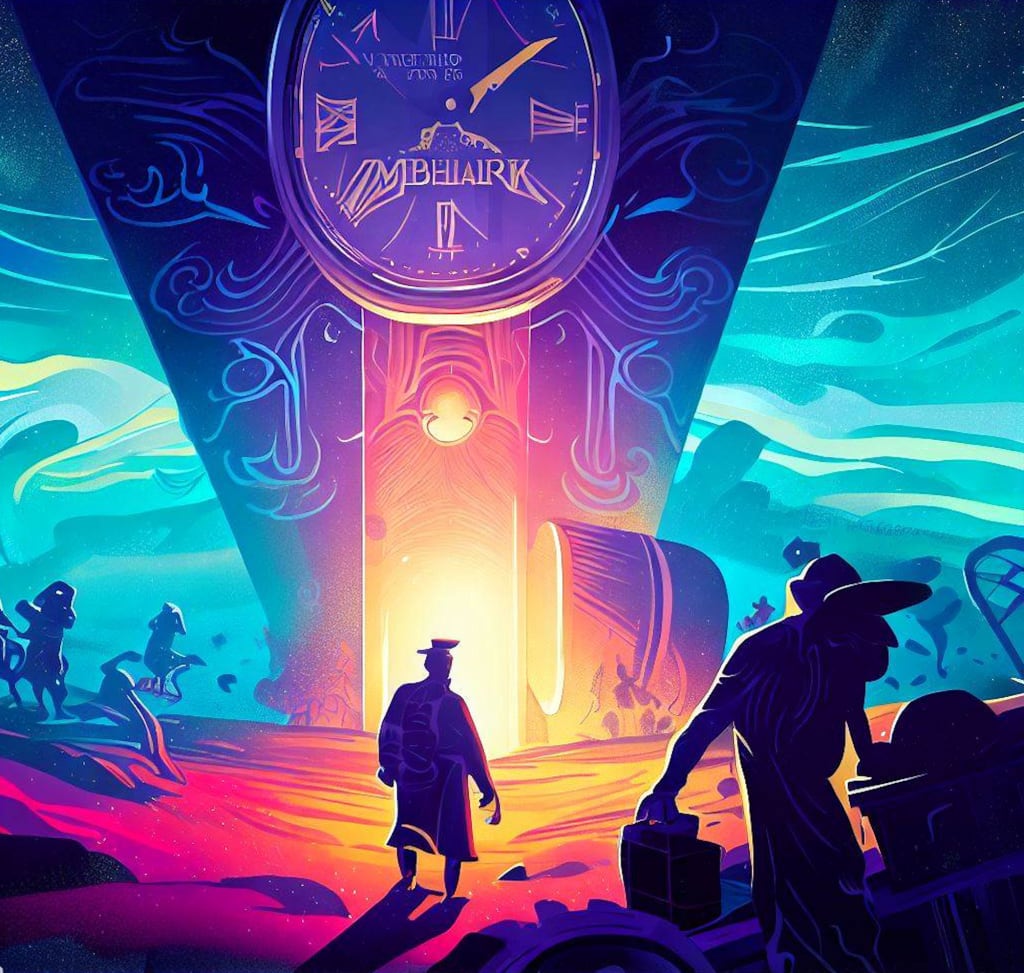
The Moberly-Jourdain incident is one of the most intriguing and controversial cases of alleged time travel in history. It raises questions about the nature of time, memory, and perception, as well as the reliability of historical evidence and eyewitness testimony. In this essay, I will examine the main arguments for and against the validity of the incident and evaluate its significance for our understanding of the past and present.
The incident occurred on 10 August 1901, when two British women, Charlotte Anne Moberly and Eleanor Jourdain, visited the Palace of Versailles in France. They were both academics and friends who had decided to take a holiday in Paris. They were not very impressed by the main palace, so they decided to look for the Petit Trianon, a smaller palace where Marie Antoinette used to spend her time.
As they walked through the gardens, they claimed to have experienced a series of strange phenomena. They felt a sense of gloom and sadness. They saw people who looked out of place and time. They heard voices and noises that did not belong to their era. They felt confused and scared. They eventually found their way to the Petit Trianon and joined a tour group. They did not mention their experience to anyone until later.
They returned to England and tried to make sense of what happened. They did some research and found out that some of the people and details they saw matched the historical records of the 18th century. They also discovered that 10 August was the anniversary of the storming of the Tuileries Palace in 1792, a key event in the French Revolution.
They wrote a book about their experience, called An Adventure, which was published in 1911. They used pseudonyms to protect their identities, but their real names were soon revealed. Their book caused a lot of controversy and criticism. Some people accused them of lying, hallucinating, or being tricked by a hoax. Others believed them and suggested that they had experienced a time slip, a phenomenon in which people seem to travel through time by unknown means.
The main arguments for the validity of the incident are based on the following points:
- The women were credible witnesses who had no motive to fabricate their story.
- The women provided accurate and consistent details that corresponded to historical facts that they could not have known beforehand.
- The women experienced similar sensations and emotions that indicated a shared reality.
- The women underwent psychological tests that showed no signs of mental illness or suggestibility.
The main arguments against the validity of the incident are based on the following points:
- The women were influenced by their expectations and imagination, as they were interested in history and literature.
- The women misinterpreted or embellished what they saw, as they were unfamiliar with the French culture and language.
- The women suffered from a form of dissociation or hysteria, as they were under stress and fatigue.
- The women were victims of a prank or a hoax, as they encountered people who were dressed up or acting out a scene.
The significance of the incident for our understanding of the past and the present is twofold:
- It challenges our conventional notions of time as a linear and objective dimension that separates different historical periods.
- It reveals our fascination with the past as a source of mystery and inspiration that connects us with different cultures and identities.
In conclusion, the Moberly-Jourdain incident is a fascinating and controversial case that invites us to question our assumptions about time travel and history. Whether it was a genuine time slip or not, it shows how our perception of reality is shaped by our imagination and memory, as well as by our social and historical context.
About the Creator
Hector Sampson
A computer whizz, radio & TV presenter, author, speaker and polyglot. He started writing brief notes to himself, giving himself tips and telling himself off. He has written 25 books in the areas of self-help, spirituality and nonfiction.
Keep reading
More stories from Hector Sampson and writers in Futurism and other communities.
Time Travel Ethics:
Time travel is a fascinating concept that has captured the imagination of many people for centuries. The idea of being able to visit different periods of history, witness historical events, meet famous figures, or even change the course of history is appealing and exciting. However, time travel also raises many ethical questions and challenges that need to be carefully considered before embarking on such an adventure.
By Hector Sampson3 years ago in Futurism
Stanford Just Killed Prompt Engineering With 8 Words (And I Can’t Believe It Worked)
Artificial intelligence tools like ChatGPT, Claude, and Gemini have made one thing clear: the way you ask a question often matters more than the question itself. Over the last few years, an entire skill set called prompt engineering has emerged. People spend hours learning how to write detailed prompts in order to get better answers from AI. But what if most of that effort isn’t actually necessary? Researchers studying large language models discovered something surprisingly simple. Instead of writing long and complicated prompts, adding a short instruction of just eight words can dramatically improve the quality of AI responses. Those eight words are simple: “Think step by step and explain your reasoning.” At first, this sounds almost too basic to be powerful. But in practice, this small instruction can completely change how an AI system approaches a question.
By Shahid Zamanabout 14 hours ago in Futurism



Comments
There are no comments for this story
Be the first to respond and start the conversation.