
The Man Who Remembered the Future
He knew what was coming—but no one believed him, until it was too late.

The first time it happened, Daniel thought it was a dream.
He woke with a start, heart racing, the smell of burning still clinging to his nostrils. In the dream, he had stood in front of a building—his office building—watching it burn, people running, screaming, sirens blaring, the smoke thick and oily. And in the dream, he’d known it wasn’t an accident.
The next morning, he dismissed it as stress. He worked in finance—stress was part of the job. But something about the vividness of the images lingered. The fire. The fear. The timestamp on his dream: Wednesday, 3:13 p.m.
He checked the clock every hour that day. When 3:13 p.m. came, he was standing by the coffee machine, halfway through a stale donut.
Nothing happened.
Daniel exhaled, embarrassed with himself.
Until the following Wednesday.
At exactly 3:13 p.m., a fire broke out in the building across the street from his office. Smoke billowed upward like a stormcloud. Someone screamed. Sirens came seconds later. The exact images from his dream played out before him—not at his building, but close enough to chill him.
He tried to tell his colleagues. He joked at first, then got serious. They laughed. “Coincidence,” they said. “You probably saw a fire report and forgot.”
But Daniel knew what he’d seen. He hadn’t dreamed it. He had remembered it.
Over the next month, the memories came faster. Not dreams. Not visions. Memories. That’s what frightened him most—because they didn’t feel imagined. They felt lived.
He remembered future birthdays of nieces not yet born. Wars that hadn't started. The name of a President who hadn’t even run for office. He remembered falling in love with a woman he hadn’t met yet—Rachel. Her name came to him one morning like a perfume. He could hear her laugh, recall the taste of wine on her lips, the way she said his name when she was angry.
He hadn’t met her.
But he would.
He was remembering the future.
Daniel began keeping journals. He wrote down everything he could recall, trying to verify events when they happened. He started small: lottery numbers, weather patterns, celebrity scandals. Then larger things: economic crashes, political shifts, natural disasters. He was almost always right.
It made him careful. Fearful. If he changed things—would the memories disappear? Would he stop remembering? Could he make things worse?
He tried telling someone again. A psychiatrist this time.
Dr. Klein listened with mild interest, nodding along, scribbling in his notebook. “It’s a fascinating delusion,” he said. “Your brain is fabricating consistent, predictive dreams. That’s rare.”
Daniel showed him the journals. Dates. Predictions.
Klein smiled gently. “Self-fulfilling prophecy. You’ve become very good at pattern recognition. These aren’t memories—they’re guesses.”
But Daniel wasn’t guessing.
He proved it.
He remembered an explosion in a subway station. A week in the future. He didn’t know the cause, only the time and place. And this time, he refused to sit by.
He went to the authorities. Reported the threat anonymously. Bomb squad swept the station. They found nothing.
The next day, an explosion killed six people in a trash can just outside the station entrance. Not in the station—but close enough to echo his memory.
That’s when they came.
Men in suits. Government, maybe. Or not. They didn't introduce themselves. Just showed him pictures. Asked him questions.
“Who told you?”
“No one,” Daniel said. “I remembered.”
They didn’t laugh.
Instead, they studied him. Ran tests. Brain scans. Bloodwork. They kept him for days in a clean, sterile room. No windows.
“Why is this happening to me?” Daniel asked one of them, a woman with tired eyes.
“We don’t know,” she admitted. “But if you can remember the future, then there’s a future out there worth remembering. We need to know what you see.”
So he told them. As much as he could. Names. Events. Patterns. He didn’t understand all of it, but they took it seriously. Sometimes too seriously.
Then he remembered something terrible.
A city. A name. Boston. A date: June 14th, 2026. And silence after that. No memories beyond it. Just darkness. As if the future stopped.
He told them.
They went quiet.
They moved him again. Somewhere deeper. Underground, he thought. No windows. The lights never turned off. The food tasted like paper.
One night, Rachel appeared.
She walked into his room like a ghost stepping out of his memory. Her hair was shorter than he recalled, her face a little older, but it was her.
“Rachel,” he whispered.
She looked stunned. “How do you know my name?”
He laughed, and then he cried.
She was a researcher, they said. Brought in to study his case. They hadn’t told her much. Just that he was important.
“I’ve seen you,” Daniel said. “In my future.”
And as they talked, she began to believe him. Not because he told her about the wine, or her laugh, or how she hated flying. But because he knew things she hadn’t told anyone. Because when she looked in his eyes, she saw a familiarity she couldn’t explain.
They gave her a choice: stay and study him, or leave and forget everything.
She stayed.
Together, they tried to stop what was coming.
Daniel remembered more—clues hidden in dreams that weren’t dreams. Conversations that hadn’t happened yet. Warnings. A secret project. A weapon lost. A man named Kessler.
But time fought back.
The more they tried to change, the harder it became to see. His memories blurred. Details faded. Some events shifted, others resisted.
One morning, Daniel woke up screaming. Not from a nightmare, but from absence.
The memories were gone.
No fire. No Rachel. No future.
He was ordinary again.
He cried for hours. Not for the visions, but for the loss of her. He didn’t know if she was real anymore. Had he ever truly met her? Had any of it happened?
A week later, he walked past a café and saw her.
Rachel.
She looked up from her coffee and frowned slightly, as if something tugged at her memory.
He hesitated.
Then walked inside.
Sat across from her.
And said, “Have we met before?”
She smiled slowly.
“I think we will.”
About the Creator
Keep reading
More stories from Zeeshan Khan and writers in Futurism and other communities.
The Love I Found After Losing Myself
I didn’t realize I was disappearing until I was already gone. It started with small things. The music I liked changed to match his playlists. I stopped wearing red lipstick because he said it was too “loud.” My Friday nights went from reading and journaling to bar-hopping with his friends, pretending to laugh at jokes that made me feel invisible. Slowly, I traded pieces of myself for the illusion of closeness—believing that love meant compromise, even if it hurt.
By Zeeshan Khan10 months ago in Confessions
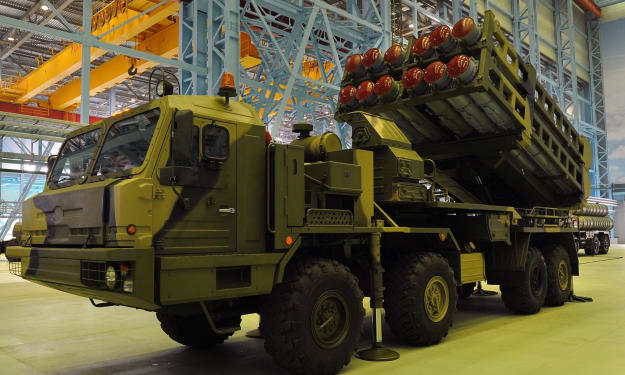
Air Defense Systems Market Outlook: Advanced Military Protection and Strategic Defense Growth Opportunities
According to IMARC Group's latest research publication, The global air defense systems market size reached USD 51.4 Billion in 2025. Looking forward, IMARC Group expects the market to reach USD 73.7 Billion by 2034, exhibiting a growth rate (CAGR) of 4.08% during 2026-2034.
By James Whitman4 days ago in Futurism
A Transparent Look at Vocal Challenges and Top Stories
Almost three years ago, we shared a resource article that served as a place for people to suggest new challenge prompts. We thought it would be a good idea to refresh that thread, and take the opportunity to answer a few common questions about top stories, how challenges are judged and how submissions are reviewed.
By Vocal Curation Team4 days ago in Resources



Comments
There are no comments for this story
Be the first to respond and start the conversation.