

In the year 2050, the world had become a place where everything moved too fast. Time had shrunk into a thousand little increments, and every second needed to be optimized—an idea that no longer just lived in the minds of the businessmen, but had seeped into the very bones of everyday life. People didn’t take a breath without it being monitored, quantified, and assessed, as if the simple act of inhaling had become something to measure, to improve, to perfect. And somehow, in all this striving for perfection, they lost touch with the very thing that made them human.
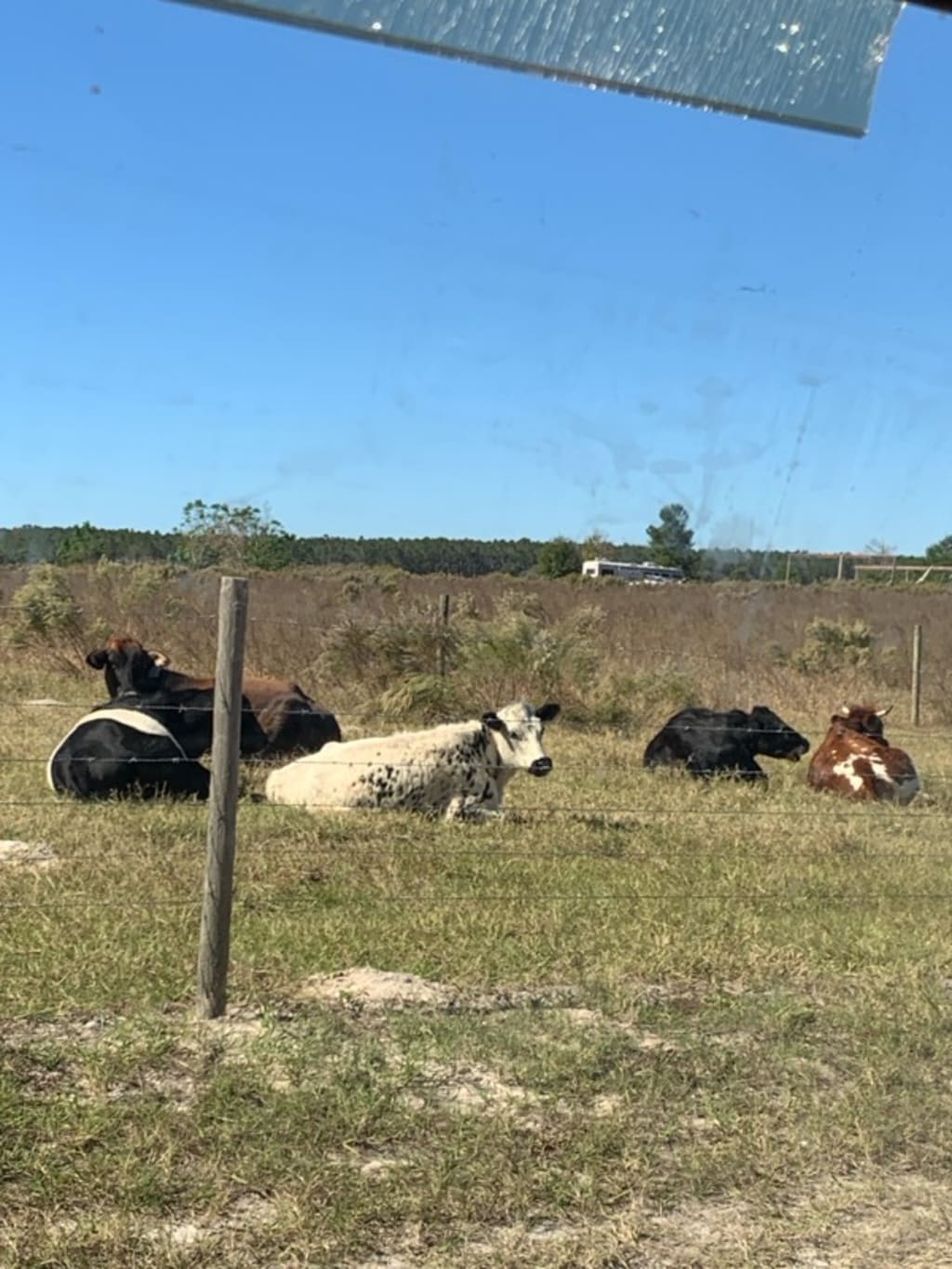
It was a summer afternoon in late July when Theodore Collins, a farmer from somewhere deep in the heart of Mississippi, stood still on his porch, watching his son ride his bicycle down the dusty old road, as he had done so many times when Theodore was a boy. The boy’s laughter could be heard echoing in the distance, a sound so pure it seemed to be fading with every passing year.
Theodore scratched his stubbled chin and squinted into the horizon, where the sun hung low, just beginning its slow crawl toward the horizon. The old dog, Buster, lay in the grass beside him, its breath slow and heavy in the heat of the day.
A distant hum could be heard in the air—somewhere beyond the trees, the city’s ever-growing electronic pulse buzzed like a swarm of bees, the sound of progress and efficiency. That hum was everywhere now, even on days when the cicadas sang and the wind rustled through the corn.
Back in Theodore’s day, when he was a boy, the whole of life had seemed slower, easier, more sacred. A ride on a bicycle wasn’t about tracking speed, calories, or optimal heart rates; it was about the freedom that comes with the wind in your hair, the feeling of your legs working in rhythm with the world beneath you.
But nowadays, even the innocent joy of a simple ride had been hijacked. The machines made sure you were always monitoring your progress—measuring how far you’d gone, how fast, and what your vital signs looked like. The bikes themselves were smart, sending real-time data to apps that assessed your health, optimized your exercise, and provided suggestions to make you “better,” whatever that meant.
“Boys today,” Theodore muttered under his breath, “don’t even know what it means to just ride.”
The world had changed. The innocence of a bike ride had given way to a frenzy of data, and what was once a joy was now just another cog in the wheel of optimization.
The same could be said about everything else. People no longer walked into a room and simply breathed the air. No, the air was filtered, measured, and calibrated. Everything had to be just right. Even your breaths were optimized. The very sound of breathing had become something strange and clinical, as if the act of living itself had become a task.
He could hear his wife, Violet, moving about inside the house, the hum of her voice speaking with someone over the comm-link, something he never quite understood. Folks didn’t talk like that when he was young. Conversations had a slow, soft quality to them back then, like a good Southern meal shared among family. Now, every conversation was reduced to efficiency and brevity.
"Thad, you still out there?" Violet’s voice broke his thoughts, sharp and cutting through the soft air like the ringing of a bell.
“Yeah,” he said, looking over his shoulder. “I’m just watchin’.” He nodded toward his son, who was now racing the bike down the gravel road, the old wheels turning beneath him.
“They’ll be home for dinner soon enough,” Violet said, her voice distant, distracted. “And we’ve got some things to discuss.”
Theodore didn't bother asking what things. He knew. The government had sent over their latest proposal for smart farming technologies, systems that would monitor his crop yields, his water usage, the air quality, everything, all in real-time. They called it “The Smart Earth Initiative,” and it was all about efficiency, about getting every drop of water, every ounce of sunlight, just right for maximum crop yield.
But in the quiet spaces of his soul, Theodore couldn’t help but feel like he was losing something far more precious than efficiency. They were offering him ways to optimize his farm, to make it work harder, faster, with less labor, but they weren’t offering him a way to make it more meaningful. He didn’t need numbers to tell him how to love the land. The soil beneath his boots, the call of the hawk above, the sweat of a long day’s labor—those were the things that gave him purpose.
The world was moving faster, and he was supposed to keep up. But Theodore couldn’t help but feel the weight of it, the sense that something essential was being taken from him. Somewhere along the way, everything that once mattered—family, hard work, quiet moments—had become expendable, a relic of a world too slow for the future.
---
The shift wasn’t just happening on farms like Theodore’s. It had happened across the globe. A new culture had taken root, one where individual identities were lost in the pursuit of perfect data, perfect systems, and perfect lives. Countries once proud of their differences, their own unique ways of life, had blended into one—America looked more like Japan, and Japan like Germany, and Germany like Brazil. The world was global, but in the worst way—everyone had become a shadow of everyone else.
The hunger for optimization had spread like a disease. The meek farmer, once seen as the backbone of society, had been replaced by the automated machine, the drone that could plant seeds faster, more efficiently, with no need for human hands. But in that shift, there was a loss, a deep, undeniable loss of grace. No longer did people work the land with their hearts; they worked it with algorithms, with codes, and with screens. They had everything except the very thing that made them human: connection.
---
But not everyone had bought into the new way of life. In the quiet corners of the country, in small towns like the one Theodore lived in, there were still those who resisted the pull of the machine. They lived lives that didn’t measure up to the global standards, didn’t chase the same goals, didn’t breathe the same air.
“Now, I know it ain’t gonna be easy, but I reckon it’s worth a shot,” Theodore said one evening as he sat across from his son, the table lit by the dim light of an oil lamp. “I’m thinkin’ of tryin’ something different. Not just for the farm, but for us—our family.”
“Different how?” the boy asked, his wide eyes full of curiosity.
“Well,” Theodore said, leaning back in his chair, “they’re offerin’ us all them fancy new gizmos and gadgets to make the farm run faster, but I ain't so sure about that. I think I want to keep it slow—teach you how to work with the land, not just let the data do the talkin’. I reckon there’s more to it than just numbers. We could use the technology to make things better for the land, but it don’t have to take away the feelin’ of it all.”
“I don’t get it,” the boy said, furrowing his brow.
Theodore smiled, his weathered face softening with the wisdom of years. “Well, son, it’s like this: we can use what the world’s given us. We can use the technology to help us water the crops right, keep track of what’s growin’, but we ain’t gotta lose the soul of it. What makes it ours. We’re gonna grow our food with our hands, and we’ll eat it with the family, and that’ll be enough.”
---
And so, Theodore made a decision that day. He would embrace the future, but he wouldn’t let it strip away the old ways of life—the connection to the land, the family meals, the simple joys that came from working the earth with love and care. He would use the technology to enhance those things, to make them better, but he would not let it steal the essence of what made his life worthwhile.
The world may have been racing toward a future that was slick, fast, and sterile, but Theodore knew that there was something more. Something worth holding on to. Something that no machine could ever replace—the heartbeat of humanity itself.
And maybe, just maybe, that was enough.
About the Creator
Taylor Ward
From a small town, I find joy and grace in my trauma and difficulties. My life, shaped by loss and adversity, fuels my creativity. Each piece written over period in my life, one unlike the last. These words sometimes my only emotion.
Keep reading
More stories from Taylor Ward and writers in Futurism and other communities.
The Breath of Time and the Gift of Choice
The morning air was crisp, still holding a chill that lingered before the sun broke through the horizon. A fine mist lay low over the pastures, and the scent of earth — warm and sweet with the promise of a new day — filled my lungs. I stood on the porch of the old farmhouse, hands resting on the worn rail, rocking gently in my chair. The wood was smooth from years of use, worn by the hands of those who had come before me. I could almost hear my grandfather's voice in the wind, his quiet, wise words whispering through the trees. His land, his legacy — it was now mine to tend to, though some days, it felt as if the burden of time itself weighed heavier than the work.
By Taylor Wardabout a year ago in Motivation
The Mystery of the "Ghost Pikachu": 5 Heartbreaking Truths Behind Peakychu’s Pale Appearance
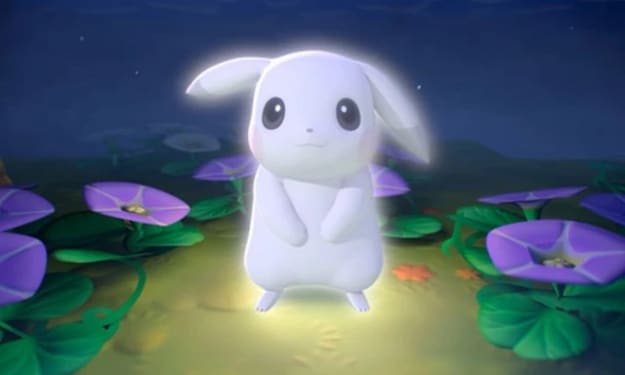
Before the first copy of Pokopia even hit shelves, the "Ghost Pikachu" had already broken the internet. When the trailers debuted a pale, hauntingly white version of the world’s most famous mouse, the fandom's collective head-canon went into overdrive, with viral theories suggesting a new Ghost-type regional variant or, more grimly, the literal spirit of a deceased companion. However, the truth buried in the game’s Pokédex is far more grounded and emotionally devastating. Peakychu isn't a supernatural phantom; it is a creature defined by a history of trauma, raising a haunting question: What happens to a Pokémon when it loses the very energy that defines its existence?
By Tech Horizons5 days ago in Futurism
Generative AI In Insurance Market to Surpass USD 13,862.7 Mn By 2033
Generative AI in Insurance Market Overview The global Generative AI in Insurance Market is projected to reach approximately USD 13,862.7 Million by 2033, expanding from about USD 731.7 Million in 2023. This represents a strong CAGR of 34.2% during the forecast period from 2024 to 2033. Market growth is largely influenced by the increasing adoption of artificial intelligence technologies across insurance operations, including underwriting, claims management, fraud detection, and customer engagement.
By Roberto Crum4 days ago in Futurism

Comments
There are no comments for this story
Be the first to respond and start the conversation.