
The Impact of Social Media on Our Lives: Benefits and Challenges
Examining the Pros and Cons of Social Media's Impact on Our Lives

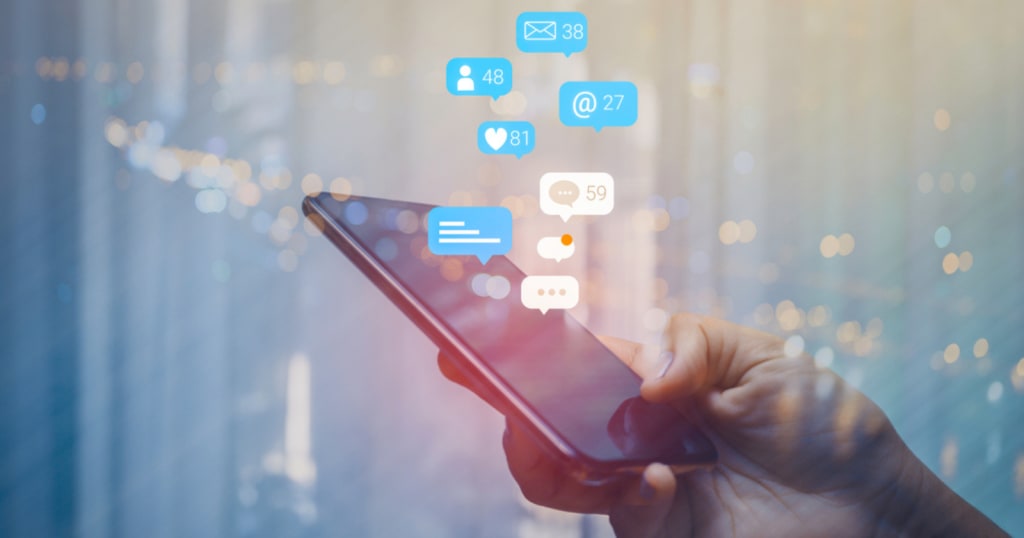
Social media has transformed the way we interact with each other and the world around us. With platforms like Facebook, Instagram, Twitter, and TikTok, social media has become an integral part of modern life, connecting people and ideas across the globe. However, social media has also created new challenges and concerns that need to be addressed.
One of the most significant benefits of social media is its ability to connect people. With just a few clicks, we can stay in touch with friends and family around the world, share photos and videos, and engage in real-time conversations. Social media has also given a voice to marginalized communities, allowing them to share their stories and experiences with a wider audience.
Moreover, social media has become a crucial tool for businesses of all sizes. It has enabled them to reach new customers, build brand awareness, and interact with their target audience. Social media has also created new job opportunities, with roles such as social media managers and influencers becoming increasingly popular.
Another significant benefit of social media is its role in disseminating information. Social media platforms allow us to access news and current events from a variety of sources in real-time. This has enabled us to stay informed about important issues and events, regardless of our location. Social media has also become a powerful tool for activism, allowing individuals and organizations to raise awareness about social issues and mobilize support for causes they care about.
However, social media has also created new challenges and concerns that need to be addressed. One of the most significant challenges is the impact of social media on mental health. Studies have found that excessive use of social media can lead to feelings of loneliness, anxiety, and depression. Social media can also create unrealistic expectations and standards, leading to feelings of inadequacy and low self-esteem. Additionally, social media has created a culture of comparison and competition, where people feel the need to constantly present a perfect image of themselves online.
Another challenge posed by social media is the issue of privacy and data security. Social media platforms collect vast amounts of data on their users, which can be used for targeted advertising and other purposes. However, this data can also be vulnerable to hacking and misuse, creating risks for users and their personal information. Social media has also contributed to the spread of misinformation and fake news, creating confusion and distrust in society.
Almost a quarter of the world’s population is now on Facebook. In the U.S., nearly 80% of all internet users are on this platform. Because social networks feed off interactions among people, they become more powerful as they grow.
Thanks to the internet, each person with marginal views can see that he’s not alone. And when these people find one another via social media, they can do things — create memes, publications, and entire online worlds that bolster their worldview, and then break into the mainstream.
Without social media, social, ethical, environmental, and political ills would have minimal visibility. Increased visibility of issues has shifted the balance of power from the hands of a few to the mainstream.
While social media activism brings an increased awareness about societal issues, questions remain as to whether this awareness is translating into real change. Some argue that social sharing has encouraged people to use computers and mobile phones to express their concerns on social issues without actually having to engage actively with campaigns in real life. Their support is limited to pressing the ‘Like’ button or sharing content.
The rise of social media means it’s unusual to find an organization that does not reach its customers and prospects through one social media platform or another. Companies see the importance of using social media to connect with customers and build revenue.
Businesses have realized they can use social media to generate insights, stimulate demand, and create targeted product offerings. These functions are important in traditional brick-and-motor businesses and, obviously, in the world of e-commerce.
In conclusion, social media has had a profound impact on our lives, bringing both benefits and challenges. While it has enabled us to connect with others, share information, and grow our businesses, it has also created new concerns around mental health, privacy, and data security. As social media continues to evolve, it will be important to address these challenges and find ways to harness the benefits while minimizing the risks.
About the Creator
Muhammad Mohib
Muhammad Mohib is my identity, I am an Astrophysicist & I write articles regarding Interesting Space Phenomenon's. You can support me by reading, & liking my work. If you find any errors Contact me at [email protected] for inquires.
Keep reading
More stories from Muhammad Mohib and writers in Futurism and other communities.
The Big Bang & Universe for Dummies.
Beginning of Everything: The Universe was just atoms, Just atoms before turning into billions of light years across (which we can only observe). These atoms were the building block of everything known to Existence. These atoms fused together under the Immense heat and pressure from the big-bang forming galaxies, stars, nebulae's, and every single cosmic entity known in the observable universe, Before all these beautiful spiraling galaxies, and stars, There were only random particles (e.g.: photons) scattered around a thick, dense, cloud of plasma which didn't let any radiation pass through, As the universe cooled, Thus protons and electrons now could combine to form neutral "hydrogen" atoms, With the emergence of free electrons now binding to protons, Now the photons could emerge and we could see light travelling through the thick dense plasma cloud, This radiation was the first ever radiation ever traced, and we now know it as the–Cosmic microwave background– The earliest forms of our observable universe when it was in its baby phase.
By Muhammad Mohibabout a year ago in Futurism
About Binding Prometheus
I want to start actively advocating on behalf of my own work, and the most valuable part of my canon is, without a doubt, Binding Prometheus, the play I have been working on since 2019 and only finished in 2023 as part of my MA. The play itself is an amalgamation of a million different inspirations. On one end, it evokes the Ancient Greek myth-play, deriving its own title from the earliest extant work of Western drama we have, Aeschylus’s Prometheus Bound. On the other end, it borrows significantly from the sci-fi bulwarks from over the years, namely Mary Shelley’s Frankenstein and Karel Capek’s Rossum’s Universal Robots. The play could be an episode of Black Mirror, I fear. I don’t know. I’ve only ever seen one episode of Black Mirror.
By Steven Christopher McKnight18 days ago in Futurism
Small Business CRM Comparison Chart for Easy Selection
I still remember the spreadsheet. It was messy, color-coded, and full of half-finished notes. I had opened it with good intentions. All I wanted was a simple way to choose a CRM for a small team that was already stretched thin. Instead, I found myself lost in tabs, feature lists, and pricing tiers that seemed to change every time I refreshed a website.
By Jane Smithabout 7 hours ago in Futurism



Comments
There are no comments for this story
Be the first to respond and start the conversation.