
The Impact of Mobile Payment technology on Retail Businesses
Widespread usage of smartphones, wider mobile network coverage and smarter mobile technologies have lead to the rise of mobile payments, transforming the retail sector

Mobile payment technology is changing the whole retail industry. As more customers are looking for more convenient, quicker, and secure ways to pay, retailers are going towards the latest payment technologies. Mobile technologies are becoming more advanced and secure day by day, and parallely smartphones are becoming more and more affordable to common men. Moreover, mobile and high-speed internet coverage is expanding to even the most rural places. Enabling the common men even at the rural parts too, have access to digital payments.
What Are Mobile Payments?
Mobile payments mean paying with your smartphone instead of traditional methods like payments with cash and physical cards. There are multiple ways to do the payments with mobile, like scanning the QR, paying with a mobile wallet, payment links, NFC (near-field communication) biometric authentication, and even voice-activated payments.
The Rise of Mobile Payments in Retail
Mobile payments are being adopted pretty quickly in the retail sector. There are multiple factors behind this rise. The primary factor is the widespread usage of smartphones as its affordable even to the common man, another factor is the mobile network and high-speed internet penetration to even the most rural parts, and growing preferences for contactless payment is another factor that is acting like a catalyst in the rise of mobile payments.
Customer Behaviour Changes
Modern-generation customers are very tech-savvy people. Digital payment methods completely gel with their taste, as payment transactions can be directly completed with smartphones, no need to carry physical and even physical cards. Moreover, as all digital transactions create digital records of all the transactions, thus financial management becomes more easier and transparent. In order to cater to this changing customer behaviour, retailers are offering the latest digital payment options.
Mobile Payment Technologies
QR Code Payments
Everyone in today's world will be familiar with QR codes, fancy looking codes that can be scanned using a smartphone camera to make payments. QR code payments are a quick, easy, and secure way to make payments, and is used widely across small shops to large stores.
NFC
NFC (Near-Field Communication) is the technology that allows one to initiate payments by just tapping the smartphone on NFC enabled payment terminal. For the same, you will have the tap-to-pay options in mobile wallets like Google Pay. Its a fast, secure, and convenient way to make payments at the retail stores.
Mobile Wallets
Mobile wallets are like an integral part of smartphones nowadays. Mobile wallets can store payment information like account and card details securely in your mobile phone, facilitating faster mobile payments. Common mobile wallets are Google Pay, Samsung Pay, and Apple Pay. These wallets allow you to use mobile cameras to scan QR codes for payments as well as biometric authentications to make the process more secure.
Payment Links
Payment links are one of the fast-growing payment technologies where businesses will generate a unique link also called pay-by-link and will share it with customers through any mediums like SMS, WhatsApp and social media. On clicking the link customers will be taken to the payment page, where you can choose the payment method of your choice. Although it works on desktops too, but is super convenient to use through a smartphone.
Biometric Authentication
Biometric authentications like fingerprint scanning and face scanning add an additional layer of protection to mobile payments, making it a more secure and easy way to pay.
Voice-Activated Payments
Voice-activated payments utilise virtual assistants like Google Assistant, Siri and Alexa to initiate the payment process using voice commands, its gaining popularity among customers as this makes the shopping process more convenient.
Benefits of Mobile Payment Technology for Retail Businesses
Enhanced Customer Convenience
Mobile payment syncs with modern customer preferences, With just a tap or scan customers can complete the payments, enhancing customer satisfaction. Satisfied customers remain loyal to the brand and will give more sales in the future.
Faster Checkout Process
Digital payments allow faster processes leading to faster checkout at the counters. This enables retailers to serve more customers, especially during peak hours.
Better Data Collection and Insights
Mobile payments enable to collect valuable customer data that contains customer preferences and behaviours, which can be leveraged to fine-tune the marketing as well as it help in optimisation the inventory.
Higher Operational Efficiency
Mobile payment systems can be integrated with invoicing applications and accounting applications, reducing the manual workload and also preventing manual errors and the time spent in fixing those errors, making things smoother and easier to handle.
Secure Payment Options
Mobile payment systems offer advanced security features like encryption, tokenization and biometric authentication making to more secure.
Support for Contactless Payments
Mobile payments allow customers to complete the payment without actual physical touch, making it more hygienic. Modern day users prefer such contactless options, as this makes shopping more safer.
Environmental Impact
Digital payment options are more environment friendly, as paper receipts and physical cash are not required, which helps in reducing the cutting of trees for manufacturing paper.
Facilitating Cross-Border Payments
Mobile payment technology helps businesses to go global and cater to a wider audience. Mobile payments help in overcoming the barriers to Global Retail Expansion and reaching new markets.
Mobile payment technology is not just a trend, its actually shaping the future of the retail industry. By understanding the changing consumer preferences and the impact of mobile technology, businesses can make more informed business decisions, leading to faster growth and success.
About the Creator
About Binding Prometheus
I want to start actively advocating on behalf of my own work, and the most valuable part of my canon is, without a doubt, Binding Prometheus, the play I have been working on since 2019 and only finished in 2023 as part of my MA. The play itself is an amalgamation of a million different inspirations. On one end, it evokes the Ancient Greek myth-play, deriving its own title from the earliest extant work of Western drama we have, Aeschylus’s Prometheus Bound. On the other end, it borrows significantly from the sci-fi bulwarks from over the years, namely Mary Shelley’s Frankenstein and Karel Capek’s Rossum’s Universal Robots. The play could be an episode of Black Mirror, I fear. I don’t know. I’ve only ever seen one episode of Black Mirror.
By Steven Christopher McKnight22 days ago in Futurism
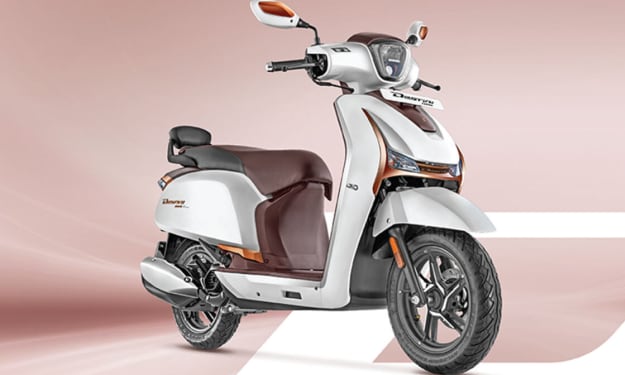
Two-Wheeler Market: Scooter & Motorcycle Demand, Lifestyle Shifts & Growth Outlook
Strong urbanization and rising personal mobility needs are driving the two-wheeler market. According to IMARC Group's latest research publication, global two-wheeler market size reached USD 138.6 Billion in 2024. Looking forward, IMARC Group expects the market to reach USD 245.9 Billion by 2033, exhibiting a growth rate (CAGR) of 6.25% during 2025-2033.
By sujeet. imarcgroupabout 19 hours ago in Futurism



Comments (1)
This can be applicable. But not sure.