
The Impact of Artificial Intelligence: Revolutionizing Industries and Shaping the Future
Exploring the Boundless Potential and Ethical Implications of Artificial Intelligence

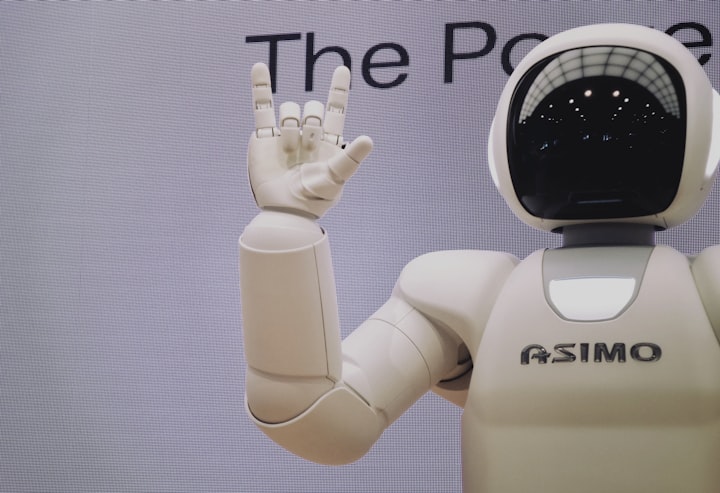
Artificial Intelligence (AI) has emerged as one of the most transformative technologies of the 21st century. From improving healthcare outcomes to optimizing transportation systems and revolutionizing manufacturing processes, AI is reshaping various industries and fundamentally altering the way we live and work. This article explores the far-reaching implications of AI, highlighting its potential, challenges, and ethical considerations as we navigate the age of intelligent machines.
Unleashing the Power of AI:
AI refers to the simulation of human intelligence in machines that are programmed to think and learn like humans. Through the amalgamation of advanced algorithms, vast amounts of data, and computing power, AI systems can perform complex tasks, recognize patterns, and make decisions with remarkable speed and accuracy. This ability to analyze and process data has given rise to innovative applications across diverse domains.
Transforming Industries:
1. Healthcare: AI is revolutionizing healthcare by accelerating diagnosis, drug discovery, and personalized treatment plans. Machine learning algorithms can analyze medical records, identify patterns, and provide early warnings for diseases. AI-powered robotic surgery enhances precision, while virtual nurses assist in patient monitoring and personalized care.
2. Transportation: Self-driving cars and intelligent traffic management systems are reshaping the transportation sector. AI enables autonomous vehicles to navigate complex roadways, reducing accidents and improving efficiency. Moreover, AI algorithms optimize traffic flow, reducing congestion and emissions.
3. Manufacturing: AI-driven automation is transforming manufacturing processes. Intelligent robots and machine learning algorithms streamline production lines, improving efficiency, and reducing costs. Predictive maintenance algorithms help prevent equipment failures, reducing downtime and increasing productivity.
4. Finance: AI algorithms power automated trading systems, enabling faster and more accurate decision-making in financial markets. Fraud detection systems employ AI to identify suspicious patterns, mitigating financial risks. AI-powered chatbots enhance customer service, providing instant assistance and personalized recommendations.
Challenges and Ethical Considerations:
While AI offers tremendous potential, it also presents significant challenges and ethical dilemmas:
1. Data Privacy and Security: AI systems rely on vast amounts of data, raising concerns about privacy and security. Protecting personal information and ensuring data confidentiality are critical considerations as AI becomes increasingly integrated into our lives.
2. Bias and Fairness: AI algorithms are only as unbiased as the data they are trained on. Bias in training data can lead to discriminatory outcomes, reinforcing existing societal inequalities. Ensuring fairness and inclusivity in AI algorithms is essential to avoid perpetuating biases.
3. Job Displacement: The widespread adoption of AI automation has the potential to disrupt labor markets. While new jobs may be created, there is a need for upskilling and retraining the workforce to adapt to the changing landscape.
4. Ethical Decision-Making: As AI systems make autonomous decisions, questions arise regarding responsibility and accountability. Establishing ethical guidelines and frameworks for AI development and deployment is crucial to ensure that AI aligns with human values and societal well-being.
Conclusion:
Artificial Intelligence is transforming industries and redefining the boundaries of human achievement. With its ability to process vast amounts of data and perform complex tasks, AI has the potential to revolutionize healthcare, transportation, manufacturing, finance, and numerous other domains. However, as we harness the power of AI, it is crucial to address challenges such as privacy, bias, job displacement, and ethical decision-making. By approaching AI development and deployment responsibly, we can shape a future where intelligent machines work in harmony with human intelligence, augmenting our capabilities and creating a better world for all.
About the Creator
Ankita Panda
Ankita is a content writer with a passion for crafting engaging and compelling stories.With a keen eye for detail and a love for words, she has honed her skills in creating captivating articles, blog posts, and social media content.
Keep reading
More stories from Ankita Panda and writers in Futurism and other communities.
Importance of Education
Education plays a fundamental role in shaping individuals, societies, and the world at large. It is the key that unlocks the doors of opportunity, empowering individuals to reach their full potential, and driving societal progress. This article delves into the significance of education, highlighting its transformative power, the benefits it brings, and the need for equitable access to quality education for all.
By Ankita Panda3 years ago in Education
About Binding Prometheus
I want to start actively advocating on behalf of my own work, and the most valuable part of my canon is, without a doubt, Binding Prometheus, the play I have been working on since 2019 and only finished in 2023 as part of my MA. The play itself is an amalgamation of a million different inspirations. On one end, it evokes the Ancient Greek myth-play, deriving its own title from the earliest extant work of Western drama we have, Aeschylus’s Prometheus Bound. On the other end, it borrows significantly from the sci-fi bulwarks from over the years, namely Mary Shelley’s Frankenstein and Karel Capek’s Rossum’s Universal Robots. The play could be an episode of Black Mirror, I fear. I don’t know. I’ve only ever seen one episode of Black Mirror.
By Steven Christopher McKnight29 days ago in Futurism
Egypt Beauty & Personal Care Market Analysis: Growth Drivers, Trends & Future Outlook
According to IMARC Group's latest research publication, the Egypt beauty & personal care market size reached USD 1,852.0 Million in 2024. The market is projected to reach USD 3,099.8 Million by 2033, exhibiting a growth rate of 5.89% during 2025-2033.
By Abhay Rajput3 days ago in Futurism




Comments
There are no comments for this story
Be the first to respond and start the conversation.