
The Impact of Artificial Intelligence on Human Creativity
Impact


Artificial intelligence (AI) has revolutionized numerous fields, from medicine to economics. However, one of the most intriguing and debated aspects is its impact on human creativity. Can AI truly be creative? Is it replacing artists, writers, and designers, or is it merely a tool that enhances human talent? This article explores various areas where AI has made inroads into the creative world, examines its advantages and limitations, and discusses the ethical dilemmas that arise from its use.
AI as a Catalyst for Creativity
Rather than being seen as a threat, AI is emerging as an ally that expands creative potential. Tools like DALL·E, ChatGPT, and MidJourney have demonstrated that technology can generate images, texts, and ideas in mere seconds. These systems do not aim to replace human creativity but rather offer a starting point for new projects and speed up creative processes.
For instance, in the realm of writing, AI assistants help authors overcome writer’s block by suggesting narrative structures and alternative styles. This support allows writers to focus on the core message and refine their work. In digital art, AI-based programs enable artists to experiment with innovative techniques, blending traditional methods with modern technology to achieve striking results.
Applications Across Industries
The influence of AI extends to various creative sectors. In music, platforms such as Amper Music and AIVA compose musical pieces based on preexisting patterns, enabling musicians and producers to explore new melodies and harmonies. This technology also allows for the blending of genres, creating compositions that challenge conventional music norms.
In the film industry, AI has transformed the generation of visual effects and video editing. Advanced algorithms create complex scenes and automatically correct errors, while experimental projects have even seen AI contributing to scriptwriting by analyzing narrative trends and successful cinematic formulas.
AI is also revolutionizing graphic design and fashion. Companies like Adobe have integrated AI algorithms into their creative tools, enabling designers to experiment with styles more fluidly. In fashion, brands are leveraging AI to analyze consumer data and predict trends, resulting in clothing collections that quickly respond to market demands.
In fields like architecture and urban planning, AI tools such as Autodesk’s generative design allow architects to explore thousands of design variations in minutes. These innovations help optimize material usage, enhance energy efficiency, and create more sustainable, innovative structures.
Ethical Challenges and the Human Element
Despite its many advantages, the use of AI in creativity raises significant ethical questions. One key debate centers on authorship: Can a machine be credited as the creator of a work? If AI generates content based on preexisting data, who is responsible—the machine, its developer, or the user who directed it?
Another concern is the potential reduction in demand for creative professionals. While AI can automate certain tasks, many experts argue that the unique spark of creativity, which involves emotions, experiences, and cultural contexts, remains inherently human and irreplaceable.
The Future of Collaborative Creativity
Looking ahead, the future of creativity appears to lie in a synergistic relationship between humans and machines. AI can handle repetitive tasks and analyze large datasets, freeing up creative professionals to focus on emotional and conceptual innovation. This balance may usher in a new era of artistic expression where technology serves as a catalyst for groundbreaking ideas.
As AI evolves, it is essential to establish ethical guidelines and regulatory frameworks to govern its application in creative fields. Education and professional training in these new technologies will be key to harnessing the full potential of human-machine collaboration without compromising the intrinsic qualities of human creativity.
Ultimately, AI holds the promise of democratizing creativity by providing advanced tools to individuals who might lack traditional technical skills. Yet, it is the collective responsibility of society to ensure these innovations are used ethically and equitably, fostering the holistic development of human talent.
About the Creator
Keep reading
More stories from idaly cook and writers in Futurism and other communities.
You’re Living the Same Day Over and Over Again—Here’s How to Break Free
Have you ever felt like you’re stuck in a loop? You wake up, check your phone, go to work, scroll through social media, watch Netflix, go to bed—then repeat the same thing the next day. Weeks pass. Months pass. And one day, you realize something terrifying: nothing has really changed.
By idaly cook12 months ago in Art
Polybutadiene Rubber Market Trends: Green Tires, Low Rolling Resistance & Industry Outlook to 2034
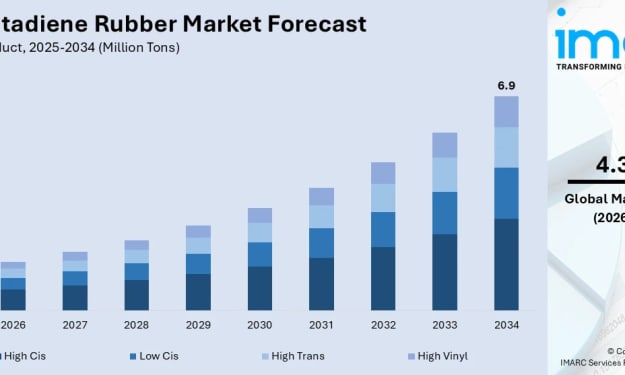
Rising demand from the automotive sector, particularly for high-performance tires, and the increasing use of synthetic rubber in industrial goods are propelling the polybutadiene rubber market. Supported by advancements in polymerization technology and a shift toward sustainable, low-rolling-resistance materials, the industry continues to expand across key manufacturing hubs. According to IMARC Group’s latest data, the global polybutadiene rubber market size reached 4.7 Million Tons in 2025. Looking forward, IMARC Group estimates the market to reach 6.9 Million Tons by 2034, exhibiting a CAGR of 4.31% during 2026-2034.
By Andrew Sullivan6 days ago in Futurism
Australia Energy Storage Market: Renewable Integration, Grid Resilience & Technology Advancements
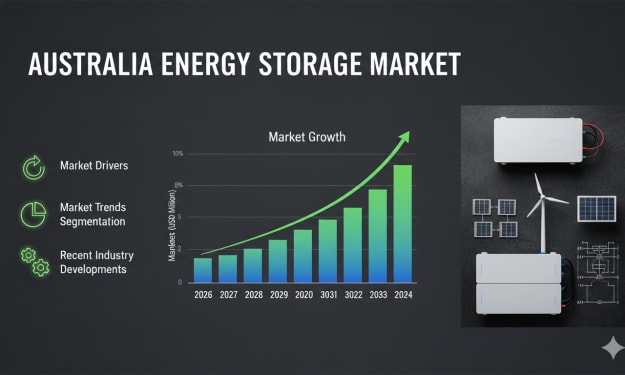
According to IMARC Group, the Australia energy storage market reached 4.72 GW in 2025 and is projected to expand significantly to 19.81 GW by 2034, exhibiting a robust compound annual growth rate (CAGR) of 17.28% during 2026–2034. This rapid expansion highlights the critical role energy storage plays in transforming the electricity ecosystem across Australia. As renewable energy capacity accelerates and coal-fired plants retire, storage systems are becoming essential for maintaining grid stability, ensuring reliability and supporting long-term decarbonization goals. From large-scale battery installations to residential storage units, energy storage is emerging as a cornerstone of Australia’s clean energy transition.
By Shrestha Roy7 days ago in Futurism


Comments
There are no comments for this story
Be the first to respond and start the conversation.