
The Hunt at Oak Grove: A Story About Tradition, Technology, and the Space Between
The Hunt at Oak Grove: A Story About Tradition, Technology, and the Space Between
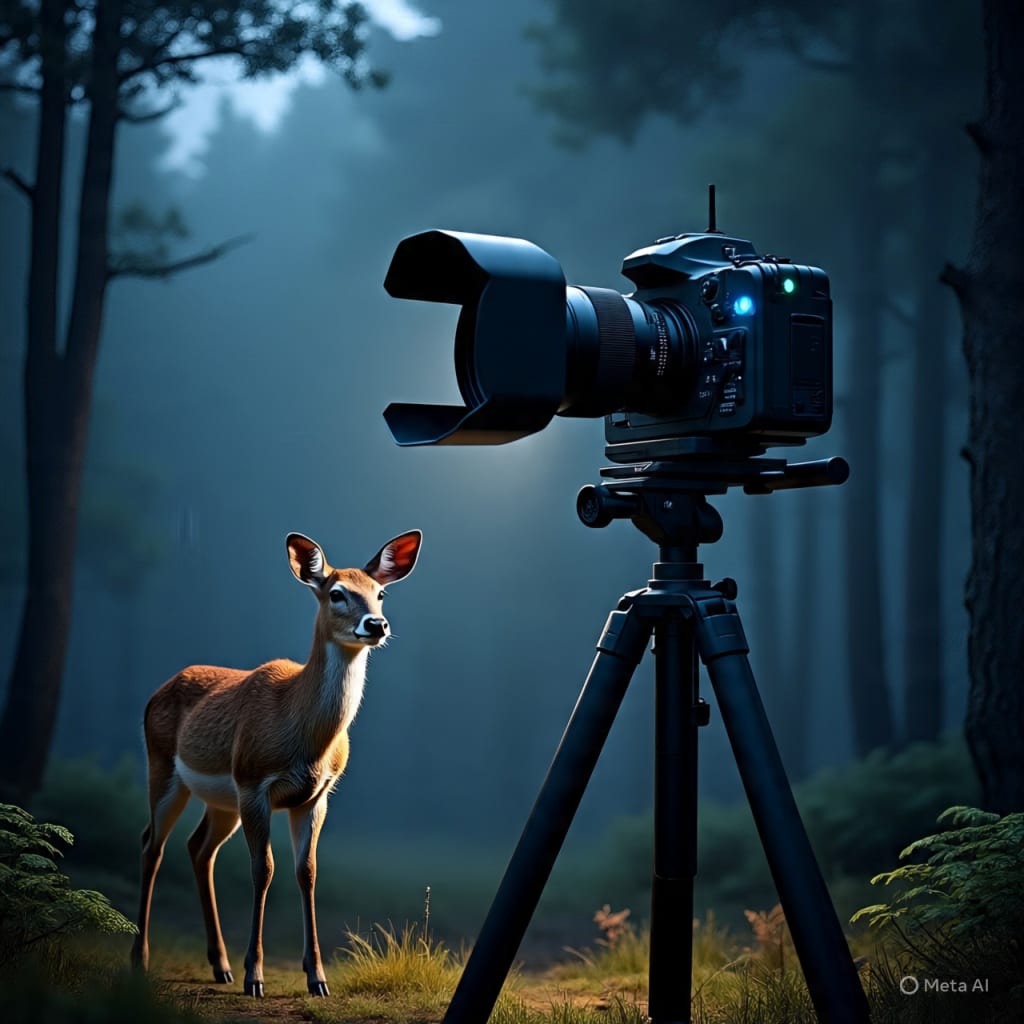
The pine-scented air of Oak Grove crackled with more than just the chill of a Montana autumn. At the annual hunters’ gathering—an event older than the rickety lodge that hosted it—a storm was brewing around the long wooden table.
Jack, a burly hunter with a beard as wild as the mountains behind him, slammed his antler-adorned hat on the table.
“These kids,” he snarled, “just sit around waiting for a phone to tell them where the deer are! Hunting’s becoming a video game!”
At the other end of the room, Amy, the newcomer with sharp eyes and a Willfine camera hanging like a lucky charm from her neck, fired back instantly. She held up her phone, displaying a crisp photo of a ten-point buck.
“This buck fed a whole retirement home last Thanksgiving,” she said. “My Willfine camera found its trail—saved me three days of dead ends.”
The older hunters grumbled. The younger ones nodded. And in that moment, the crackling fireplace felt like a referee, listening to an argument older than any of them:
Is technology ruining the soul of the hunt—or reshaping it for the better?
The Voices of Resistance
Jack wasn’t alone.
Many old-timers feared the hunt was slipping away from its roots.
They spoke of the rise of “screen hunters”—folks who, according to Wyoming reports, could read a camera alert but not a deer track on the ground. They spoke of fairness, recalling how ancestors relied on grit, not gadgets. One Alaskan elder said it plainly:
“Now a person with a $500 camera can sit in town and still monopolize the herd.”
To them, the hunt wasn’t just a harvest—it was the ritual of watching the sky for weather signs, kneeling to examine prints, wandering into the unknown with nothing but instinct and respect.
Around the fire, one club president sighed,
“Campfire tales are being replaced by notifications. That’s the loss we fear.”
The Voices of Change
But Amy and her fellow innovators had their own stories—stories not of shortcuts, but of survival and stewardship.
They talked of efficiency, backed by Colorado State data: hunters who used smart cameras made fewer mistakes and saved dozens of hours each season. They spoke of ecology, of how cameras prevented accidental kills and helped places like Yellowstone track deer populations before they damaged the land.
Then came the story that silenced even Jack.
Sarah, a single mother in Minnesota, used her Willfine camera because she only had two hours each day to hunt after work.
“It lets me feed my kids,” she said simply. “It gives women a fair chance.”
Even Jack couldn’t argue with a mother doing what she must.
The Middle Path: Where Tradition Meets Innovation
As the debate raged through the night, one truth slowly came into focus:
Hunting wasn’t dying. It was evolving.
And that evolution led to something unexpected—Willfine’s T4.0-CS “Scout Mode.”
Unlike other smart cameras, Scout Mode didn’t steal the thrill of the chase.
It delayed image transmission.
It stripped away GPS data.
It let hunters turn off AI species recognition.
The camera became a companion, not a crutch.
Ron, a 65-year-old Montana hunter who once called smart cameras “witchcraft,” shared his story:
“I still hike out to pull the memory card. I still study the land. The camera just watches while I’m away. The choices are still mine.”
In Kentucky, trainers used Scout Mode to teach newcomers how to think like hunters, not just react to alerts. Their pass rate nearly doubled.
It wasn’t technology versus tradition.
It was technology protecting tradition.
The Dawn of a New Hunt
By sunrise, the gathering had quieted.
Coffee steamed from tin mugs. Young hunters checked their camera settings. Old hunters tightened their bootlaces. Jack and Amy stood side by side, staring at the orange horizon.
The mountains didn’t care about their arguments—they had seen bows replaced by rifles, horses replaced by ATVs, guesswork replaced by GPS. And still, the hunt stayed sacred.
What mattered, Amy and Jack realized, wasn’t the tool in your hand.
It was the respect in your heart.
Willfine’s mission echoed through the stillness of the dawn:
Let technology strengthen the spirit of the hunt, never replace it.
Whether you walked with the T200’s cutting-edge AI or the T4.0-CS in humble Scout Mode, every shutter click could still be an act of reverence.
About the Creator
About Binding Prometheus
I want to start actively advocating on behalf of my own work, and the most valuable part of my canon is, without a doubt, Binding Prometheus, the play I have been working on since 2019 and only finished in 2023 as part of my MA. The play itself is an amalgamation of a million different inspirations. On one end, it evokes the Ancient Greek myth-play, deriving its own title from the earliest extant work of Western drama we have, Aeschylus’s Prometheus Bound. On the other end, it borrows significantly from the sci-fi bulwarks from over the years, namely Mary Shelley’s Frankenstein and Karel Capek’s Rossum’s Universal Robots. The play could be an episode of Black Mirror, I fear. I don’t know. I’ve only ever seen one episode of Black Mirror.
By Steven Christopher McKnight18 days ago in Futurism
Australia Iron Ore Market: Global Supply Leadership, Steel Demand & Resource Security
In 2024, Australia iron ore market reached USD 8.34 Billion. Looking ahead, the market is projected to expand to USD 12.23 Billion by 2033, exhibiting a compound annual growth rate (CAGR) of 3.90% during 2025–2033.
By Kevin Cooper6 days ago in Futurism
How to Succeed at the Benson Directory®
Congratulations and welcome to the Benson Directory® employee #22391! As our newest call handler, you will have the privilege of speaking with dozens of unique and interesting people on a daily basis as well as the opportunity to earn bonuses for high performance. Contained within this handbook you will find a set of ease to follow instructions designed to help you settle in to your new role and begin paving the way to success.
By S. A. Crawforda day ago in Fiction



Comments
There are no comments for this story
Be the first to respond and start the conversation.