
The history of the Industrial Revolution.
The Industrial Revolution was one of the most transformative periods in human history, marking a shift from agrarian economies to industrialized societies.

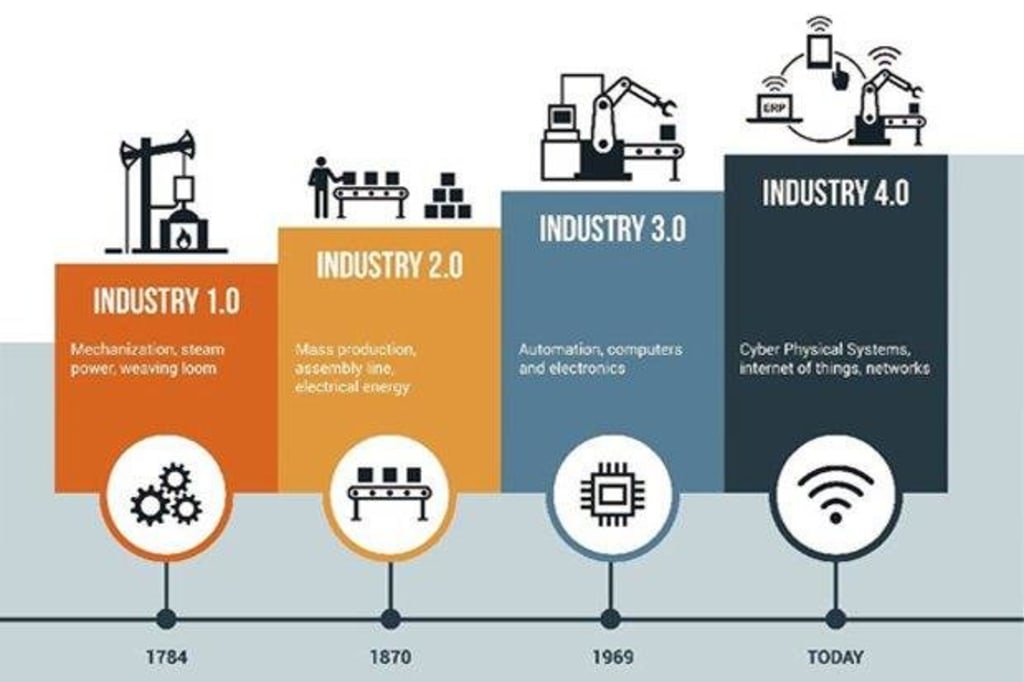
Beginning in the late 18th century and continuing into the 19th century, this revolution reshaped economies, social structures, and technological development, laying the foundation for modern industry.
Origins and Causes
The Industrial Revolution began in Britain in the late 1700s before spreading to other parts of Europe and North America. Several factors contributed to its emergence:
Agricultural Revolution – Advances in agriculture, such as crop rotation and selective breeding, increased food production and freed up laborers who moved to cities seeking work in factories.
Population Growth – Improved nutrition and medical advancements led to a significant increase in population, creating a larger workforce and greater demand for goods.
Natural Resources – Britain had abundant coal and iron, essential for powering steam engines and building machinery.
Political and Economic Stability – A strong banking system and supportive government policies encouraged industrial investments.
Technological Innovations – Inventions such as the spinning jenny, steam engine, and power loom revolutionized textile and manufacturing industries.
Key Inventions and Innovations
Several groundbreaking inventions played a crucial role in the Industrial Revolution:
Textile Industry – The invention of the spinning jenny by James Hargreaves (1764), the water frame by Richard Arkwright (1769), and the power loom by Edmund Cartwright (1787) vastly improved textile production.
Steam Power – James Watt’s improvements to the steam engine in the 1770s provided a reliable power source, facilitating mechanization in various industries.
Iron and Steel Production – The development of the Bessemer process (1856) allowed for mass production of steel, essential for constructing railways, bridges, and buildings.
Transportation – The expansion of railroads and steamships enabled faster movement of goods and people, reducing costs and boosting trade.
Communication – The invention of the telegraph by Samuel Morse in 1837 revolutionized communication, making information transfer quicker and more efficient.
Social and Economic Impact
The Industrial Revolution had profound effects on society and the economy:
Urbanization – As people moved from rural areas to cities for factory jobs, urban centers grew rapidly. However, this led to overcrowding, poor sanitation, and health issues.
Workforce Changes – The demand for factory workers increased, leading to the exploitation of labor, including long hours, low wages, and child labor.
Rise of Capitalism and Industrialists – Entrepreneurs and businessmen, such as Andrew Carnegie and John D. Rockefeller, amassed great wealth, shaping modern capitalism.
Class Struggles – The disparity between the wealthy industrialists and the working class grew, leading to labor unions and social reform movements advocating for working conditions and rights.
Increased Production and Trade – Mass production lowered the cost of goods, making them more accessible and stimulating economic growth.
Global Spread and Second Industrial Revolution
By the mid-19th century, the Industrial Revolution had spread beyond Britain to countries such as Germany, France, and the United States. The Second Industrial Revolution (late 19th to early 20th century) introduced further advancements:
Electricity – The development of electrical power enabled innovations such as the light bulb (Thomas Edison, 1879) and the telephone (Alexander Graham Bell, 1876).
Chemical Industry – Advances in chemistry led to the production of synthetic dyes, fertilizers, and pharmaceuticals.
Automobiles and Assembly Lines – Henry Ford’s introduction of the assembly line in 1913 revolutionized manufacturing, making cars affordable to the masses.
Expansion of Global Markets – Improved transportation and communication connected economies worldwide, leading to increased trade and globalization.
Challenges and Criticisms
Despite its benefits, the Industrial Revolution also had negative consequences:
Environmental Damage – Industrialization led to deforestation, air and water pollution, and increased greenhouse gas emissions.
Exploitation of Labor – Harsh working conditions, low wages, and child labor were widespread issues.
Health and Living Conditions – Rapid urbanization resulted in poor living conditions, lack of sanitation, and the spread of diseases.
Economic Inequality – The gap between the rich and the poor widened, leading to social unrest and calls for labor reforms.
Legacy and Conclusion
The Industrial Revolution fundamentally changed the world, paving the way for modern economic growth, technological advancements, and improved living standards. It set the stage for the digital and technological revolutions of the 20th and 21st centuries. While it brought unprecedented progress, it also highlighted the need for social and environmental responsibility in industrial development. The lessons learned from this period continue to influence policies and innovations in today’s global economy.
About the Creator
Badhan Sen
Myself Badhan, I am a professional writer.I like to share some stories with my friends.
Keep reading
More stories from Badhan Sen and writers in Futurism and other communities.
Sustainable public transportation models
As cities grow and environmental concerns intensify, developing efficient, affordable, and eco-friendly transportation models is more important than ever. There are several key principles and models that cities around the world are adopting to make public transportation more sustainable and effective. These models focus on integrating clean energy solutions, increasing ridership, and prioritizing accessibility for all citizens.
By Badhan Sen11 months ago in Futurism
About Binding Prometheus
I want to start actively advocating on behalf of my own work, and the most valuable part of my canon is, without a doubt, Binding Prometheus, the play I have been working on since 2019 and only finished in 2023 as part of my MA. The play itself is an amalgamation of a million different inspirations. On one end, it evokes the Ancient Greek myth-play, deriving its own title from the earliest extant work of Western drama we have, Aeschylus’s Prometheus Bound. On the other end, it borrows significantly from the sci-fi bulwarks from over the years, namely Mary Shelley’s Frankenstein and Karel Capek’s Rossum’s Universal Robots. The play could be an episode of Black Mirror, I fear. I don’t know. I’ve only ever seen one episode of Black Mirror.
By Steven Christopher McKnight18 days ago in Futurism
Kosher Food Market: Certified Food Products, Quality Standards & Retail Expansion
According to IMARC Group's latest research publication, global kosher food market size reached USD 22.1 Billion in 2024. Looking forward, IMARC Group expects the market to reach USD 29.6 Billion by 2033, exhibiting a growth rate (CAGR) of 2.95% during 2025-2033.
By sujeet. imarcgroupabout 9 hours ago in Futurism


Comments (2)
Hello, just wanna let you know that if we use AI, then we have to choose the AI-Generated tag before publishing 😊
This was quite the era of change. This is quite the history lesson. Good job.