
The Hidden History of the Tartarian Empire
Do You Believe What You Are Told?


There are tens of thousands of these "old world" buildings like the one above. Many are in ruins. Some survive as high schools, post offices, town halls. There are probably a few in your home town.
Many have been claimed to be built in the 1800's, especially in the Western hemisphere. In the East, they at least give a few hundred years for their fake history.
And I do believe it is fake.
Not the buildings, but the history they give us.
And I don't think it's really a conspiracy made by men in darkish smokey rooms with cigars and expensive whiskey.
I think it's the Mandela Effect that has given us a new version of history.
But that's just my personal opinion, and not the opinion of most "researchers" and speculators of Tartaria and the false narrative.
But what causes the Mandela Effect is a complete unknown, and I won't use this article to speculate on that theory.
I just suggest that it has something to do with changing history and changing memories.
But the history itself is false.
That is as plain as day.
If you spend ANY amount of time studying Tartaria, Star Forts, melted cities, history of recent wars, and the like, you will certainly at least agree that something is fishy in the historical narrative.
Billions of bricks were used to create these buildings in the last few hundred years. Where did the bricks come from? How were they manufactured in such great quantities? How were they transported hundreds or even thousands of miles without modern machinery, vehicles and tools?
Who built these buildings?
Often, "slave labor" is cited, especially for buildings in the USA during the early part of our nation's history. Just like they say for the pyramids at Giza. An unlikely story.
And how were they moved across land? Horses and wagons of course. Luckily, there were also the necessary supply of stonemasons, professional bricklayers, architects, etc. for each city where these buildings were needed.
And most cities have these buildings. Not just large, populated areas and cities, but every small town across America.
Look at your local schools, post offices, government buildings, theaters. Why were these elaborate buildings needed in areas with tiny populations? How did these smaller towns afford the costs to build them? Does any of this even make sense, in practical terms?
And don't even get me started on the Insane Asylums that looked like castles in many areas of the country, even in small towns. For instance, why would an area of 30,000 (the population of Salt Lake City was 20,000, with 10,000 or so in the surrounding areas in 1885) people need an insane asylum that looks like a large castle and held hundreds of people?
Provo, Utah is this example, and it's not the only one. Why the heck were there so many "insane" people in 1885 when the asylum was built? It's just weird to me and doesn't make a whole lot of sense when you think about it.
And WHY would you build a castle structure for insane patients?
Reasonable answers to these, and other pertinate questions, are never provided by historians. Possibly because they are either simply baffled themselves, or they just haven't ever thought about these things.
Because, really, why would anyone think about these things? It's not intuitive that there's something completely wrong with history until you start diving into it.
It's a conspiracy theory. People think you're nuts when you start looking into Tartaria and similar topics.
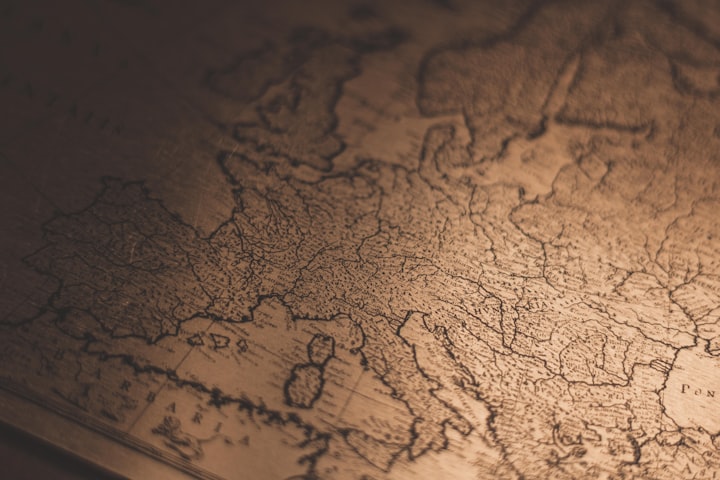
As for Tartaria itself, many of the researchers think Tartaria was a world-wide empire made up of several religions and cultures.
Why it was hidden is unclear. But as I said earlier, I don't think it was "hidden", I think that history itself was changed, and a lot of things like buildings had to be accounted for, and thus the official history might even be the "real" history.
Reality is malleable is what I'm getting at.
But that's just my opinion, nothing more.
About the Creator
Big Dreams
Writer and artist who loves dogs, beaches, coffee and solitude
Keep reading
More stories from Big Dreams and writers in Futurism and other communities.
About Binding Prometheus
I want to start actively advocating on behalf of my own work, and the most valuable part of my canon is, without a doubt, Binding Prometheus, the play I have been working on since 2019 and only finished in 2023 as part of my MA. The play itself is an amalgamation of a million different inspirations. On one end, it evokes the Ancient Greek myth-play, deriving its own title from the earliest extant work of Western drama we have, Aeschylus’s Prometheus Bound. On the other end, it borrows significantly from the sci-fi bulwarks from over the years, namely Mary Shelley’s Frankenstein and Karel Capek’s Rossum’s Universal Robots. The play could be an episode of Black Mirror, I fear. I don’t know. I’ve only ever seen one episode of Black Mirror.
By Steven Christopher McKnight17 days ago in Futurism
Saudi Arabia Packaging Market: FMCG Demand, Lightweight Solutions, Innovation Drive & Vision 2030
According to IMARC Group's latest research publication, Saudi Arabia packaging market size reached USD 11.7 Billion in 2025. The market is projected to reach USD 16.6 Billion by 2034, exhibiting a growth rate of 3.98% during 2026-2034.
By Jeffrey Wilson6 days ago in Futurism



Comments (1)
Big Dreams thank you for your time you spent on writing about Tartaria; I'm new to the subject and I'm absolutely addicted.