
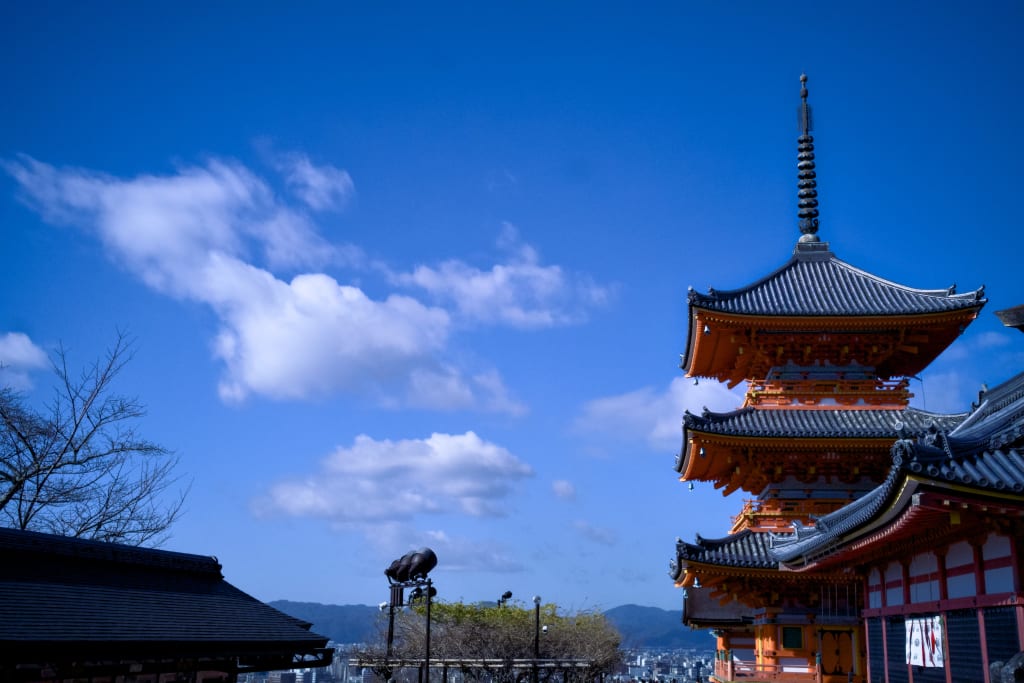
The country of Japan is a country of contradiction. Wooden temples shrouded in the early morning mist border metal Goliaths, office complexes of sprawling webworks of steel and glass. Down the dim alleyways of the bustling city sprouts the idyllic garden, blossoming straight out of a Ghibli feature. A culture that embraces the traditions and roots of its past with as much fervor as it reaches up for the flourishing of the future is that of the verdant landscape, the towering volcano, and the titantic megacity.
But where does this contradiction, this dichotomic spirit come from? Whence comes the birthplace of both the flaxen yukata and the silver robotics?
I found a hint of an answer on the streets of Nara city.
Nara: The Old
The morning sun dawns. As the fog of the early morning settles, melting away under the rays of glowing orange, the air glistens.
Getting off at the bus station in front of the World Heritage Museum, tourists find themselves surrounded by the famous mascots of the Nara Park, the roaming white and brown colored shika deer. Indigenous and friendly, these deer are the longtime tenants of the Todai-ji, Kofuku-ji, and Kasuga Shrines, buildings dating back to the seventh century. Inquisitive toddlers waddle down the streets in pursuit of the approaching fauna. One girl giggles as a shika nuzzles her cheek.
As sightseeing flocks of Americans and other migratory groups enter the temple, the bustle turns to hush under the grand shadow of the fifteen-meter-tall Buddha statue. Kokuzo Bosatsu and Nyoirin Kannon, two serene bodhisattvas flank the statue, an honorary guard of dignity. The orange glow, the flickering shadows, and the red hues are transformative; like a brush of tranquility, they paint over the entrants to the temple and leave them indelibly touched by a beauty hundreds of years in the making.
Nara: The New
After sinking in the gravitas of the temple, the spell breaks upon exiting a couple streets east of the park. Rolling hills evolve into cement sidewalks, and the blossoming sakura morph into neon signs of flashing purple. Down the famous Higashimuki street is the life of the city, a packed street where the smell of okonomiyaki wafts, mixed in with the scent of raw wagyu and fresh seafood. Cyclists on gleaning motorbikes part the street, splitting the ocean of bodies as traffic control in their green and orange uniforms autonomously wave pedestrians through in rehearsed fashion.
The shopping mall is kaleidoscopic, pulsating with an undercurrent of energy, a throbbing of groove and vibrance. The display cases are tall things, a window into a world of manga, merchandising, and technology. Inside the stores await marketing specialists, ready to advertise the newest gadgets, the trendiest, the most novel, the most glamorous. A man in a suit speaks, chattering rapid-fire into his cell. His wife bobs and ducks through aisles, an island amidst two rivers of consumers that twist and flow. Here is where, in a single moment, ten thousand people meet, leave, and silently agree never to meet again.
They leave the store, weighed down by bags of discounted Versace, weary shoppers returning to the solitude of their hotels, smiling upon attaining peace at long last.
Everything in Between
A month of vacation passes in a flash. The airplane lifts off, and a tiny city on a small island shrinks from memory.
Back in my flat in New York City, life goes on. The scent of home gives rise to nostalgia, where the trusty alarm clock on the nightstand desk stands guard as it has for the past month, unattended. A few weeks pass, and soon routine and work pine for attention, dampening those ephemeral memories of the land of the rising sun.
Yet one day, when I passed by Columbus Circle, I glanced up from my thoughts to see Central Park. A thought bloomed. This is grass, and these are trees, and those are people enjoying this manicured oasis of greenery in a fortress of red brick. Yet there is no nature here. There are no deer, only obese pigeons gorged on the waste that litters the lawn. There are no statues of millennia past, only hot dog vendors and blaring radios and shopping carts piled with the last possessions of the lepers of society. The garden is merely a garden and not a forest and suddenly tears streak down my face as I remembered that timeless, magical city where man and nature were connected, where shrines and skyscrapers meet.
In the end, the city of Nara is the future, the past, and everything in between. Most importantly, it is the edge between peace and war, between silence and sound, between death and life. This razor edge which we all cross, back and forth and back again, is the nature of humanity. Humans are a contradiction. We are each so different, yet we each hold in our chest a heart. The heart is an engine which pumps blood, rhythmic and constant, but it is also alive and organic. And in it, lies the parks and landscapes of indescribable solitude, and the noise and rumble and color that come from that city which lights up the night.
In this way, the Japanese are perhaps the most honest people, and the most honest culture. They embrace themselves and show it with heart.
About the Creator
Keep reading
More stories from Greg Craig and writers in Futurism and other communities.
Tiktok and the Brain in the Vat
The year is 2199. Neo, a humble programmer cycling through days of drudgery on his 9-5 job, is called into the office of his boss to be berated for insubordination. What follows next is an epic chase scene, after which Neo learns about a world beyond his that will completely upheave his life.
By Greg Craigabout a year ago in Futurism
The RAF’s Foothold in the Eastern Med Is Slipping – £17k Drones Are to Blame
The Royal Air Force is facing growing operational challenges in the eastern Mediterranean as low-cost drones, costing as little as £17,000, increasingly threaten airspace security and force a reassessment of defensive postures. Officials acknowledge that these unmanned systems, often commercially available or easily modified, are disrupting reconnaissance, surveillance, and regional air operations, highlighting vulnerabilities even in technologically advanced militaries. The eastern Mediterranean has long been a strategic region for the United Kingdom, serving as a staging ground for intelligence gathering, military exercises, and rapid response missions. However, the proliferation of inexpensive drones has complicated these operations, creating operational hazards and reducing the RAF’s ability to maintain dominance in contested airspace. Drones: A Growing Threat Small drones, or unmanned aerial vehicles (UAVs), have become increasingly common in conflicts and contested zones worldwide. Analysts note that while each drone may cost only a fraction of traditional military aircraft, their ability to evade radar detection and conduct surveillance or even deliver payloads makes them a disproportionate threat. A spokesperson for the RAF noted that several recent incidents in the eastern Mediterranean involved drones approaching military airfields, monitoring aircraft movements, or interfering with exercises. “Even low-cost UAVs can present significant challenges to our operations,” the official said. “They require rapid detection, tracking, and, in some cases, neutralization to ensure mission safety.” The £17,000 drones cited by military sources are commercially available but often upgraded with military-grade sensors, GPS guidance, or payload modifications. Such upgrades make them capable of gathering intelligence or harassing military assets with minimal cost to adversaries. Operational and Strategic Impacts The presence of these drones has forced the RAF to adjust flight patterns, increase air patrols, and deploy counter-drone systems. These measures, while necessary, place additional strain on personnel and resources. Analysts warn that repeated drone incursions may gradually erode operational confidence and limit the RAF’s freedom of action in the region. Strategically, drones are challenging traditional concepts of air superiority. While the RAF continues to operate advanced jets and surveillance aircraft, small UAVs provide low-cost, persistent monitoring that can identify patterns, vulnerabilities, and deployment schedules without significant risk to operators. Military planners emphasize that the proliferation of inexpensive drones demonstrates how modern conflicts increasingly favor asymmetric approaches, where low-cost technology can counter high-end military assets. This shift is particularly visible in regions like the eastern Mediterranean, where multiple actors operate with differing levels of capability. Counter-Drone Measures In response, the RAF and the Ministry of Defence (MoD) have accelerated investments in counter-drone technology. These measures include radar and sensor systems capable of detecting small UAVs, electronic jamming equipment to disrupt communications, and rapid-response interception protocols. Exercises are now incorporating drone threat simulations, training pilots and ground crews to respond to swarming UAVs or reconnaissance missions. Officials stress that a layered approach, combining electronic, kinetic, and procedural defenses, is necessary to maintain operational integrity. Regional Implications The eastern Mediterranean remains a hotbed of military activity due to ongoing geopolitical tensions involving NATO members, regional powers, and non-state actors. The presence of low-cost drones increases uncertainty and complicates coordination among allied forces. Countries in the region, including Greece, Turkey, and Israel, are increasingly using UAVs for reconnaissance and patrol missions. The RAF must adapt to a dynamic environment where drones can operate alongside conventional aircraft, requiring both operational flexibility and investment in defensive technologies. Lessons for Future Operations Military analysts argue that incidents involving inexpensive drones highlight the importance of integrating counter-UAV strategies into broader air defense planning. The RAF is expected to continue developing detection networks, automated response systems, and intelligence sharing protocols to mitigate drone-related risks. Additionally, the challenge underscores the evolving nature of modern conflict, where small, cheap technologies can challenge established militaries, forcing continuous adaptation and strategic foresight. Balancing Costs and Capabilities While counter-drone systems are essential, they also represent a significant financial investment. Balancing the costs of defensive measures against the operational risks posed by low-cost UAVs remains a critical challenge for the RAF. Training, equipment procurement, and operational adjustments must be carefully coordinated to ensure efficiency without compromising readiness. Conclusion The RAF’s experience in the eastern Mediterranean demonstrates that even small, inexpensive drones can have outsized effects on military operations and strategy. As the proliferation of UAVs continues, the UK military faces a dual challenge: maintaining air dominance while adapting to new asymmetric threats. By investing in detection, response, and training, the RAF aims to preserve its operational foothold in the region. However, the rise of £17,000 drones illustrates a broader lesson for modern defense: technological sophistication alone does not guarantee superiority in the age of accessible, disruptive innovations.
By Fiaz Ahmed Brohiabout 18 hours ago in Futurism
Europe Gene Therapy Market Within Cell & Gene Therapy: Fast‑Growing Niche in a USD 7.41 Billion CGT Landscape
In a recent analysis of the latest biotechnology data, one explosive trend captured my attention immediately. The Europe gene therapy market is rapidly evolving into the most critical segment of the broader Cell & Gene Therapy (CGT) sector. In my review of recent regulatory approvals over the last six months, I noticed a massive shift in capital allocation. Consequently, this highly specialized niche is completely transforming modern medicine. Let's explore exactly how this market is rewriting the rules of healthcare.
By Joey Moore2 days ago in Futurism



Comments
There are no comments for this story
Be the first to respond and start the conversation.