
The Genome Whisperer
In a future where DNA can be rewritten like code, one scientist must decide whether to erase humanity's darkest traits—or embrace them

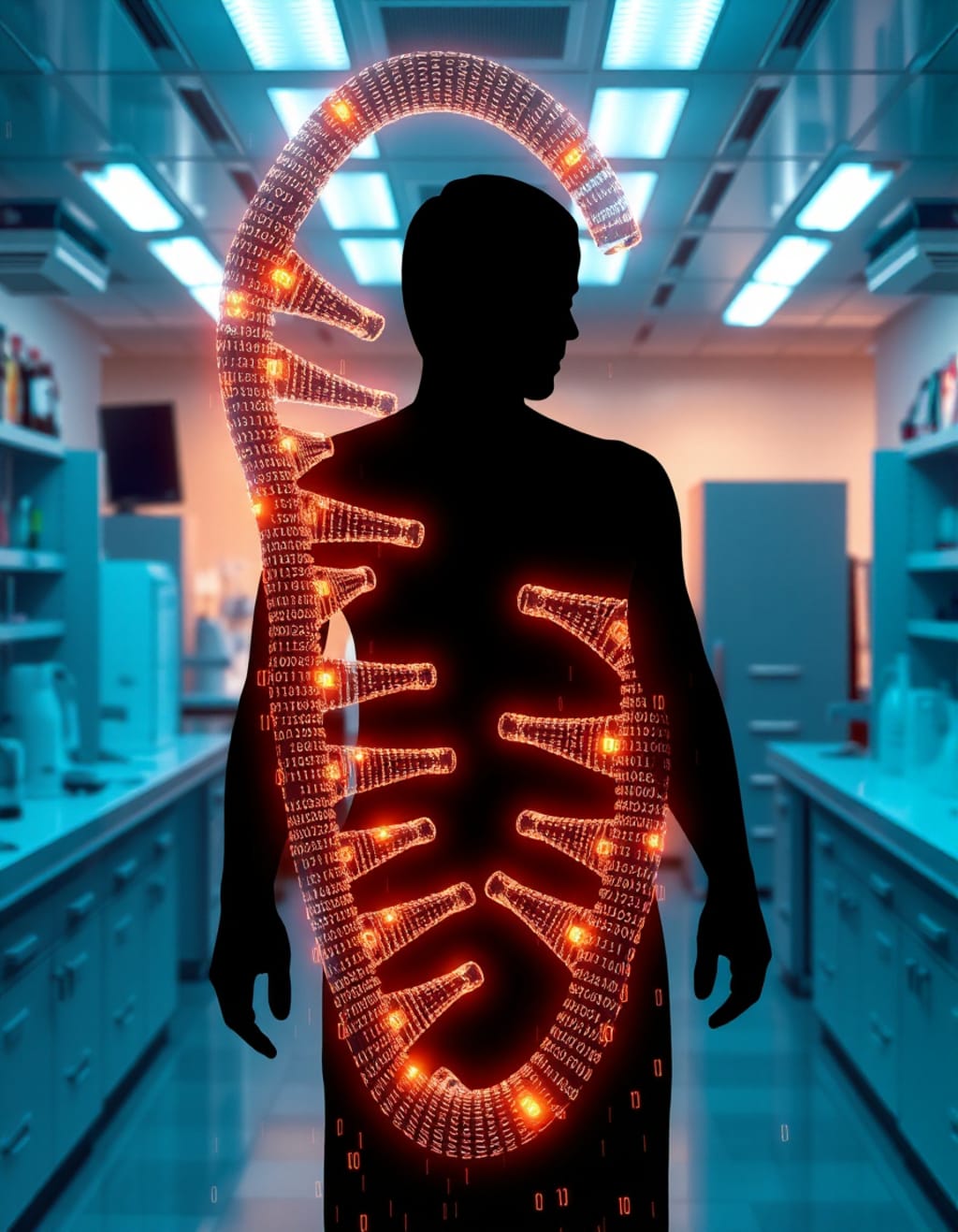
Dr. Elara Myles stood at the edge of a decision that could unravel or redeem the future of the human race. Her lab, nestled deep in the Arctic Circle, operated in silence save for the soft hum of the CRISPR-X terminal—the most powerful genetic editor ever created. Outside, the auroras danced across the frozen sky like nature's own neural signals, responding to a planet on the verge of self-reprogramming.
Born in an era when children were no longer born but designed, Elara was one of the last "naturals." Her mismatched eyes, one green and one gray, were once a subject of ridicule in her childhood classrooms. Now, they were a symbol of authenticity, of human variability in a world increasingly allergic to difference.
She remembered the first time she saw her brother Theo in pain. He had inherited a rare genetic condition, something that made his bones brittle and his joints scream with every movement. He had been eliminated from the gene pool before he could even be born, and yet, by some clerical error or biological anomaly, Theo made it through. Their parents were ostracized. Theo was shunned.
And yet, he was the most compassionate human she had ever known.
Years later, Elara's grief and guilt became the seed of Project Eden—a mission not to cleanse the genome of its so-called "flaws," but to protect what made humanity resilient: its imperfection.
---
CRISPR-X was a marvel. Where earlier gene editors required viral vectors and years of modeling, CRISPR-X used quantum simulations, AI-guided heuristics, and nanobot delivery systems to rewrite DNA at the embryonic, adolescent, or even adult stage. It was a genetic whisperer—a symphony conductor reshaping the music of life itself.
The Global Health Syndicate (GHS) had approved Elara's research, but only under the condition that her edits aimed to "standardize and optimize". They wanted uniformity. Predictability. A population devoid of aggression, disorder, or depression.
But Elara knew what they did not: that those very traits often birthed creativity, empathy, and genius. A world without sadness was a world without poetry. A mind without struggle was a mind without revolution.
Her code, titled Variant-9, introduced complexity back into the genetic algorithm. It reactivated silenced genes, introduced variability into neurotransmitter responses, and restored the ancient genomic elements that once coded for emotional nuance.
---
She ran the final simulations. Variant-9 showed promise. Subjects with the modified genome experienced deeper emotional ranges, formed stronger communal bonds, and showed increased resistance to psychological disorders. But there were anomalies—spikes in impulsive behavior, unusual sleep patterns, even hallucinations. Side effects of diversity.
The GHS monitor bots would flag these immediately.
She disabled them.
---
Elara descended into the BioVault, a chamber deep beneath the permafrost where the first group of embryos rested in cryostasis. They were volunteers—parents who rejected the designer genome trend and wanted something more primal for their children.
As she initiated the activation protocol, her console flickered.
**\[UNFORESEEN VARIABLES DETECTED: 13% UNKNOWN GENOMIC INTERACTIONS]**
**\[PROCEED? Y/N]**
Her fingers trembled.
Thirteen percent.
It wasn’t perfect.
But neither was humanity.
She clicked 'Y'.
---
News spread within days.
A new generation had been born—not engineered for sameness, but designed for deviation. The public was split. Some hailed Elara as a prophet, a savior who had restored free will at the molecular level. Others called her reckless, a heretic who dared to defy the genome gods.
Then the anomalies began to grow.
One child in Nairobi could recite conversations from the womb. A girl in Argentina began painting visions of cities no one had ever seen. A boy in Tokyo started dreaming in binary.
The media coined them "The Wildborn."
---
Elara testified before the World Biogenetic Council. Her speech was broadcast to ten billion screens:
"Evolution was never meant to be sterile. We are born of chaos, not code. By fearing the shadows in our genome, we risk extinguishing the very light that defines us."
Her words sparked a global movement: The Genomic Renaissance.
Art returned. So did disorder.
But also empathy. Wonder. Fearless imagination.
---
Years passed.
Elara retired to the same Arctic lab where it all began. She watched the sky pulse with light, auroras swirling like strands of awakened DNA.
Then, one day, a knock.
A girl with a single blue eye and a single brown one.
"Are you the Genome Whisperer?" she asked.
Elara smiled.
"No, child. You are."
And in that moment, she knew: her whisper had become a chorus.
Humanity was no longer edited. It was alive.
**\[THE END]**
About the Creator
rayyan
🌟 Love stories that stir the soul? ✨
Subscribe now for exclusive tales, early access, and hidden gems delivered straight to your inbox! 💌
Join the journey—one click, endless imagination. 🚀📚 #SubscribeNow
Australia Energy Storage Market: Renewable Integration, Battery Deployment & Grid Stability
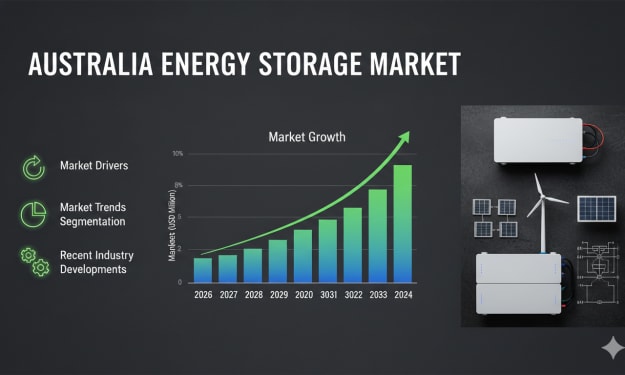
According to IMARC Group, the Australia energy storage market reached 4.72 GW in 2025 and is projected to expand significantly to 19.81 GW by 2034, exhibiting a compound annual growth rate (CAGR) of 17.28% during 2026–2034. The rapid growth of the sector reflects the country’s accelerating transition toward renewable energy and the increasing need for reliable electricity systems across Australia. As solar and wind power generation expands, energy storage technologies such as battery energy storage systems (BESS) are becoming essential for maintaining grid reliability and balancing electricity supply and demand. Government policies supporting clean energy adoption, declining battery costs, and investments in grid modernization are significantly strengthening Australia energy storage market share while enabling the integration of renewable power into the national electricity network.
By Shrestha Roy6 days ago in Futurism
The Last Fortress
The Final Frontier of Privacy For centuries, the human mind has been the only place where true freedom existed. No matter how oppressive a regime was, or how invasive a technology became, your thoughts were yours alone. They were the "Last Fortress"—a sanctuary of private dreams, silent rebellions, and unspoken loves.
By Alex Sterling 2 days ago in Futurism


Comments (1)
This story is intense! The idea of a genetic editor like CRISPR-X is mind-blowing. It makes me wonder about the ethics of playing with DNA like this. And Elara's decision to go against the GHS's wishes for the sake of human imperfection is brave. How far should we take genetic engineering? What are the potential consequences of trying to standardize humanity?