
The Future of Space Travel: Are We Closer to Colonizing Mars?
Are We Closer to Colonizing Mars?

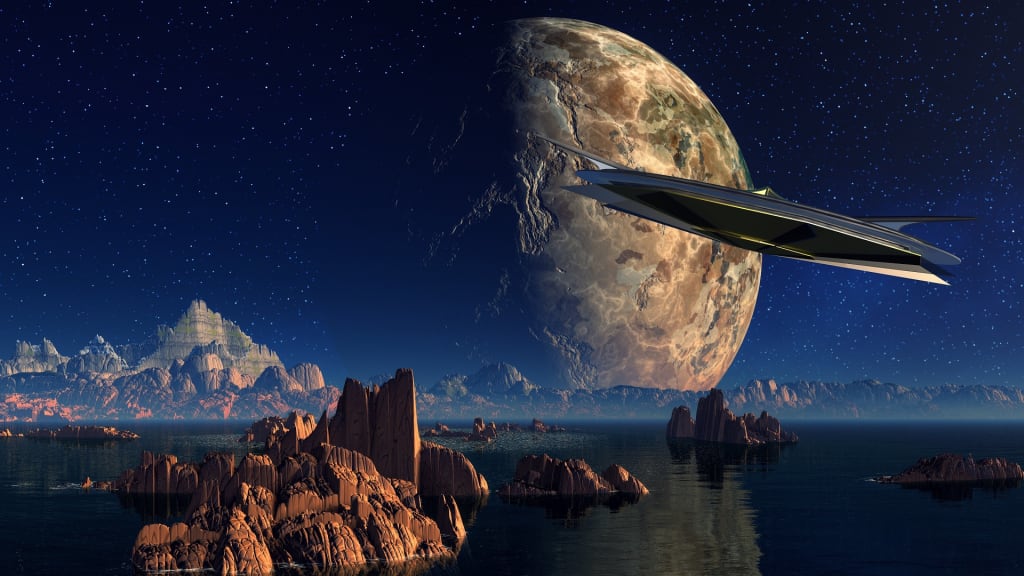
The dream of colonizing Mars has captured the imagination of humanity for decades. What was once science fiction is now on the verge of becoming reality, thanks to rapid advancements in space exploration technology and international collaborations. In this article, we delve into the current state of Mars exploration, the challenges we face, and the promising developments that suggest we are closer than ever to making Mars colonization a tangible goal.
1. Mars Exploration Missions: A Historical Perspective
The quest to explore Mars began in earnest during the mid-20th century, with early missions focusing on flybys and orbital observations. NASA's Mariner missions in the 1960s provided valuable insights into the Martian surface and atmosphere, laying the groundwork for future exploration efforts. The successful Viking landings in the 1970s marked the first time spacecraft touched down on Mars, conducting experiments to search for signs of life.
Since then, numerous missions led by NASA, ESA (European Space Agency), and other space agencies have continued to expand our understanding of Mars. Notable successes include the Mars Pathfinder, which deployed the Sojourner rover in 1997, and the Mars rovers Spirit, Opportunity, and Curiosity, which have conducted extensive geological studies and searched for evidence of past habitability.
2. Recent Advances in Mars Exploration
Recent years have witnessed significant advancements in Mars exploration technology, paving the way for ambitious missions aimed at understanding the planet's geology, climate, and potential for supporting human life. NASA's Perseverance rover, launched in 2020, represents the latest in robotic exploration, equipped with advanced instruments to search for signs of ancient microbial life and collect samples for future return to Earth.
In addition to NASA's efforts, SpaceX, founded by Elon Musk, has emerged as a key player in the race to Mars colonization. The company's Starship spacecraft, designed for deep space missions, aims to transport humans and cargo to Mars with the goal of establishing a sustainable human presence on the Red Planet. SpaceX's ambitious timeline targets the first crewed missions to Mars in the mid-2020s, sparking renewed interest and optimism in the feasibility of Mars colonization.
3. Challenges of Mars Colonization
While technological progress has accelerated Mars exploration, significant challenges remain on the path to colonization. Mars presents harsh environmental conditions, including extreme cold, radiation exposure, and a thin atmosphere primarily composed of carbon dioxide. These factors pose critical challenges for human survival and require innovative solutions in habitat design, life support systems, and resource utilization.
Another formidable challenge is the long-duration space travel required to reach Mars, which could span several months depending on orbital alignments. The physiological and psychological effects of prolonged spaceflight on astronauts must be carefully studied and mitigated to ensure their health and well-being during the journey and upon arrival.
4. Technological Innovations and Solutions
To address the challenges of Mars colonization, scientists and engineers are developing groundbreaking technologies and innovative solutions. Advances in propulsion systems, such as ion propulsion and nuclear thermal propulsion, promise faster and more efficient travel to Mars. In-situ resource utilization (ISRU) technologies aim to leverage local resources, such as water ice and minerals, to produce oxygen, water, and fuel on Mars, reducing reliance on Earth for critical supplies.
Habitat design is another area of active research, with concepts ranging from inflatable modules to underground habitats that offer protection from radiation and temperature extremes. Sustainable life support systems, including closed-loop recycling of air and water, are essential for maintaining a self-sufficient colony on Mars.
5. International Collaboration and Partnerships
The journey to Mars colonization is a global endeavor, characterized by international collaboration and partnerships between space agencies, governments, and private companies. NASA's Artemis program, aimed at returning humans to the Moon and establishing a sustainable lunar presence, serves as a precursor to future Mars missions. International cooperation, such as ESA's contributions to Mars missions and collaborations with Russian space agency Roscosmos, demonstrates the shared commitment to exploring and eventually colonizing Mars.
Public-private partnerships are also driving innovation in space exploration, with companies like SpaceX, Blue Origin, and Boeing collaborating with NASA and international partners to develop next-generation spacecraft and infrastructure for deep space missions.
6. Ethical Considerations and Planetary Protection
As humanity prepares for Mars colonization, ethical considerations and planetary protection protocols are paramount. Preserving the integrity of Mars' environment and preventing contamination from Earth organisms is essential to safeguarding scientific exploration and potential future discoveries of life, past or present, on Mars.
International treaties and guidelines, such as those established by the Committee on Space Research (COSPAR), outline protocols for planetary protection and responsible exploration practices. Robust sterilization protocols for spacecraft and equipment, as well as stringent quarantine measures for returning Martian samples, are critical to minimizing biological contamination and preserving Mars' pristine environment for scientific study.
7. Public Interest and Inspiration
The prospect of Mars colonization has captured the imagination of people worldwide, inspiring a new generation of scientists, engineers, and space enthusiasts. Public interest in space exploration, fueled by media coverage and outreach efforts from space agencies and private companies, continues to grow as we inch closer to realizing humanity's dream of becoming a multi-planetary species.
Educational initiatives, such as STEM (science, technology, engineering, and mathematics) programs and outreach events hosted by space agencies and museums, play a crucial role in engaging and inspiring future generations to pursue careers in space exploration and related fields. By fostering curiosity and enthusiasm for space science, we empower the next wave of innovators to tackle the challenges of Mars colonization and beyond.
Conclusion
The future of space travel and the prospect of colonizing Mars represent humanity's bold aspirations and technological prowess. While significant challenges lie ahead, recent advancements in Mars exploration technology, international collaboration, and public-private partnerships have brought us closer than ever to achieving this monumental goal. With continued innovation, determination, and global cooperation, we can unlock the mysteries of Mars, establish sustainable habitats, and pave the way for a future where humans thrive on multiple worlds. The journey to Mars colonization is not just about exploring new frontiers—it is about expanding the horizons of human potential and ensuring a legacy of exploration and discovery for generations to come.
About the Creator
Robert
Unveiling the illusions obscuring my view, I write to reveal deeper truths. Let my stream of ideas illuminate both my journey and yours, sparking understanding and connection.
SUBSCRIBE for more interesting and unique stories 🌺🌻💐🍂🤺
About Binding Prometheus
I want to start actively advocating on behalf of my own work, and the most valuable part of my canon is, without a doubt, Binding Prometheus, the play I have been working on since 2019 and only finished in 2023 as part of my MA. The play itself is an amalgamation of a million different inspirations. On one end, it evokes the Ancient Greek myth-play, deriving its own title from the earliest extant work of Western drama we have, Aeschylus’s Prometheus Bound. On the other end, it borrows significantly from the sci-fi bulwarks from over the years, namely Mary Shelley’s Frankenstein and Karel Capek’s Rossum’s Universal Robots. The play could be an episode of Black Mirror, I fear. I don’t know. I’ve only ever seen one episode of Black Mirror.
By Steven Christopher McKnight18 days ago in Futurism
Saudi Arabia Used Car Market: Rising Demand, Digital Platforms & Pricing Trends
According to IMARC Group's latest research publication, The Saudi Arabia used car market size was valued at USD 10.2 Billion in 2025. Looking forward, IMARC Group estimates the market to reach USD 17.4 Billion by 2034, exhibiting a CAGR of 6.11% from 2026-2034.
By Abhay Rajput3 days ago in Futurism




Comments
There are no comments for this story
Be the first to respond and start the conversation.