
The Future of Space Exploration
Advancements, Colonization, Asteroid Mining, and the Search for Extra terrestrial Life
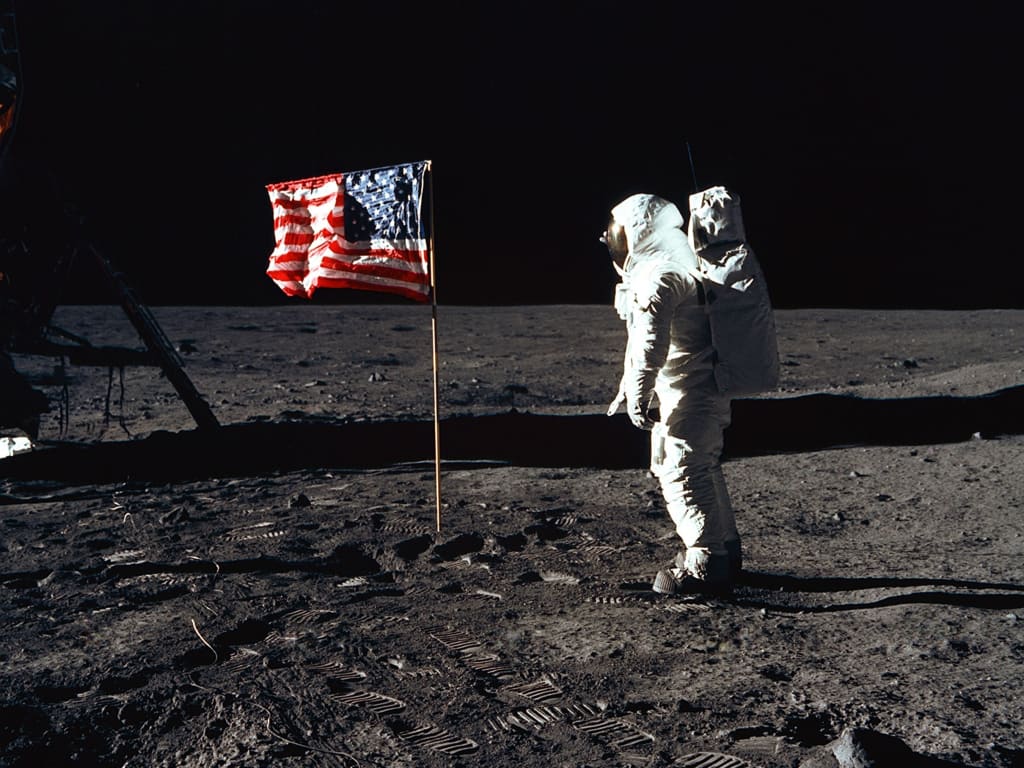
Space exploration has always been a human endeavour driven by curiosity and the desire to understand the universe. Over the years, significant advancements in technology have propelled us further into the cosmos. This essay aims to delve into the future of space exploration, including plans for colonization, asteroid mining, and the search for extra terrestrial life.
Advancements in technology have played a pivotal role in expanding the frontiers of space exploration. Developments in rocket propulsion, materials science, robotics, and miniaturization of spacecraft have increased our capabilities to explore the cosmos. These technological breakthroughs have enabled us to send missions to distant celestial bodies and gather valuable data.
The emergence of private space companies has revolutionized the space industry. Companies like SpaceX, Blue Origin, and Virgin Galactic are driving innovation, reducing launch costs, and accelerating the pace of space exploration. This increased involvement of private entities has opened up new possibilities for space missions, research, and commercial ventures.
Mars has emerged as a potential candidate for human colonization. Initiatives such as NASA's Artemis program and SpaceX's Starship project envision sending humans to Mars within the next few decades. Establishing a sustained presence on Mars would not only provide a platform for scientific research but also serve as a stepping stone for further exploration and potential colonization of other celestial bodies.
The Moon has regained attention as a potential site for human colonization. NASA's Artemis program aims to return humans to the Moon and establish a sustainable lunar presence by the 2030s. Lunar colonies could serve as outposts for scientific research, resource extraction, and staging points for deeper space exploration.
Asteroid mining has the potential to revolutionize space exploration and resource utilization. Asteroids contain valuable resources such as water, precious metals, and rare minerals. Mining these resources in space could reduce the cost and logistical challenges of supplying missions, enable sustainable space exploration, and even support industries beyond Earth.
Asteroid mining opens up new economic opportunities, including the potential for a space-based economy. The extraction and utilization of asteroid resources could lead to the development of in-space manufacturing, fuel production, and support the growth of space tourism. This could spur innovation, create jobs, and drive economic growth.
The discovery of exoplanets, planets orbiting stars outside our solar system, has fuelled the search for extra terrestrial life. Missions such as NASA's Kepler and TESS are discovering thousands of exoplanets, some of which may harbour conditions suitable for life. Further advancements in telescopes and space-based observatories will enable us to characterize exoplanet atmospheres and search for signs of life.
The exploration of Mars is closely linked to the search for signs of past or present microbial life. Missions like NASA's Mars rovers and upcoming missions, such as the Mars Sample Return campaign, aim to collect samples that may hold clues to the existence of life on Mars. The study of extremophiles on Earth also provides insights into the possibility of life existing in extreme environments elsewhere in the universe.
As space exploration advances, ethical considerations must be addressed. These include preserving celestial bodies and environments for scientific study, ensuring responsible resource utilization, and avoiding contamination of extra terrestrial environments with Earth's microorganisms.
The future of space exploration relies heavily on international collaboration. Partnerships between space agencies, private entities, and international organizations are essential for sharing resources, expertise, and costs. Collaboration fosters collective scientific advancements and promotes peaceful cooperation in the exploration of space.
Public engagement and education play a crucial role in inspiring future generations and garnering support for space exploration. Programs that promote science, technology, engineering, and mathematics (STEM) education and public outreach initiatives foster a scientifically literate society and encourage public participation in space exploration endeavours.
The future of space exploration holds tremendous potential for humanity. Advancements in technology, private sector involvement, and ambitious missions pave the way for human colonization of other planets, asteroid mining, and the search for extra terrestrial life. These endeavours not only push the boundaries of our scientific knowledge but also offer economic opportunities, technological innovation, and inspire generations to dream and explore. As we venture further into the cosmos, responsible stewardship of celestial bodies, international collaboration, and public engagement will be crucial in ensuring the success and sustainability of our space exploration endeavors.
About the Creator
About Binding Prometheus
I want to start actively advocating on behalf of my own work, and the most valuable part of my canon is, without a doubt, Binding Prometheus, the play I have been working on since 2019 and only finished in 2023 as part of my MA. The play itself is an amalgamation of a million different inspirations. On one end, it evokes the Ancient Greek myth-play, deriving its own title from the earliest extant work of Western drama we have, Aeschylus’s Prometheus Bound. On the other end, it borrows significantly from the sci-fi bulwarks from over the years, namely Mary Shelley’s Frankenstein and Karel Capek’s Rossum’s Universal Robots. The play could be an episode of Black Mirror, I fear. I don’t know. I’ve only ever seen one episode of Black Mirror.
By Steven Christopher McKnight15 days ago in Futurism
Asia Pacific Secondhand Luxury Goods Market Growth from Sustainability
The Asia Pacific Secondhand Luxury Goods Market reached a size of USD 8.6 Billion in 2024 and is forecast to grow to USD 17.9 Billion by 2033. The market is expected to expand at a CAGR of 8.09% during the forecast period 2025–2033. Growth is driven by rising middle-class demand, digital platform adoption, sustainability awareness, and the appeal of rarity and exclusivity that pre-owned luxury goods offer.
By Abhishek Dixit3 days ago in Futurism



Comments