
The Future of Robotics: Automation, AI, and Human-Machine Collaboration
Unveiling the Power of Robotics: Exploring the Evolving Landscape of Automation, Artificial Intelligence, and the Synergy between Humans and Machines
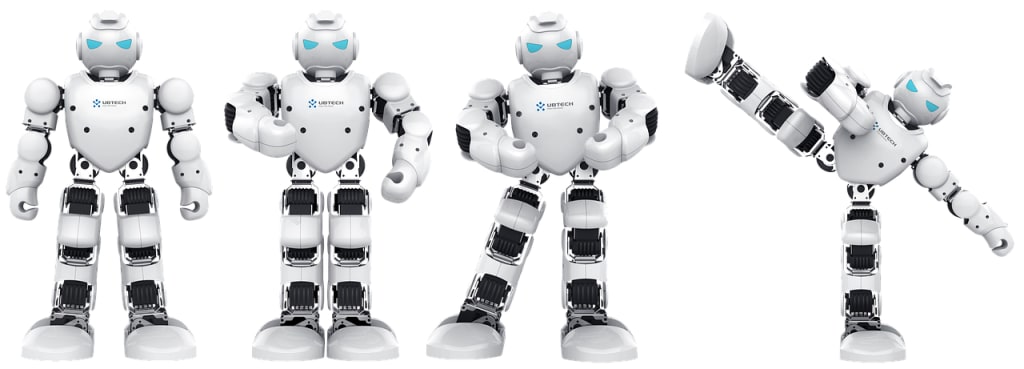
Embark on a journey into the future of robotics and witness the incredible potential of automation, AI, and collaborative human-machine partnerships.
Introduction:
The world of robotics is going through an unprecedented revolution. Advances in automation, artificial intelligence (AI), and machine learning are reshaping industries, changing the way we work, and pushing the boundaries of human-machine collaboration. In this article, we'll dive into the future of robotics, exploring how automation, AI, and the dynamic relationship between humans and machines interact. From self-driving cars to collaborative robots in factories, we'll uncover the incredible potential of this technological frontier with real-life examples.
1. Automation: Redefining Efficiency and Precision
Automation is at the heart of robotics, empowering industries to streamline processes, improve efficiency, and minimize human errors. Robots are taking over repetitive and labor-intensive tasks, freeing up humans to focus on more complex and creative endeavors.
Real-life example: Tesla's Gigafactory relies on a fleet of robots to automate the production line. These robots assemble intricate components with unmatched precision, significantly boosting production rates and product quality.
2. Artificial Intelligence: The Brains Behind Intelligent Robotics
Artificial intelligence is the driving force behind the cognitive capabilities of robots. Machine learning algorithms enable robots to perceive and interpret the world around them, adapt to changing environments, and make informed real-time decisions. AI empowers robots to learn from their experiences and continually improve their performance.
Real-life example: Boston Dynamics' humanoid robot, Atlas, showcases impressive AI-powered capabilities. It navigates uneven terrains, performs complex movements, and even recovers from falls, demonstrating the potential of AI in creating agile and adaptable robots.
3. Collaborative Robotics: Humans and Machines Working Hand-in-Hand
The future of robotics isn't about replacing humans; it's about creating a harmonious partnership between humans and machines. Collaborative robots, also known as cobots, are designed to work alongside humans, enhancing productivity, safety, and efficiency. These robots assist in repetitive tasks, provide additional strength or precision, and augment human capabilities.
Real-life example: In healthcare settings, robotic surgical systems like the da Vinci Surgical System enable surgeons to perform minimally invasive procedures with enhanced precision. The robot's arms translate the surgeon's movements into precise actions, resulting in smaller incisions, reduced recovery time, and improved patient outcomes.
4. Autonomous Vehicles: Transforming Transportation and Mobility
Autonomous vehicles are leading the robotics revolution, poised to reshape transportation as we know it. Self-driving cars, trucks, and drones equipped with AI algorithms and sensor technologies have the potential to enhance road safety, reduce traffic congestion, and revolutionize delivery services.
Real-life example: Waymo, a subsidiary of Alphabet Inc., is a frontrunner in autonomous driving technology. Their self-driving cars have successfully navigated thousands of miles on public roads, demonstrating the potential for safer and more efficient transportation in the future.
5. Ethical Considerations and Societal Impact
As robotics advances, ethical considerations surrounding job displacement, privacy, and the potential for misuse become increasingly important. It's crucial to address these challenges responsibly, ensuring that the benefits of robotics are accessible to all while addressing concerns related to ethics, equity, and societal impact.
Conclusion:
The future of robotics is filled with endless possibilities. Through automation, AI, and collaborative human-machine partnerships, we're witnessing a transformation across industries, transportation, healthcare, and more. As robots become more intelligent, adaptable, and capable of working harmoniously with humans, the potential for innovation and societal impact is enormous. By responsibly embracing this technological frontier, we can unlock a future where robots and humans collaborate to create a safer, more efficient, and prosperous world.
Unleashing the Power of Robotics: Explore the future of automation, AI, and collaborative human-machine partnerships and witness the transformative potential of this remarkable technological revolution.
About the Creator
Artemis II: Nasa targets early April for Moon mission
The mission represents a crucial milestone in NASA’s broader Artemis program, which aims to return humans to the lunar surface and establish a long-term presence on the Moon. If successful, Artemis II will pave the way for future missions that could eventually support lunar bases and deeper exploration into the solar system. Artemis II will be the first crewed flight of the powerful Orion spacecraft launched aboard the massive Space Launch System rocket. The spacecraft will carry four astronauts on a journey that will take them thousands of kilometers beyond the Moon before returning safely to Earth. The mission follows the success of Artemis I, which flew in late 2022 and successfully tested the Orion spacecraft in deep space without astronauts on board. That mission orbited the Moon and returned valuable data about the spacecraft’s performance, heat shield durability, and onboard systems. According to NASA officials, Artemis II will take astronauts on a roughly 10-day journey. During the mission, the Orion spacecraft will perform a flyby of the Moon, traveling farther from Earth than any human mission has gone before. The astronauts will also test key navigation systems, life-support technology, and communication equipment needed for long-duration space travel. The crew selected for the historic mission includes commander Reid Wiseman, pilot Victor Glover, mission specialist Christina Koch, and Canadian astronaut Jeremy Hansen. Together, they will represent a new era of international cooperation in space exploration. Christina Koch’s participation is particularly significant, as she will become the first woman to travel to the Moon. Meanwhile, Jeremy Hansen will be the first Canadian astronaut to take part in a lunar mission, highlighting the role of international partnerships in NASA’s long-term exploration strategy. The Artemis program itself is part of a broader effort to establish sustainable human exploration beyond Earth. Unlike the earlier Apollo missions, which focused on short lunar visits, the Artemis program aims to build infrastructure that will support repeated missions and long-term scientific research. Future plans include the construction of the Lunar Gateway, a small space station that will orbit the Moon and serve as a staging point for missions to the lunar surface. From there, astronauts could travel down to the Moon using specialized landers designed for repeated use. NASA officials say the Artemis program will also help prepare astronauts for future missions to Mars. By testing deep-space systems near the Moon, engineers and scientists can learn valuable lessons about life-support systems, radiation protection, and long-duration spaceflight. Despite the excitement surrounding Artemis II, the mission has faced multiple delays as engineers worked to ensure the safety of both the spacecraft and the launch system. Issues related to hardware testing, battery components, and environmental control systems required additional time for inspection and redesign. NASA administrators have emphasized that safety remains the agency’s top priority. Crewed missions beyond low Earth orbit carry significant risks, and officials have insisted that all systems must be thoroughly tested before astronauts are launched into deep space. The early April target represents a tentative launch window rather than a fixed date. Weather conditions, final technical checks, and launch readiness reviews will ultimately determine the exact day when the rocket lifts off from Kennedy Space Center. If the mission proceeds as planned, Artemis II will become the first crewed lunar flyby mission since Apollo 17 in 1972. That historic mission marked the end of the Apollo era, after which human exploration of the Moon paused for decades. Now, with Artemis II approaching launch, NASA is preparing to usher in a new chapter of lunar exploration. The mission is expected to capture global attention as astronauts once again venture into deep space, retracing a path last traveled by the Apollo generation. For space enthusiasts, scientists, and engineers around the world, the upcoming mission represents more than just a technological achievement. It symbolizes humanity’s renewed determination to explore beyond Earth and expand our understanding of the universe. If Artemis II succeeds, it will not only demonstrate the readiness of NASA’s next-generation spacecraft but also bring humanity one step closer to returning astronauts to the lunar surface for the first time in the 21st century.
By Fiaz Ahmed 2 days ago in Futurism
Cyber Security Market to hit USD 7,473.05 billion by 2034
Cyber Security Market Overview The Global Cyber Security Market accounted for approximately USD 284.60 Billion in 2024 and is projected to expand significantly during the forecast period. The market is expected to grow steadily, reaching substantially higher levels by 2034, supported by the increasing digitalization of business operations, rising cyber threats, and the growing importance of data protection across industries. Cyber security solutions protect digital infrastructure, networks, applications, and sensitive information from unauthorized access, cyberattacks, and data breaches.
By Roberto Crum2 days ago in Futurism



Comments
There are no comments for this story
Be the first to respond and start the conversation.