
The Future of Real Estate in Pakistan: AI and ML Leading the Way in 2025
The Role Of Ai In Real Estate Sector
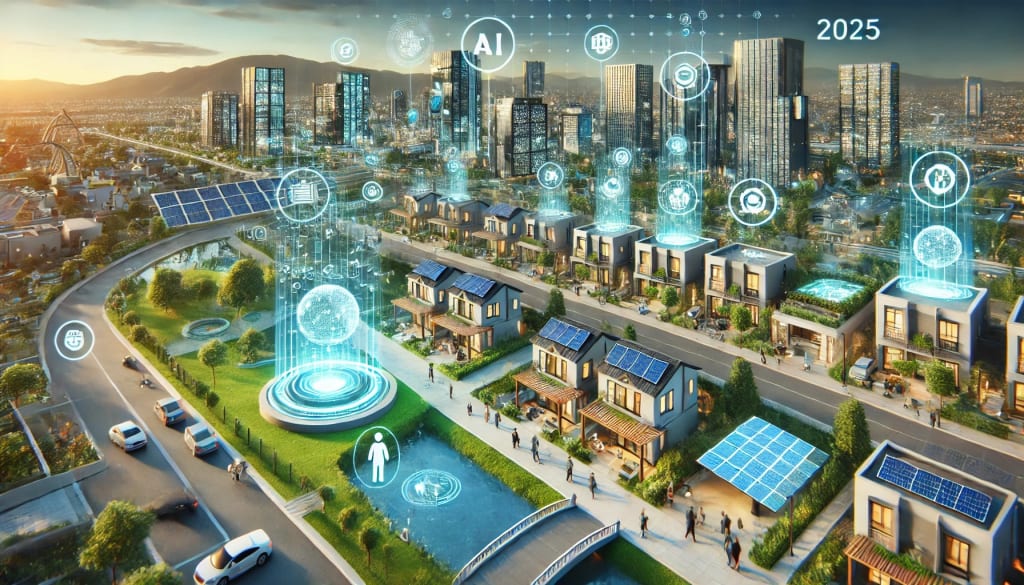
Real estate is one of Pakistan's most vital economic sectors, contributing significantly to GDP growth and employment. However, this industry has long relied on traditional practices that are now being challenged by technological advancements. As Pakistan strides towards a digital future, artificial intelligence (AI) and machine learning (ML) are emerging as transformative forces, reshaping how properties are marketed, managed, and transacted. This article explores how these technologies are set to redefine the real estate landscape in Pakistan by 2025.
What are AI and ML?
AI involves the creation of intelligent systems capable of mimicking human tasks, while ML is a subset of AI that enables computers to learn from and act on data. These technologies have revolutionized industries like healthcare, education, and finance, and their potential applications in real estate are vast.
AI in Real Estate:
AI-powered systems can process large volumes of data to provide insights into market trends, pricing, and customer preferences.
ML in Real Estate:
ML algorithms learn from historical data to predict future market behavior, enabling smarter investment decisions.
The Current State of Real Estate in Pakistan
Despite being a growing market, Pakistan's real estate sector faces several challenges:
Traditional Practices:
Manual processes dominate property transactions, making them time-consuming and error-prone.
Lack of transparency:
Issues like fraudulent listings and unclear property titles deter investment.
Technology Gap:
Limited use of digital platforms reduces efficiency and global competitiveness.
How AI and ML Are Transforming Real Estate Globally
Globally, AI and ML are enabling groundbreaking innovations:
Property Valuation:
AI-based tools assess property value by analyzing factors like location, amenities, and market demand.
Smart Contracts:
Blockchain-powered AI ensures secure, automated transactions, reducing the risk of fraud.
Virtual Reality Tours:
Combined with AI, VR technology offers immersive property tours for buyers and investors.
Applications of AI and ML in Pakistan’s Real Estate
In Pakistan, AI and ML are paving the way for modernized real estate practices.
AI-Driven Property Portals:
Platforms like Zameen.com are incorporating AI to provide personalized property recommendations.
Predictive Analytics:
ML tools forecast market trends, helping investors make data-driven decisions.
Automated legal processes:
AI can streamline legal verifications, ensuring quicker and safer property transfers.
AI-Powered Property Management
The integration of AI in property management is revolutionizing operations.
Smart Homes:
AI-enabled devices, such as smart thermostats and security systems, are becoming common in modern Pakistani homes.
Maintenance Solutions:
AI-driven systems predict maintenance needs, preventing costly repairs.
Data-Driven Real Estate Investment
AI tools analyze market data to identify lucrative opportunities:
Big Data Integration:
By processing vast datasets, AI uncovers investment hotspots and pricing trends.
Risk Management:
ML models assess potential risks, optimizing portfolio performance.
Enhanced Customer Experience with AI/ML
AI and ML improve customer experiences through personalized services.
Virtual Assistance:
AI-powered chatbots provide instant support and property information.
AR and VR Tools:
Buyers can virtually explore properties, saving time and effort.
Challenges in Adopting AI and ML in Pakistan’s Real Estate
Despite their potential, the adoption of AI and ML faces obstacles:
Infrastructure Deficits:
Limited internet access and outdated systems hinder technological integration.
Skill Gaps:
A shortage of trained professionals slows the adoption of AI and ML technologies.
Regulatory Barriers:
Outdated policies do not accommodate the rapid technological advancements.
Case Studies: Success Stories from Around the World
Zillow (USA):
Uses AI to estimate property prices with remarkable accuracy.
WeWork (Global):
Employs ML to optimize workspace utilization.
Lessons for Pakistan:
Adopting similar strategies can boost Pakistan’s real estate sector.
Economic Impacts of AI and ML on Real Estate in Pakistan
AI and ML can drive economic growth in various ways:
Cost Reductions:
Automation minimizes operational costs, increasing profitability.
Job Creation:
Emerging roles in AI and data analysis offer new career opportunities.
Future Trends in Real Estate with AI and ML
By 2025, several trends are expected to dominate Pakistan’s real estate:
Smart Cities:
Developments like DHA and Bahria Town may incorporate AI for efficient urban planning.
Blockchain Integration:
Blockchain ensures secure and transparent property transactions.
Metaverse Real Estate:
Virtual property ownership may become a reality, expanding investment opportunities.
Policy Recommendations for Technology Integration
Government Support:
Initiatives to promote AI research and development are crucial.
Public-Private Partnerships:
Collaborations can accelerate the deployment of AI tools.
Regulatory Frameworks:
Policies must address privacy concerns and ensure ethical AI usage.
Ethical Considerations of AI in Real Estate
Privacy Concerns:
Ensuring data security on AI-driven platforms is essential.
Fair Usage:
Avoiding algorithmic biases guarantees equitable access to opportunities.
Conclusion
AI and ML hold immense potential to reshape Pakistan's real estate sector by 2025. By addressing existing challenges and adopting cutting-edge technologies, the country can unlock unprecedented growth and efficiency. As Pakistan’s real estate market embraces the digital age, the future looks brighter than ever.
FAQs
What is the role of AI in real estate?
AI optimizes processes like property searches, valuation, and transaction security.
How can AI improve property management?
AI predicts maintenance needs and integrates smart home technologies.
What are the challenges in adopting AI in Pakistan’s real estate?
Infrastructure deficits, skill gaps, and regulatory barriers are major hurdles.
Will AI replace real estate jobs?
AI will create new roles, emphasizing data analysis and technology management.
What is the future of smart cities in Pakistan?
Smart cities like DHA and Bahria Town may incorporate AI for efficient planning.
How does ML assist in real estate investments?
ML analyzes data to predict market trends and assess investment risks.
About the Creator
About Binding Prometheus
I want to start actively advocating on behalf of my own work, and the most valuable part of my canon is, without a doubt, Binding Prometheus, the play I have been working on since 2019 and only finished in 2023 as part of my MA. The play itself is an amalgamation of a million different inspirations. On one end, it evokes the Ancient Greek myth-play, deriving its own title from the earliest extant work of Western drama we have, Aeschylus’s Prometheus Bound. On the other end, it borrows significantly from the sci-fi bulwarks from over the years, namely Mary Shelley’s Frankenstein and Karel Capek’s Rossum’s Universal Robots. The play could be an episode of Black Mirror, I fear. I don’t know. I’ve only ever seen one episode of Black Mirror.
By Steven Christopher McKnight19 days ago in Futurism
Massage Equipment Market: Ergonomic Innovation, Wellness Demand & Market Momentum
According to IMARC Group's latest research publication, The global massage equipment market size reached USD 8.1 Billion in 2024. Looking forward, IMARC Group expects the market to reach USD 16.3 Billion by 2033, exhibiting a growth rate (CAGR) of 8.08% during 2025-2033.
By James Whitman7 days ago in Futurism


Comments (1)
Hello, just wanna let you know that if we use AI, then we have to choose the AI-Generated tag before publishing 😊