
The Future of Food: Lab-Grown Meat vs. Plant-Based Alternatives
What Is Lab-Grown Meat?

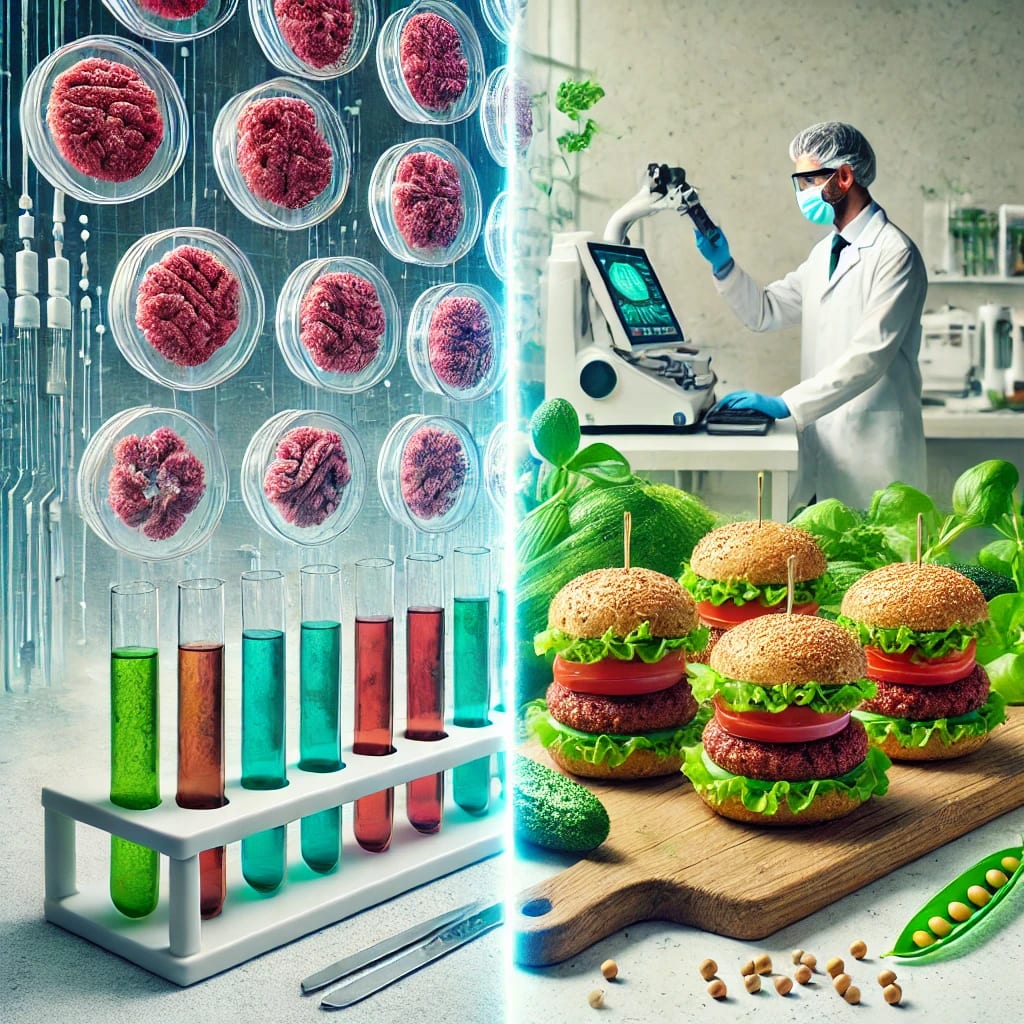
Hey there, food lovers! 🍽️ Today, we’re diving into a hot topic that’s making waves in the food industry: lab-grown meat and plant-based alternatives. As our world continues to grow, so does our appetite for food, and we’re facing some serious challenges in how we produce it.
With a projected population of nearly 10 billion people by 2050, we need to rethink how we source our meals. Traditional livestock farming is a major culprit in greenhouse gas emissions and environmental degradation. So, what’s the solution? Let’s explore two innovative approaches: lab-grown meat and plant-based alternatives.
What Is Lab-Grown Meat?
First up is lab-grown meat, also known as cultured or cell-based meat. Imagine being able to enjoy a delicious steak without the environmental and ethical concerns of raising livestock. Sounds like a dream, right? Well, that dream is becoming a reality!
How Is It Made?
Here’s how it works: scientists take muscle cells from live animals and cultivate them in a lab. These cells are placed in a nutrient-rich environment that mimics the conditions inside an animal's body. Over time, these cells multiply and form muscle tissue, which we can then process into actual meat products. It’s pretty fascinating!
Why It’s Sustainable
One of the biggest selling points of lab-grown meat is its sustainability. Research shows that it could cut greenhouse gas emissions by up to 96% compared to traditional meat production. That’s a huge reduction! Plus, it uses 90% less land and 87% less water. With climate change knocking at our door, lab-grown meat offers a promising way to meet our food needs without sacrificing the planet.
Health Benefits
Let’s talk health! Lab-grown meat can be tailored to be healthier than conventional meat. Scientists can tweak the nutritional profile to include fewer unhealthy fats and even add beneficial nutrients like omega-3 fatty acids. However, since this technology is still relatively new, we need to conduct more research to ensure it’s safe for long-term consumption.
The Rise of Plant-Based Alternatives
Now, let’s shift gears and talk about plant-based alternatives. These options have been around for a while, but they’ve skyrocketed in popularity in recent years. You might have heard of brands like Beyond Meat and Impossible Foods—they’re leading the charge in creating meat-like products made entirely from plants.
What’s Inside?
Plant-based meats are made from ingredients like soy, peas, and various grains. The goal is to replicate the taste and texture of meat while keeping it entirely animal-free. Think of it as a delicious way to enjoy burgers, sausages, and more without any animal products!
Environmental Impact
So, how do plant-based alternatives stack up environmentally? They’re impressive! Producing these products typically requires far less land, water, and energy than raising livestock. For instance, making an Impossible Burger generates 89% fewer emissions than a traditional beef burger. Plus, using plants helps protect biodiversity and combat climate change.
Health Considerations
From a health perspective, plant-based meats can be a fantastic choice. They’re often lower in saturated fats and cholesterol-free, making them heart-healthy. Many of these products are also packed with fiber, which is great for digestion. Just be sure to check the labels, as some plant-based options can be high in sodium or contain additives.
Lab-Grown vs. Plant-Based: A Showdown
Let’s get into the nitty-gritty and compare lab-grown meat and plant-based alternatives side by side.
Taste and Texture
When it comes to taste, lab-grown meat has the upper hand because it’s actual meat! Taste tests have shown that lab-grown options closely resemble the flavors and textures of the meats we know and love.
Plant-based alternatives have made significant strides, too! While many consumers enjoy these products, there may still be slight differences in texture and juiciness compared to real meat. But don’t worry! Continuous innovations in food tech are working to make these products even better.
Scalability and Cost
Currently, plant-based meat is more widely available and cost-effective than lab-grown meat. Brands like Beyond Meat have made it to grocery store shelves and restaurant menus across the globe, making it easier for consumers to try out these options.
Lab-grown meat is still in its infancy. While production costs are decreasing, it’s not yet as accessible as plant-based options. However, as technology advances and production scales up, we can expect prices to drop, making lab-grown meat more available.
Regulation and Safety
Regulation plays a crucial role in the future of both lab-grown and plant-based meats. Plant-based products already follow existing food safety regulations, while lab-grown meat is still figuring out its path in this area. It’s important to ensure that whatever we’re eating is safe and meets public health standards.
Both industries must focus on transparency, too. Many consumers may not fully understand these technologies, so providing clear information about how they’re made and their nutritional benefits will be essential for building trust.
The Road Ahead: Coexistence or Competition?
As we think about the future, it’s clear that both lab-grown and plant-based alternatives can play vital roles in reshaping our food systems. It doesn’t have to be one or the other—both can coexist!
Consumer Preferences
What do you prefer? As we become more aware of climate change, animal welfare, and health issues, many people are seeking diverse options to align their dietary choices with their values.
A Hybrid Approach
Imagine a world where you can choose to incorporate both lab-grown and plant-based proteins into your meals. This flexibility allows for a more personalized eating experience while still supporting sustainable food production.
Final Thoughts: Embracing Innovation
The future of food is exciting, with lab-grown meat and plant-based alternatives leading the charge toward a more sustainable and ethical food system. While both options face challenges, they also offer incredible opportunities to rethink how we produce food.
As we move forward, let’s support innovation and research in both fields. We owe it to future generations to ensure they have access to nutritious and sustainable food choices.
So, whether you’re a fan of lab-grown meat, plant-based options, or both, embracing these innovations is a step toward a healthier planet and a more sustainable future. 🌍💚
For a deeper dive into this topic, including a detailed comparison of sustainability, taste, and health impacts, check out my blog post:
Lab-Grown vs. Plant-Based Meat: Future of Food.
About the Creator
Waqas Hussain
Welcome to https://infomix360.blogspot.com/, your number-one source for informative articles, browser games, and live scores for various international cricket matches, football, and tennis tournaments.
Sincerely
Waqas Hussain.
Keep reading
More stories from Waqas Hussain and writers in Futurism and other communities.
Elevate Your Gaming Odyssey with the ASUS ROG Strix G16 (2023): A Comprehensive Review
In the ever-evolving realm of gaming laptops, the ASUS ROG Strix G16 (2023) emerges as a beacon of innovation and performance, promising an unparalleled gaming experience. From its immersive 16-inch 16:10 display to the dynamic duo of Intel Core i7-13650HX processor and NVIDIA GeForce RTX 4060 GPU, every facet of this gaming marvel is meticulously designed to redefine your gaming odyssey.
By Waqas Hussain2 years ago in Gamers
The Last Fortress
The Final Frontier of Privacy For centuries, the human mind has been the only place where true freedom existed. No matter how oppressive a regime was, or how invasive a technology became, your thoughts were yours alone. They were the "Last Fortress"—a sanctuary of private dreams, silent rebellions, and unspoken loves.
By Alex Sterling 7 days ago in Futurism
Microencapsulation Market Outlook: Controlled Release Technologies and Application Expansion Opportunities
According to IMARC Group's latest research publication, the global microencapsulation market size reached USD 11.3 Billion in 2024. Looking forward, IMARC Group expects the market to reach USD 22.1 Billion by 2033, exhibiting a growth rate (CAGR) of 7.38% during 2025-2033.
By James Whitman6 days ago in Futurism



Comments
There are no comments for this story
Be the first to respond and start the conversation.