
The Future of Consumer Electronics: Trends and Predictions
by Oktay Ünsal

Consumer electronics have come a long way since the first television sets and transistor radios were introduced. Today, the industry is a vast and complex ecosystem that encompasses everything from smartphones and wearables to smart home devices and gaming consoles. But what does the future hold for consumer electronics? In this article, we'll explore some of the top trends and predictions for the industry in the years to come.
Artificial Intelligence (AI)
Artificial intelligence has already made its mark on the consumer electronics industry, powering voice assistants like Amazon's Alexa and Google Assistant. But in the future, AI is set to become even more ubiquitous, powering everything from self-driving cars to smart home devices. AI will be used to enhance personalization, improve efficiency, and make our lives easier in countless ways.
5G Networks
The rollout of 5G networks is set to be a game-changer for the consumer electronics industry. 5G will enable faster data speeds, lower latency, and greater connectivity, opening up new opportunities for everything from streaming high-quality video to powering smart cities. The increased bandwidth and faster speeds will also make it possible for more devices to connect to the internet, paving the way for the Internet of Things (IoT) to truly take off.
Augmented Reality (AR) and Virtual Reality (VR)
Augmented and virtual reality technologies have been around for a while, but they are set to become more mainstream in the coming years. AR and VR are being used in everything from gaming to retail, and they have the potential to transform the way we interact with technology. In the future, we could see AR and VR being used in education, healthcare, and even in the workplace.
Wearables
Wearable devices like smartwatches and fitness trackers have already made a significant impact on the consumer electronics industry. But in the future, wearables are set to become even more advanced, with features like real-time health monitoring, augmented reality displays, and even self-healing materials. Wearables will become more seamlessly integrated into our daily lives, providing us with valuable data and insights into our health and well-being.
Sustainability
As the world becomes more environmentally conscious, sustainability is set to become a major trend in the consumer electronics industry. Manufacturers will be expected to create products that are energy-efficient, recyclable, and eco-friendly. The move towards a circular economy, where products are designed to be reused and recycled, will also gain momentum.
Personalization
Personalization has been a trend in the consumer electronics industry for some time, with companies like Apple and Samsung offering customizable smartphones and other devices. In the future, personalization will become even more important, with companies using AI and other technologies to create products that are tailored to our individual needs and preferences.
Smart Homes
Smart home devices like Amazon Echo and Google Home have already made a significant impact on the consumer electronics industry. But in the future, smart homes are set to become even more advanced, with features like voice-controlled lighting, automated security systems, and self-learning thermostats. The smart home will become a truly integrated ecosystem, with devices working seamlessly together to make our lives easier and more efficient.
In conclusion, the future of consumer electronics is bright and full of possibilities. From AI and 5G networks to AR and VR technologies, the industry is set to transform the way we live, work, and play. Sustainability and personalization will become more important, and smart homes will become even smarter. As consumers, it's up to us to embrace these new technologies and use them to enhance our lives in meaningful ways. The future is exciting, and the possibilities are endless.
About the Creator
Keep reading
More stories from Oktay Ünsal and writers in Futurism and other communities.
The Impact of Consumer Electronics on Society
Consumer electronics have revolutionized the way we live, work, and communicate. The rise of the internet, smartphones, and smart devices has transformed nearly every aspect of our lives. While this transformation has brought many benefits, it has also raised concerns about the impact of consumer electronics on society. In this article, we'll take a closer look at the impact of consumer electronics on society and explore some of the potential benefits and risks.
By Oktay Ünsal3 years ago in Futurism
GCC Fruit Juice Market Analysis: Key Drivers, Market Dynamics & Future Prospects
According to IMARC Group's latest research publication, GCC fruit juice market size reached USD 3.7 Billion in 2024. The market is projected to reach USD 5.6 Billion by 2033, exhibiting a growth rate (CAGR) of 4.8% during 2025-2033.
By Abhay Rajput7 days ago in Futurism
Alternative Fuels Market Insights: USD 688.2 Billion by 2034
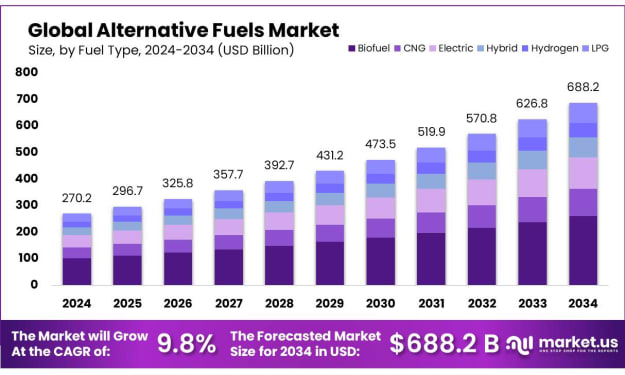
Overview The Global Alternative Fuels Market is on a strong growth trajectory, projected to expand from USD 270.2 billion in 2024 to USD 688.2 billion by 2034, representing a compound annual growth rate of 9.8% over the forecast period. North America currently leads the market, accounting for a 43.2% share of global revenue in 2024.
By Hayden Kulasabout 4 hours ago in Futurism



Comments
There are no comments for this story
Be the first to respond and start the conversation.