
The Future of Cash - Will Physical Money Become Obsolete?
Advancements in technology have made digital payment methods like Digital wallets, contactless cards, payment links, UPI payments, QR code payments, CBDCs and cryptocurrencies, very popular
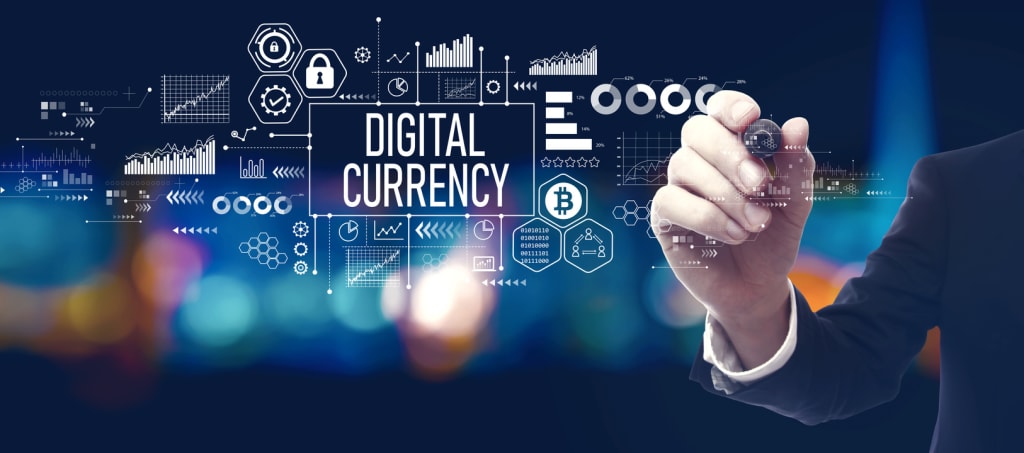
Physical cash became the backbone of our financial systems, replacing the age-old barter systems. From small daily transactions to large-scale exchanges, cash is a trusted and tangible form of payment. Rapid advancements in technology are changing the way we handle money. Digital wallets, contactless cards, payment links, UPI payments, QR code payments, CBDCs and cryptocurrencies are becoming very popular and taking mainstream, this raises a critical question: Will physical money soon become a thing of the past? Lets check this in detail.
The Current State of Cash Usage Globally
Even though digital payments are on the rise, cash transactions still take a considerable market share. Still, there are European countries like Spain, Greece, and Italy where the majority of in-person purchases are still carried through physical cash. On the other hand, there are countries like Sweden, Denmark, and UK, where digital payments are the preferred means. Big Asian economy like India prefers digital payments with their game-changing real-time payment system called UPI (unified payment interface).
In developing economies, cash remains dominant due to limited access to digital infrastructure. But African countries like Kenya, South Africa, and Nigeria are adopting digital payment systems at a pretty fast pace. M-Pesa launched by Vodafone and Safaricom in Kenya has made it easier for people to move away from cash and embrace digital alternatives.
Digital Currencies
Digital currencies are emerging as the new form of money, and have the potential to replace traditional physical cash. Unlike traditional cash which has a physical form, digital currencies exist only in electronic form. Cryptos and CBDCs are digital currencies, where CBDCs are launched and controlled by central banks.
Cryptocurrencies
Cryptocurrencies are the digital currency backed by blockchain technology. They are a decentralised form of currency and their values are usually decided by market forces. Cryptos are quite popular now, but have seen a lot of Ups and downs, and are highly volatile. This high volatility makes it unsafe for common men to invest in it. Cryptos are known for their anonymity and faster transactions with a very low transaction fee. They are an ideal choice for cross-border transactions, as they are not affected by currency conversion issues and dont have a middleman, achieving much faster cross-border transactions.
Popular cryptocurrencies in the market are
• Bitcoin
• Ethereum
• Dogecoin
• Tether (USDT)
• Binance Coin
Central Bank Digital Currencies (CBDCs)
Central Bank Digital Currencies are issued and regulated by various central banks. Thus they are a safer alternative to the decentralised crypto currency. More than 130 countries across the globe are working to develop their CBDCs. Few countries like the Bahamas, Nigeria, and Jamaica have launched their CBDCs, while many countries like India and China have launched their pilot programs. CBDCs are a way to modernize the monetary systems of the country and offer a more secure and efficient way to manage money, while also giving governments better control over monetary policy. They can also reduce fraud activities like money laundering as well as reduce corruption.
Fintech Innovations
Fintech sectors are coming up with innovative technologies and even challenging traditional banking systems and offering more convenient and user-centric systems. Lets check some of the key innovations.
Mobile Wallets
Mobile wallets like Apple Pay, Google Pay, and Samsung Pay allow users to store their card and account information securely, thus facilitating faster payments. Mobile wallets allow scanning QR codes using the smartphone camera allowing faster payments at stores. They make wallets and transactions more secure by utilising biometric authentications like fingerprint scanning and facial scanning.
QR Codes
QR codes are fancy-looking codes, that allow faster transactions, especially at retail stores. Customers can scan QR codes with their smartphones for quicker payments and make the checkout process more smoother. In countries like India and China, this method is quite popular.
Payment Links
Payment links are a newer technology that getting popular pretty fast. These are unique links that can be generated by businesses and can share the same with customers trough SMS, email, WhatsApp, and other social media platforms. On clicking the link customers will be taken directly to the payment page, where they can choose the payment method of their choice. Making it a simple and faster method to collect payments.
Contactless Cards
Contactless cards allow users to pay for the products and services purchased by just tapping on the NFC-enabled payment terminals. NCF and RFID are the technologies behind contactless card payments. NFC allows data transfer only when in close proximity, making it a secure and faster way to make payments.
Neo Banks
Neo banks are digital-only banks that operate without any physical branches. Neo banks offer all services from current accounts to investments, and all through their mobile apps. Since they don't have to spend on building and maintaining physical branches, making them more profitable than traditional banks. As a result, they can offer higher returns, as well as neo-banks are more eager to adopt tech-driven newer innovations which attracts tech-savvy Gen Z customers.
Benefits of a Cashless Society
• Convenience
• Faster Transactions
• Enhanced Security
• Increased Financial Inclusion
• Lower Crime Rates
• Improved Tax Collection
• Faster Cross-Border Transactions
• Access to Real-Time Data
A cashless society comes with a wide range of advantages, not just for individuals, but for businesses and governments as well. They provide financial services for people in remote areas where traditional banking infrastructure would be difficult to setup and operate. This reduces the informal economy, which in turn increases the total tax collections. In remote areas majority of the criminal activities are cash related, digitisation can help reduce such activities.
Well, the future of cash is uncertain but the trend is clear due to the benefits that digital systems offer and the changing customer preferences. Future fintech innovations could make digital systems more attractive. Physical money usage will gradually reduce over time, but when – a cashless society may not happen overnight despite the goodies they offer but its something to watch for.
About the Creator
About Binding Prometheus
I want to start actively advocating on behalf of my own work, and the most valuable part of my canon is, without a doubt, Binding Prometheus, the play I have been working on since 2019 and only finished in 2023 as part of my MA. The play itself is an amalgamation of a million different inspirations. On one end, it evokes the Ancient Greek myth-play, deriving its own title from the earliest extant work of Western drama we have, Aeschylus’s Prometheus Bound. On the other end, it borrows significantly from the sci-fi bulwarks from over the years, namely Mary Shelley’s Frankenstein and Karel Capek’s Rossum’s Universal Robots. The play could be an episode of Black Mirror, I fear. I don’t know. I’ve only ever seen one episode of Black Mirror.
By Steven Christopher McKnight22 days ago in Futurism
GCC Switchgear Market Analysis: Key Players and Market Forecast
According to IMARC Group's latest research publication, the GCC switchgear market size reached USD 2,334.97 Million in 2025. The market is projected to reach USD 3,385.56 Million by 2034, exhibiting a growth rate of 4.21% during 2026-2034.
By Abhay Rajputabout 19 hours ago in Futurism
The Path to Salvation
The late autumn evening air filled the monk's lungs, but it wasn't the season that chilled his bones. The heavy-handed presence of evil he had sensed upon entering the woods surrounding this mountain village had not bothered to conceal itself from him.
By Made in DNAabout 15 hours ago in Fiction



Comments
There are no comments for this story
Be the first to respond and start the conversation.