

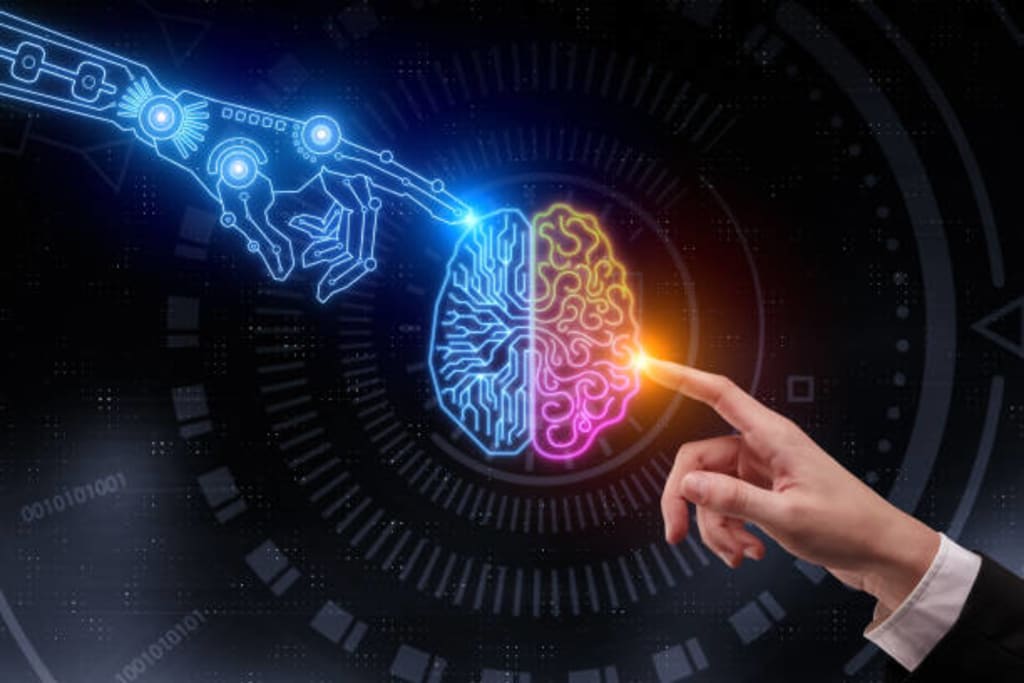
The future of artificial intelligence (AI) is an area of active research and debate, with many experts predicting that AI will have a significant impact on a wide range of industries and applications in the coming years. Some potential developments in the future of AI include.
There are many potential developments that could shape the future of artificial intelligence (AI). Some possible developments in the field of AI include.
1.Continued improvements in machine learning algorithms: Continued improvements in machine learning algorithms are likely to be a key area of development in the future of artificial intelligence (AI). Machine learning algorithms are used to enable AI systems to learn from data, allowing them to improve their performance over time without the need for explicit programming. There are many different types of machine learning algorithms, including supervised learning, unsupervised learning, and reinforcement learning, and each has its own strengths and weaknesses.
As machine learning algorithms continue to evolve, we can expect to see AI systems that are able to perform more complex tasks and make more accurate predictions. This could lead to the development of new AI applications in a wide range of industries, including healthcare, finance, and transportation.
Some potential developments in machine learning algorithms that could shape the future of AI include:
The development of new techniques, such as deep learning, that allow AI systems to learn more effectively from large and complex datasets.
The use of machine learning to improve the efficiency and accuracy of AI systems, for example by reducing the need for large amounts of labeled training data.
The integration of machine learning with other AI technologies, such as natural language processing and computer vision, to create more sophisticated AI systems.
The use of machine learning to optimize the performance of AI systems, for example by adapting to changing conditions or by learning from feedback.
2. The increasing use of AI in healthcare:
The increasing use of artificial intelligence (AI) in healthcare is likely to be a major development in the future of the field. AI has the potential to revolutionize healthcare by assisting with tasks such as diagnosis, treatment planning, and patient monitoring.
Some potential applications of AI in healthcare include:
Assisting with diagnosis: AI systems could be used to analyze medical images, such as X-rays and CT scans, to help doctors identify abnormalities or diagnose diseases.
Treatment planning: AI could be used to help doctors develop personalized treatment plans for patients based on their medical history and other factors.
Patient monitoring: AI could be used to monitor patients remotely, allowing doctors to track vital signs and other indicators of health.
Drug discovery: AI could be used to analyze large amounts of data and identify potential new drugs or treatments.
The increasing use of AI in healthcare could help to improve the efficiency and effectiveness of the healthcare system, and could ultimately lead to better outcomes for patients. However, it is important to ensure that AI is used ethically and responsibly in the healthcare setting, and that it is not used to replace the role of human doctors or nurses.
3.The integration of AI into everyday devices:
The integration of artificial intelligence (AI) into everyday devices is likely to be a major development in the future of the field. AI has the potential to be integrated into a wide range of devices and appliances, such as smart speakers, home security systems, and even clothes.
Some potential applications of AI in everyday devices include:
Smart speakers: AI-powered smart speakers, such as Amazon Echo and Google Home, can be used to play music, answer questions, and perform a variety of other tasks.
Home security systems: AI could be used to analyze video feeds from home security cameras and alert homeowners to potential threats.
Appliances: AI could be integrated into appliances such as refrigerators, washing machines, and ovens to improve their performance and make them easier to use.
Clothes: AI could be used to create "smart" clothing that can monitor a person's vital signs or provide other types of feedback.
4.Some potential developments in the future of AI include:
The integration of AI into everyday devices could make our lives more convenient and efficient, and could also open up new possibilities for how we interact with technology. However, it is important to consider the privacy and security implications of such developments, and to ensure that AI is used ethically and responsibly.It is difficult to make definitive conclusions about the future of artificial intelligence (AI) because it is an active area of research and development, and many of the potential developments and applications of AI are still largely unknown. However, it is clear that AI will play an increasingly important role in many aspects of our lives in the coming years.
5.The potential for AI to assist with scientific research:
The potential for artificial intelligence (AI) to assist with scientific research is an area of active research and development, with many experts predicting that AI could have a significant impact on the field. Some potential ways in which AI could assist with scientific research include:
Analyzing large datasets: AI systems could be used to analyze large datasets, such as genomic data or data from scientific experiments, and identify patterns or trends that might not be apparent to humans.
Developing new drugs and treatments: AI could be used to identify potential new drugs or treatments based on data from scientific experiments or clinical trials.
Modeling and simulation: AI could be used to create models and simulations of complex systems, such as the human body or the environment, which could be used to test hypotheses or make predictions.
Optimizing research processes: AI could be used to optimize research processes, such as by identifying the most promising areas of study or by helping to design experiments.
AI has the potential to significantly accelerate and improve scientific research, but it is important to ensure that it is used ethically and responsibly, and to consider the potential impacts of AI on employment in the scientific research field.
Regenerate response
Some potential developments in the future of AI include:
Continued improvements in machine learning algorithms, which could allow AI systems to perform more complex tasks and make more accurate predictions.
The increasing use of AI in healthcare, which could help to improve the efficiency and effectiveness of the healthcare system and lead to better outcomes for patients.
The integration of AI into everyday devices and appliances, which could make our lives more convenient and efficient and open up new possibilities for how we interact with technology.
The use of AI to improve transportation, such as the development of autonomous vehicles and the integration of AI into transportation systems to optimize routes and reduce congestion.
The potential for AI to assist with scientific research and discovery, including the analysis of large datasets and the development of new drugs and treatments.
It is important to consider the ethical implications of AI and to ensure that it is used responsibly and for the benefit of society as a whole.
About the Creator
natarajan
Hi there! My name is Natarajan and I am a content creator with a mission to inform and educate. Join me on my journey to make the world a more informed place, one piece of content at a time."
Keep reading
More stories from writers in Futurism and other communities.
About Binding Prometheus
I want to start actively advocating on behalf of my own work, and the most valuable part of my canon is, without a doubt, Binding Prometheus, the play I have been working on since 2019 and only finished in 2023 as part of my MA. The play itself is an amalgamation of a million different inspirations. On one end, it evokes the Ancient Greek myth-play, deriving its own title from the earliest extant work of Western drama we have, Aeschylus’s Prometheus Bound. On the other end, it borrows significantly from the sci-fi bulwarks from over the years, namely Mary Shelley’s Frankenstein and Karel Capek’s Rossum’s Universal Robots. The play could be an episode of Black Mirror, I fear. I don’t know. I’ve only ever seen one episode of Black Mirror.
By Steven Christopher McKnight20 days ago in Futurism
UAE Amusement Parks Market: Theme Park Expansion & Future Growth
According to IMARC Group's latest research publication, UAE Amusement Parks Market size was valued at USD 299.03 Million in 2025 and is projected to reach USD 496.63 Million by 2034, growing at a compound annual growth rate of 5.80% from 2026-2034.
By Abhay Rajput5 days ago in Futurism




Comments
There are no comments for this story
Be the first to respond and start the conversation.