
The Future of Artificial Intelligence
How lt Will Transform Our Lives

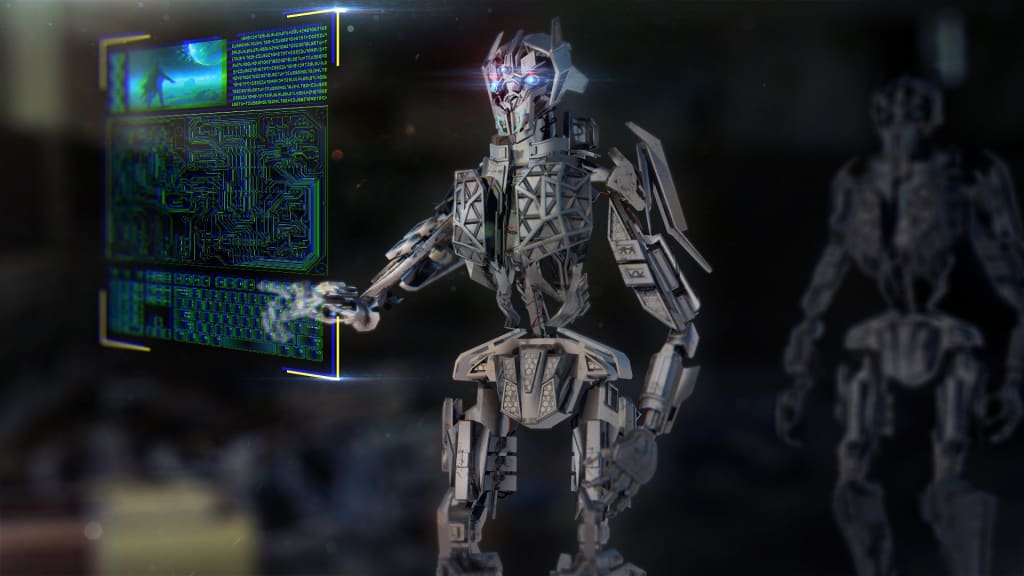
As we enter the 21st century, it's hard to ignore the impact that technology has had on our daily lives. From smartphones and social media to autonomous cars and drones, we've become accustomed to a world that is increasingly reliant on futuristic innovations.
But perhaps no technology has captured our collective imagination quite like artificial intelligence (AI). AI has been a mainstay of science fiction for decades, but in recent years, it's become a very real and tangible force in the world. And as the technology continues to advance and evolve, it's clear that the future of AI will be nothing short of transformative.
At its core, AI is all about machines that can learn, reason, and make decisions. Whether it's a smartphone that can predict your next move or a self-driving car that can navigate a busy city street, AI is changing the way we live our lives in fundamental ways.
But what does the future hold? How will AI continue to evolve and what will its impact be on society as a whole? To answer these questions, we need to take a closer look at some of the most exciting developments in the field.
One area where AI is poised to have a major impact is healthcare. With the ability to analyze vast amounts of data and identify patterns that humans might miss, AI could revolutionize the way we diagnose and treat diseases. Already, there are AI-powered tools that can help doctors detect cancer, predict heart attacks, and even identify early signs of Alzheimer's disease.
But healthcare is just the beginning. AI is also set to transform the way we work. With the ability to automate routine tasks and perform complex calculations in a fraction of the time it takes humans, AI has the potential to dramatically increase productivity and efficiency across a wide range of industries.
For example, in the manufacturing sector, AI-powered robots are already being used to assemble products and perform quality control checks. In the finance industry, AI is being used to analyze vast amounts of data and identify patterns that can help investors make better decisions.
And then there's the field of transportation. With self-driving cars becoming increasingly common, it's clear that the future of transportation will be one that's heavily reliant on AI. From minimizing traffic congestion to improving safety on the roads, self-driving cars have the potential to revolutionize the way we travel.
Of course, with all this excitement comes some measure of trepidation. There are those who worry that AI could lead to job loss, as machines replace human workers across a range of industries. And there are concerns about the ethical implications of giving machines the power to make decisions that could impact our lives in profound ways.
But despite these concerns, it's clear that the future of AI is one that's full of promise and potential. With advances in machine learning, natural language processing, and computer vision, the machines of tomorrow will be smarter, more intuitive, and more capable than ever before.
As the field of AI continues to evolve, it's clear that we're on the precipice of a revolution that will fundamentally change the way we live our lives. Whether it's in healthcare, manufacturing, finance, or transportation, AI is poised to transform every corner of our world, in ways we can't even begin to imagine.
About the Creator
zhao ajie
I specialize in writing articles in the genres of technology, horror, and science fiction. My works are creatively unique and combined with the latest technological developments, taking readers into fantastic and thrilling worlds.
About Binding Prometheus
I want to start actively advocating on behalf of my own work, and the most valuable part of my canon is, without a doubt, Binding Prometheus, the play I have been working on since 2019 and only finished in 2023 as part of my MA. The play itself is an amalgamation of a million different inspirations. On one end, it evokes the Ancient Greek myth-play, deriving its own title from the earliest extant work of Western drama we have, Aeschylus’s Prometheus Bound. On the other end, it borrows significantly from the sci-fi bulwarks from over the years, namely Mary Shelley’s Frankenstein and Karel Capek’s Rossum’s Universal Robots. The play could be an episode of Black Mirror, I fear. I don’t know. I’ve only ever seen one episode of Black Mirror.
By Steven Christopher McKnight19 days ago in Futurism
UAE Health Insurance Market: Population Growth, Employer Coverage & Industry Trends
According to IMARC Group's latest research publication, UAE Health Insurance Market size was valued at USD 8.72 Billion in 2024. Looking forward, IMARC Group estimates the market to reach USD 14.9 Billion by 2033, exhibiting a CAGR of 6.1% during 2025-2033.
By Abhay Rajput7 days ago in Futurism


Comments
There are no comments for this story
Be the first to respond and start the conversation.